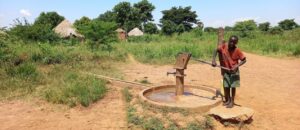
At the heart of Ewoyaa, a middle-aged woman by name Efua Tawiah-Afful, struggles to carry a bucket of water from a distant borehole. “It used to be easier when the community water system worked,” she lamented. “But ever since the contractors came, our pipe was cut, and we’ve been without water for months. Now we fetch from boreholes they provided, but even that is not enough.”
Her plight reflects the deepening divide between promised development and the harsh realities local residents endure.
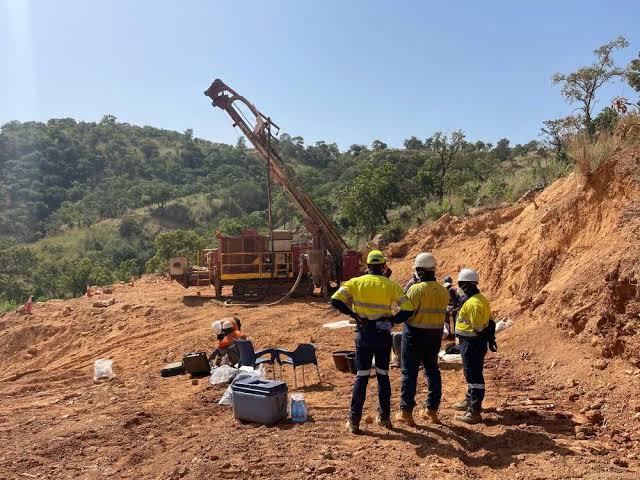
Despite assurances of improved living conditions, the community now faces severe water scarcity after contractors hired by Atlantic Lithium tampered with their community pipeline while drilling boreholes for the proposed lithium extraction.
Although residents have reported the issue, they remain in limbo, uncertain when—or if—their water supply will be restored.
In the meantime, they are forced to rely on a borehole provided by the company, but that falls short of meeting their needs, leaving them in a dire situation due to the ongoing water crisis.
This testimony highlights the challenges surrounding Ghana’s budding lithium industry, particularly its impact on biodiversity, ecosystems, and community livelihoods.
The Ewoyaa Lithium Project, spearheaded by Atlantic Lithium, is positioned to become Ghana’s first lithium-producing mine. Located in the Cape Coast region, the mine aims to produce spodumene concentrate for battery-grade lithium, a critical resource for renewable energy technologies like electric vehicles.
While the project holds significant economic promise, it also raises environmental and social concerns that must be addressed proactively to prevent long-term consequences.
The Ewoyaa region, with its lush tropical forests and small wetlands, is home to diverse plant and animal species. Lithium mining, which requires significant land clearing, threatens these ecosystems. The destruction of habitats for endangered species and pollinators could disrupt the region’s delicate ecological balance, leading to biodiversity loss and reduced agricultural productivity.
Deforestation and soil degradation further compound the problem, increasing erosion and diminishing the land’s ability to support plant and animal life. Without stringent measures to protect these ecosystems, the damage could be irreversible.
Interviews with Ewoyaa residents reveal significant disruptions to their water supply. Contractors severed the main community pipeline to reserve water for mining operations, leaving locals dependent on boreholes drilled. While these boreholes were intended to mitigate the impact, residents report that they are inadequate for the community’s needs, leading to long queues and frustration.

Water scarcity has had a ripple effect on livelihoods, particularly for farmers and fishermen who depend on reliable water sources.
Having already drilled over 36 boreholes in preparation for lithium extraction, Atlantic Lithium stands on the cusp of a major development. The company now eagerly awaits government approval to move forward, a decision that could mark the beginning of a transformative era in Ghana’s mining sector, with profound economic and environmental implications.

In an effort to address the community’s displacement, discussions with elders of Ewoyaa community reveal an agreement between Atlantic Lithium and the elders of the community on issues of settlement and compensation. The company has committed to relocating affected residents to a site of their choosing, complete with basic social amenities and infrastructure. Compensation packages are also planned to help residents establish new livelihoods, such as starting businesses or trades.
The Queen-mother of Ewoyaa, Nanayere Mbronu Edu IX, said, “Just as you are here, some of your colleagues have come to ask us the same questions. And as we said to them, we had an extensive discussion with the company [Atlantic Lithium] about what would be done for the community if the project were approved by Parliament. During our discussion with them [Atlantic Lithium], issues of compensation and relocation came up, and they said we should choose a place of our satisfaction so that a community would be built there with the necessary social amenities we currently lack, such as schools and hospitals.
“As we speak, everything has been documented with our lawyer. They also promised that they would compensate us so that when we leave here, we can start a business on our own with the capital given to us. However, even with that, the issue of someone getting enough compensation for the amount of land they own is not assured—someone may not receive the exact value of the land they own.
“We are also aware that in situations like this, the building materials used for the relocation houses may not be of good quality, which, in the long run, could lead to structural collapse and escalate the issue further. We have discussed all of this, and they have assured us of their promises. Right now, everything is in the hands of the government since a new administration has come into power. Until the project is approved, nothing can be done,”he said.
This agreement, however, is yet to be approved by Parliament, raising concerns about potential delays.
In a recent media publication, Atlantic Lithium Ltd has announced it is “actively engaged” in discussions with the Ghanaian Government to ratify the Mining Lease for the Ewoyaa Lithium Project. Responding to recent media speculation, the company reiterated its dedication to collaborating with Ghanaian authorities and stakeholders to move the project forward.
“The company and government agencies are actively engaged in discussions regarding the ratification of the mining lease and advancing Ewoyaa. The company is pleased to continue to work with the Government of Ghana and all stakeholders to progress the Ewoyaa Lithium Project,” Atlantic Lithium stated.
Nothing came of the efforts to speak with the company after repeated attempts through calls and messages. A company representative said the company had slashed jobs, limiting its ability for media engagements.
Ghana’s experience with illegal gold mining, or galamsey, serves as a stark warning. Weak enforcement of regulations has led to widespread environmental degradation, deforestation, and water pollution. These past failures highlight the need for strict oversight and adherence to environmental laws in the lithium sector to avoid repeating similar mistakes.
Lithium, a cornerstone of renewable energy technologies, ironically contributes to climate change during its extraction. Producing one ton of lithium emits up to 15 tons of carbon dioxide, highlighting the environmental cost of a mineral intended to combat global warming.
Dust and chemicals generated during lithium mining operations pose significant health risks to nearby communities. Prolonged exposure to these substances can lead to respiratory diseases, gastrointestinal infections, and neurological disorders. Vulnerable populations, particularly children and the elderly, are at heightened risk, amplifying the need for health safeguards before mining activities commence.
According to Awula Serwaa, Executive Director of Eco Conscious Citizens, lithium mining poses significant environmental risks, including water depletion, contamination, and greenhouse gas emissions. She emphasised the urgent need for strict enforcement of environmental laws and independent assessments to ensure sustainable practices in Ghana’s mining sector.
“Lithium mining is highly water-intensive, requiring up to 2.2 million liters per ton, diverting water from agriculture and communities. Each ton of lithium extracted releases up to 15 tons of CO2, a staggering carbon footprint that exacerbates the very climate crisis lithium mining aims to help mitigate. As the world turns to lithium for clean energy solutions, the environmental cost of this carbon emission threatens to undo the progress made in combating global warming, making it crucial to reconsider the sustainability of such practices.
“Ghana’s main issue is not a lack of laws but weak enforcement. Independent environmental assessments are essential to evaluate lithium mining’s impact on ecosystems, water sources, and greenhouse emissions. Stakeholders must prioritize sustainability, ensuring economic benefits do not outweigh the severe environmental and social risks involved,” she said.
If Ghana fails to adopt sustainable mining practices, the lithium project could undermine the country’s climate goals while causing irreparable harm to its ecosystems.
The convenor of Coalition Against Galamsey, Aremeyaw Wusama, advocates that, ensuring the success of Ghana’s lithium industry requires balancing economic ambitions with environmental and social sustainability.
Independent environmental impact assessments, conducted by impartial experts, are essential to understanding the true consequences of mining. Measures such as habitat restoration, efficient water usage, and community engagement must be prioritised.
“Lithium mining must adhere to legal and eco-friendly processes. Authorities should issue licenses only if extraction methods significantly reduce harm to humans, ecosystems, forests, freshwater, and biodiversity, ensuring sustainability and minimising negative environmental impacts.
“Ghana’s laws vest mineral resources in the President, delegated to the Minerals Ministry. Licensing decisions must prioritise green practices, mitigating environmental damage while protecting biodiversity, forest reserves, freshwater, and essential resources crucial for human survival and the food chain.
“However, there should be an independent body to conduct a fresh environmental impact assessments, ensure strict enforcement of existing laws, and the adoption of sustainable mining practices to address instances of biases and conflict of interest with the outcome of results,” he said.
He added that, “Relocation plans for affected residents should be executed transparently, with prompt compensation to avoid unnecessary hardships. Robust enforcement of mining regulations will also be critical in safeguarding the environment and preventing illegal practices.”
As part of the research, ghextractives.com sought to interview Martin Kwaku Ayisi, Chief Executive Officer (CEO) of the Minerals Commission, to gain insights into the regulatory framework governing the Ewoyaa Lithium Project. However, despite repeated efforts, he turned down interview requests.
Ghana is at a pivotal moment in its development. The decisions made today will shape the country’s future, determining whether it achieves sustainable progress or exacerbates ecological and social inequalities.
The Ewoyaa Lithium Project has the potential to position Ghana as a leader in the global renewable energy market. However, this ambition must not come at the expense of biodiversity, community welfare, or environmental integrity. With proactive governance, transparent processes, and the adoption of green technologies, Ghana can set a global example of balancing development with preservation, ensuring a sustainable legacy for future generations.
The writer is Abigail Teye, a broadcast journalist with Asaase radio and Ghextractives.com and a beneficiary of the Centre for journalism, innovation and development.
This reporting was completed with the support of JET Minerals and the Centre for Journalism Innovation and Development as part of the Centre for investigative Journalism’s Investigative Reporting on Ghana’s Lithium Deposit.