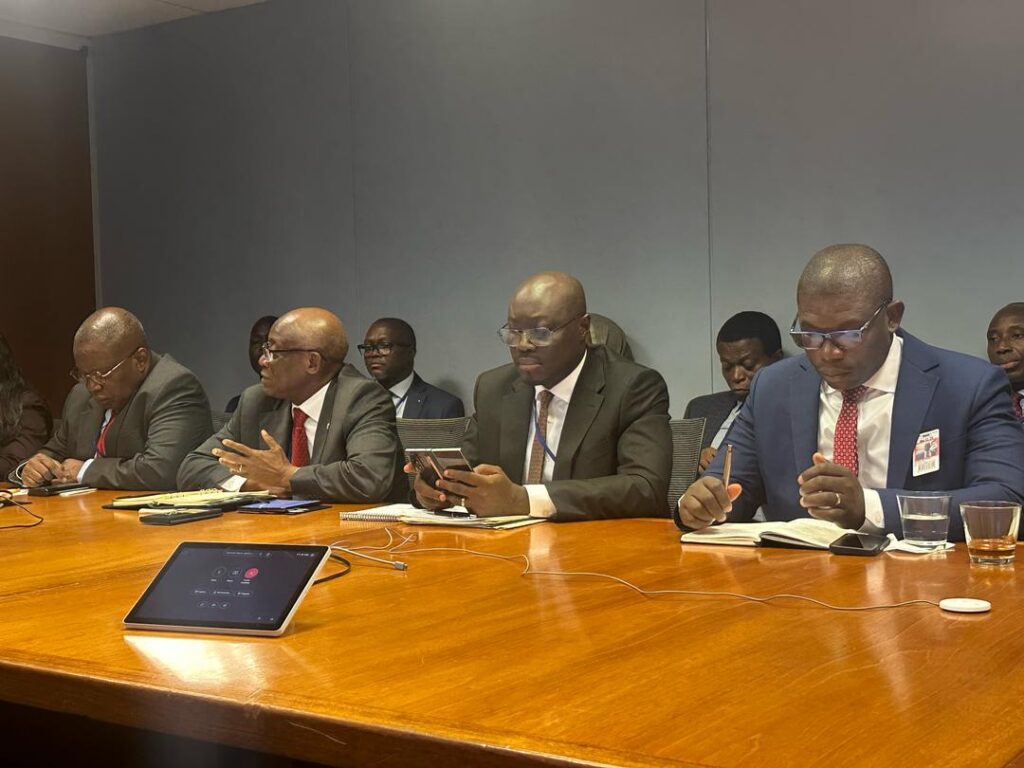
In a major step toward reforming Ghana’s power sector, the government has submitted a Legislative Instrument (LI) to Parliament aimed at institutionalizing competitive procurement for power generation. This was disclosed by Finance Minister, Dr Cassiel Ato Forson, during a deep-dive session on the Ghana Energy Compact under the World Bank’s Mission 300 initiative.
Dr. Forson said the proposed legislation is designed to address systemic inefficiencies and enhance transparency and cost-effectiveness in energy contracting.
“We have submitted the LI to Parliament to ensure that all future power plant procurements are carried out through a competitive process,” he stated. “If we are serious about fixing the deep-rooted issues in the energy sector, this is a critical first step.”
Highlighting the urgency of reform, the Minister identified the energy sector as the single biggest threat to Ghana’s economic stability, pointing to a financial deficit of approximately US$2 billion.
He attributed much of this gap to inefficiencies within the electricity value chain—particularly in distribution.
“ECG alone has the potential to cut the shortfall by half if operational inefficiencies are resolved. We cannot continue passing these costs onto the Ghanaian consumer,” Dr. Forson said.
He emphasized that the LI forms part of a wider reform agenda and demonstrates the government’s commitment to restructuring the energy sector. Urging swift action, the Minister called on Parliament to prioritize the passage and implementation of the instrument.
“This is a pivotal moment. We must act quickly. Time is of the essence,” he concluded.