Mercedes Asamani
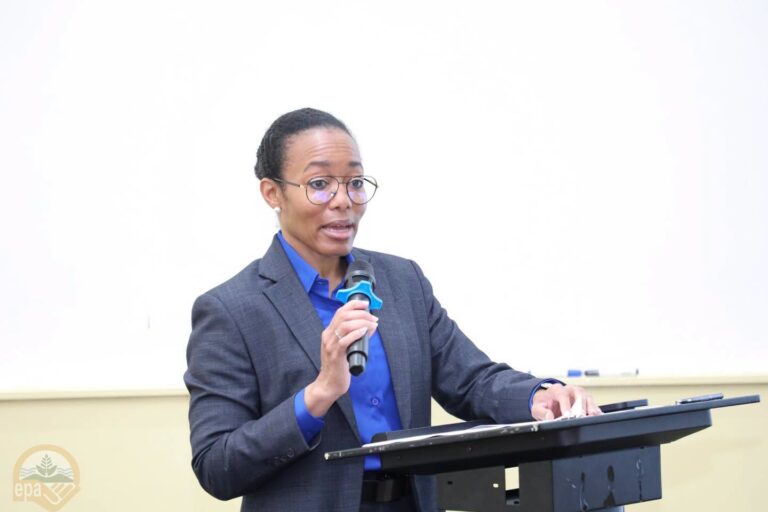
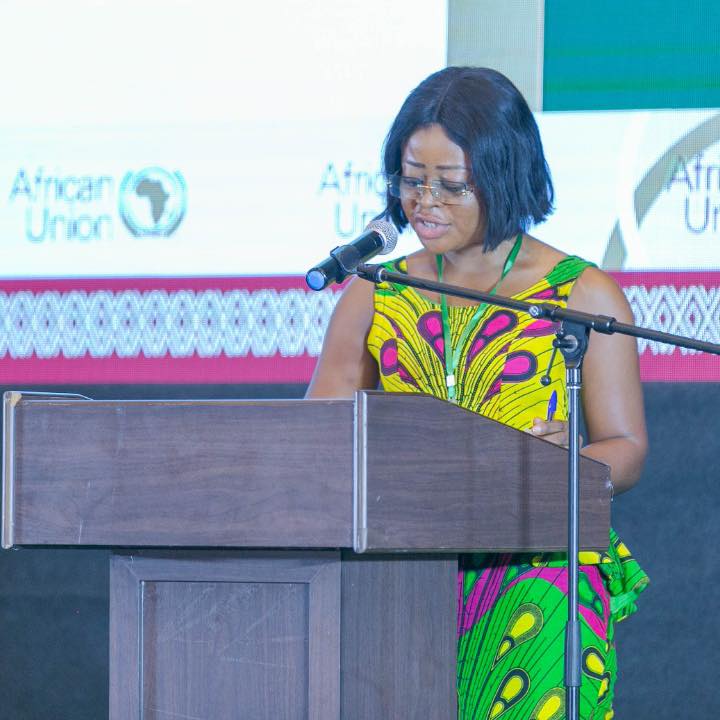
The Founder and Executive Director of GreenLead, Ms. Mercedes Rowe Asamani, has underscored the need for a socially just and inclusive transition to a circular economy if the world is to achieve true sustainability.
She made the remarks during her participation in the Yemaya “Waste to Resources” Webinar, where she represented GreenLead as part of its collaboration with the University of Environment and Sustainable Development (UESD).
The webinar, part of the Yemaya Women in Science programme funded by Erasmus+, brought together researchers and thought leaders from institutions including the Technical University of Mining and Technology in Freiberg, Germany, UESD, and the University of Mines and Technology (UMaT), Tarkwa. Discussions centred on transforming e-waste and agro-waste into valuable resources as part of a global push towards circularity.
Speaking on the social justice dimensions of waste and sustainability, Ms. Asamani, a social scientist and a doctoral researcher in Environmental and Energy Justice, argued that circular economy policies must not reinforce existing inequalities.“A true transformation towards a circular economy must be inclusive and socially just,” she said. “Socio-economic development is only sustainable when knowledge, innovation, and dignified livelihoods are accessible to all—not just a privileged few.”
She noted that waste management is a global challenge with high economic costs. In 2022, the global cost of managing waste was estimated at $989.7 billion, with projections indicating a rise to over $1.6 trillion by 2032. The United States alone spends around $200 billion annually, while Europe spends over $394 billion. These figures, Asamani said, make it unsurprising that the Global North has found ways to outsource waste disposal to the Global South—a phenomenon she referred to as toxic colonialism.
Quoting a 1991 World Bank memo by Prof. Lawrence Summers that controversially justified dumping waste in African countries, Asamani highlighted how waste colonialism has burdened Africa with not just its own growing volumes of waste but also the discarded toxic products of the developed world.
Africa generated 2.9 million metric tonnes of e-waste in 2019, much of it imported from richer countries and dumped at notorious sites like Agbogbloshie in Accra and Alaba in Nigeria. If current trends persist, Africa’s waste volumes are expected to triple by 2050 to 516 million tonnes annually.
In this context, Asamani emphasized the need for polluter-pay principles, extended producer responsibility (EPR), and justice-centred policies to support communities, build capacity, and finance sustainable solutions. She called for deeper investments in green infrastructure and innovation, along with broad-based stakeholder collaboration to create dignified jobs, especially for youth.
“The circular economy could unlock $4.5 trillion in economic growth and create six million jobs globally, many in developing countries,” she added. “But we must ensure that transition pathways do not exclude the vulnerable or reproduce the injustices of the past.”
GreenLead, the organization she leads, is committed to advocacy, research, and community action that empowers underserved populations. At the heart of its mission is the belief that environmental and economic justice must go hand in hand.“The transition to a circular economy and a sustainable future demands justice at its core,” she concluded.