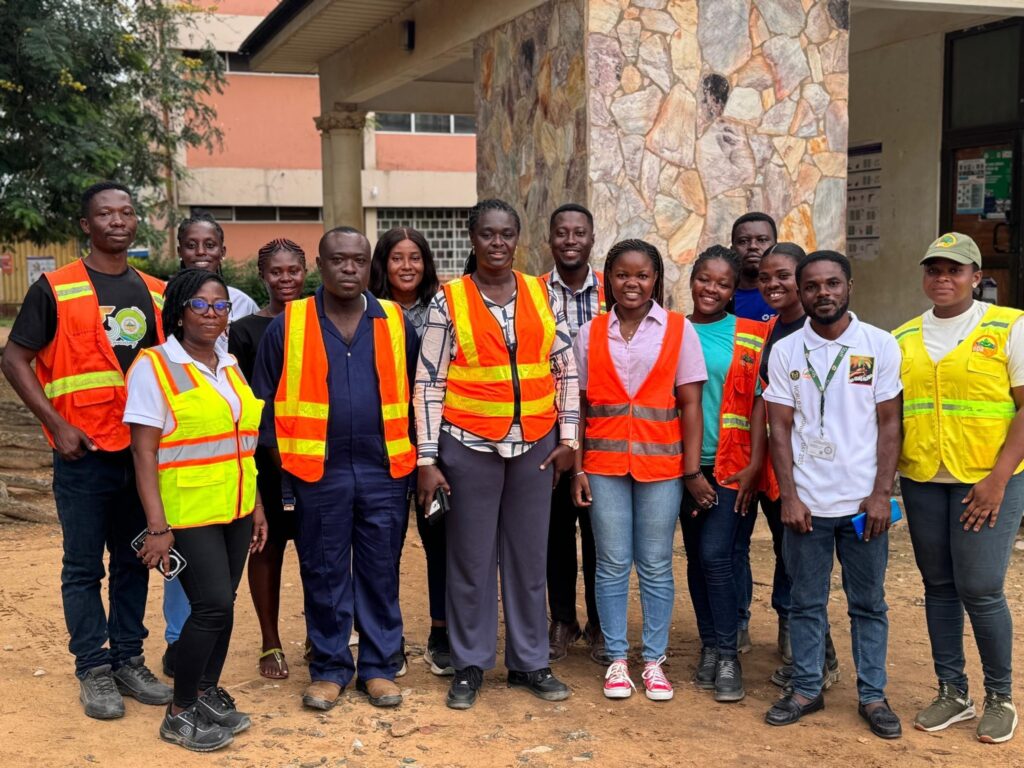
EPA boss Prof Klutse (middle) with some workers of the Authority
The Environmental Protection Authority (EPA) of Ghana has announced that it will begin nationwide compliance enforcement exercises to ensure strict adherence to the Environmental Protection Act, 2025 (Act 1124) and related regulations.
The Authority stated that the enforcement drive forms part of its mandate to protect Ghana’s natural and built environment, promote sustainable development, and curb pollution and hazardous practices across sectors.
According to the EPA, the scope of the exercise will include verification of valid environmental permits and licenses, compliance with operational conditions under Environmental Impact Assessments (EIAs), payment of mandated environmental fees, adherence to Environmental Impact Statements (EIS) and Environmental Management Plans (EMPs), proper waste management practices, and monitoring of activities classified under the new Act.
Entities targeted include hospitality and tourism facilities, industrial plants, healthcare institutions, extractive and mining operations, construction and infrastructure projects, waste management operators, landfill sites, and petroleum downstream operations such as fuel stations.
The EPA cautioned that non-compliance identified during the exercise will attract sanctions under Act 1124, ranging from administrative penalties and suspension of operations to revocation of permits and prosecution.
“All entities are reminded to ensure that their environmental permits and approvals are valid, and that they comply fully with the conditions, including timely payment of fees and submission of reports,” the Authority emphasized.
The EPA further urged members of the public to cooperate with its officers during the exercise and to report any suspected cases of environmental violations through its dedicated hotlines, email, or regional and district offices.
Reaffirming its commitment, the Authority said: “The EPA remains committed to safeguarding Ghana’s environment for present and future generations and thanks all stakeholders for their cooperation.”