Africa Extractives Media Fellowship launched in Accra

The Australian High Commissioner to Ghana, Berenice Owen-Jones, and Nana Oye Bampoe Addo, Deputy Chief of Staff, have jointly underscored the vital role of responsible journalism in promoting transparency, sustainability and accountability in Africa’s extractive sector.
Speaking at the official launch of the Africa Extractives Media Fellowship in Accra, the Australian envoy highlighted her country’s long-standing contribution to Africa’s mining industry, emphasizing responsible investment, environmental stewardship and people-to-people connections.
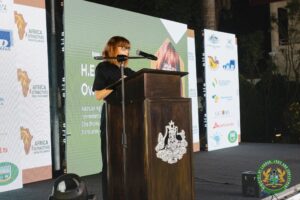
“With over 150 Australian mining companies active in at least 30 African countries and investments exceeding 60 billion Australian dollars, we’re proud of their contribution to economic growth and sustainable community development,” she said.
Owen-Jones noted that Australian companies have maintained a history of responsible investment in Ghana’s extractive sector for more than 50 years, adhering to the highest environmental and occupational safety standards.
She cited examples such as the Atlantic Lithium Project, expected to be Ghana’s first lithium mine and a major source of jobs and revenue.
She added that beyond mineral wealth, the enduring partnership between Australia and Ghana is also defined by education, skills development and cultural exchange. “Through the Australia Awards Programme, over 500 Ghanaians have undertaken study, research and professional development at top Australian institutions, gaining knowledge in public health, agriculture, renewable energy and mining,” she said.
The High Commissioner said Australia’s support for the Africa Extractives Media Fellowship reflects its commitment to capacity building, gender equality and responsible journalism. “The fellowship provides journalists with the tools and mentorship to tell nuanced, impactful stories about the extractive sector and to analyse issues such as environmental impact, resource management, technological change and economic diversification,” she stated.
She also stressed the importance of amplifying women’s voices in both the media and extractive industries. “Earlier this year, through our Direct Aid Program, we supported the DCAM Centre’s Her Press initiative, which provides women journalists with training and mentorship. Though women made up only about a quarter of total applicants to this fellowship, I’m delighted that there is strong female representation in the inaugural cohort,” she added.
Owen-Jones commended Newswire Africa for its leadership in launching the fellowship and praised the collaboration between government, academia, industry and civil society, describing it as a model of meaningful partnership. She urged the selected fellows to use the opportunity to raise the standards of responsible and fact-based journalism in reporting on Africa’s extractive industries.
Representing the Office of the Chief of Staff, Nana Oye Bampoe Addo also reaffirmed government’s commitment to strengthening accountability in natural resource governance under President John Dramani Mahama’s “Reset Agenda.” She noted that while Africa’s extractive sector contributes significantly to GDP and export earnings, it continues to suffer major losses due to illicit financial flows.
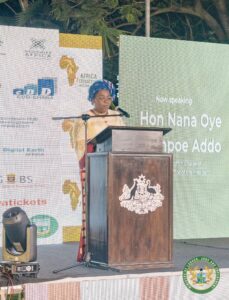
“Across Africa, citizens are increasingly demanding transparency and accountability in the management of our natural resources. The extractive sector accounts for about 70 percent of Africa’s export earnings, yet the continent loses over 40 billion dollars annually to illicit financial flows,” she said.
She outlined ongoing reforms under Ghana’s reset agenda aimed at restoring environmental integrity and ensuring that the nation’s resources benefit all Ghanaians. These include the establishment of the Ghana Gold Board to regulate gold trading and exports, the creation of the National Anti-Illegal Mining Operations Secretariat, and the introduction of the Responsible Cooperative Mining and Skills Development Programme to promote sustainable community mining and land reclamation.
“The extractive sector cannot be left to chance—it must be regulated, monitored and reported on with precision. Journalists are not just reporters; they are vanguards of resource governance,” she said.

She called on the new fellows to see themselves as partners in accountability and guardians of the public interest.
“Every story you publish, every investigation you conduct, and every concession you uncover contributes to Ghana’s national accountability. Let this fellowship mark a new social contract between state institutions and the media—one rooted in truth, vigilance, ethical mining and shared responsibility,” she concluded.
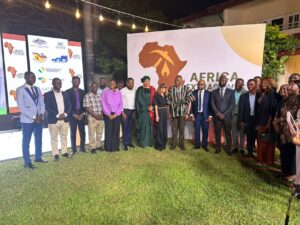
The Africa Extractives Media Fellowship, an initiative by Newswire Africa with support from the Australian Government, seeks to strengthen journalistic capacity in reporting on Africa’s extractive industries.
It focuses on ethical storytelling, environmental accountability, gender equality and governance reform—empowering journalists to become catalysts for transparency and sustainable development across the continent.
About thirty participants are taken part in the maiden edition of the fellowship which will subsequently rolled out in Southern and Eastern Africa.