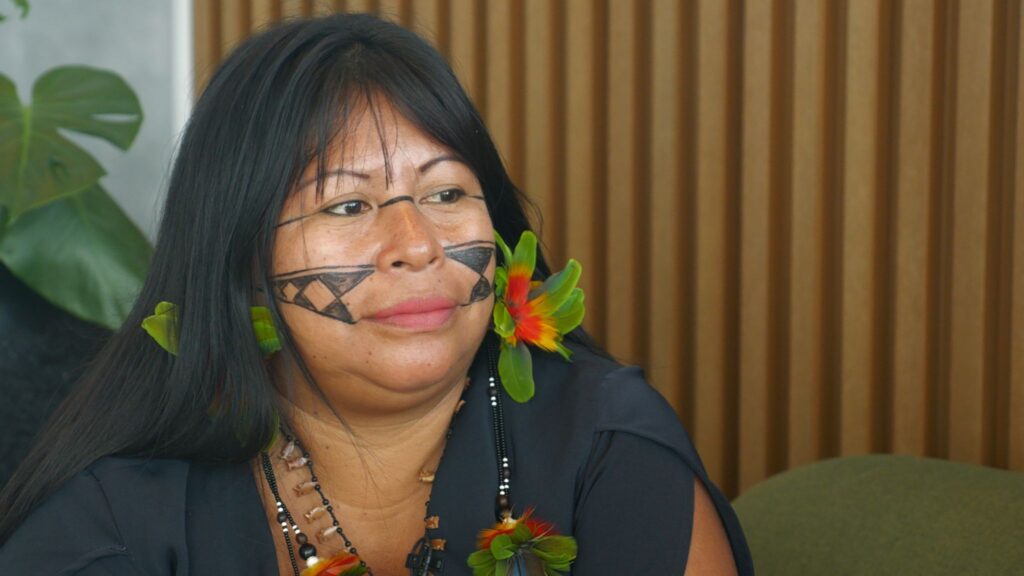
The Munduruku people of Brazil are battling a surge in miscarriages and the loss of sight and hearing—symptoms linked to escalating mercury poisoning caused by illegal gold mining, a community leader has told Sky News.
“Many women end up losing their children,” says Alessandra Korap, a prominent Munduruku leader from the Brazilian Amazon. “Either they can’t get pregnant, or they lose the foetus over time. Women are now afraid of getting pregnant.”
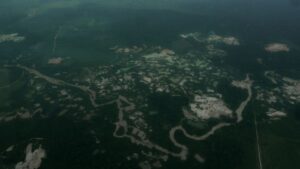
For centuries, the Munduruku have lived across what is now the Amazonas and Pará regions of northern Brazil, particularly around the Tapajós River. But in recent decades, villagers have been plagued by mysterious symptoms: children unable to lift their heads, adults losing mobility, muscle tremors, memory loss, deteriorating vision and hearing, and repeated miscarriages.
Now, after years of uncertainty, the cause is becoming clear.
The Tapajós River, the community’s lifeline, is contaminated with highly toxic mercury.
‘Very likely mercury is to blame’
Mercury poisoning is notoriously difficult to diagnose because its symptoms mimic degenerative illnesses such as Parkinson’s and Alzheimer’s disease, explains Gabriela Arrifano, a professor of mercury toxicology at the Federal University of Pará.
“But there is now enough evidence to relate the signs and symptoms found in people exposed to mercury,” she says. “It is very likely mercury is to blame for many of the symptoms in riverside Amazon communities.”
Researchers say there is no doubt about its source: illegal gold mining.
“We have robust evidence that mercury emissions come from illegal gold mining activity,” Prof Arrifano says from her lab, where she analyses hair and blood samples from affected communities.
Alessandra recalls that when researchers first arrived, she “didn’t even know what mercury was”.
Illegal gold mining and organised crime
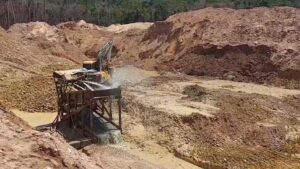
Gold mining is outlawed in Indigenous territories in Brazil, yet vast areas are now pockmarked with red and orange craters carved out by illicit miners. The trend has been fuelled by soaring global gold prices.

Illegal gold operations are deeply enmeshed with organised crime, sharing clandestine runways and roads, and using gold to launder drug money.
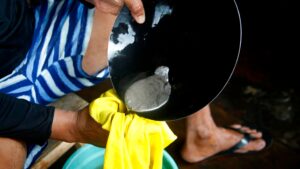
To extract gold, miners churn up riverbeds and mix the sediment with mercury, which binds to gold. The waste then seeps into rivers, soil, and the air.

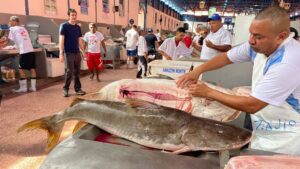
Mercury accumulates in river fish—staples of the Munduruku diet—and eventually enters the bloodstream and the brain, where it can cause lesions. Even low-level exposure disrupts reproductive, neurological, and sensory systems.
Prof Arrifano says mercury shrinks a person’s visual field, wiping out peripheral vision—“a devastating impact for people who depend on their senses in the forest.”
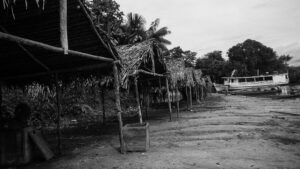
Alessandra’s own symptoms include tingling in her hands, brain fog, and forgetfulness. Her niece, however, cannot walk or talk—damage she suspects stems from her grandfather’s years as a fisherman and the heavy consumption of contaminated fish by her mother during pregnancy.

A worsening crisis amid rising gold prices
President Luiz Inácio Lula da Silva’s administration has launched a major crackdown on illegal mining. IBAMA, the environmental protection agency, has been blowing up mining equipment, torching illegal camps, and freezing assets.
In the Yanomami Indigenous Territory, active illegal mining areas have reportedly fallen by 94% between 2023 and 2025. But many miners have simply moved elsewhere.
“We expected the activity to decline, and initially it did,” says Adalberto Maluf, Brazil’s national secretary for water resources. “But the price of gold keeps rising—it makes the fight harder.”
Across South America and Africa, illegal mining is spreading as investors turn to gold as a safe haven amid global economic and geopolitical tensions. This, experts warn, is drawing new organised crime groups into the trade.

‘If we don’t fight, we are crushed’
The Munduruku have a long history of resisting intruders on their land. This year, they seized the global spotlight during Brazil’s hosting of the UN climate summit, COP30.
Midway through the conference, they staged a peaceful blockade, forcing a meeting with officials and ultimately securing legal recognition of two additional parcels of their territory.
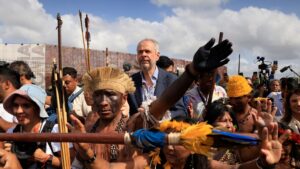
“When the land is demarcated, it’s easier to pressure the government to protect it,” Alessandra explains. “If we don’t fight, we are crushed, we are taken over.”
But she acknowledges that they are battling powerful forces.
“When the price of gold increases, everyone wants to invade our land—to pollute the water, to destroy the forest—because they want the gold to sell to other countries.”
“But those buyers don’t know what is happening to our bodies, to our lives,” she says.
Source: Sky News