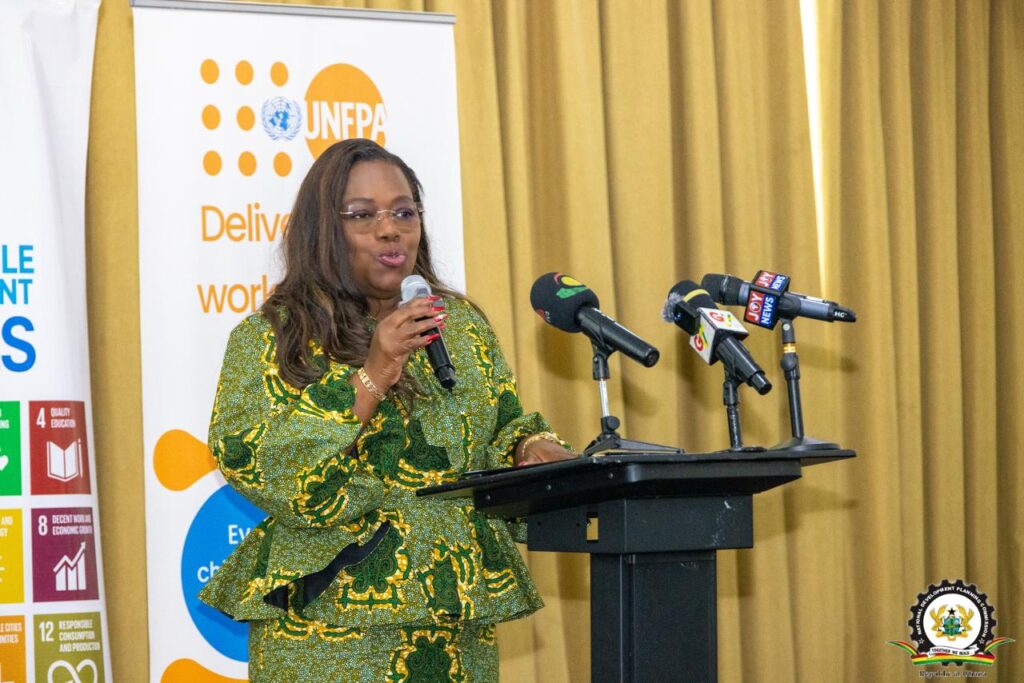
Nana Oye Bampoe Addo Deputy Chief of Staff-Administration
The Deputy Chief of Staff, Nana Oye Bampoe Addo, has stressed that reducing maternal deaths in Ghana requires action far beyond hospitals and clinics, pointing to the complex social, infrastructural and systemic factors driving the country’s persistent maternal mortality crisis.
According to her, maternal health outcomes are shaped not only by the quality of care provided by health professionals, but also by the state of road networks, emergency transport systems, blood supply chains, procurement processes, financing mechanisms, community leadership and accountability across all levels of governance.
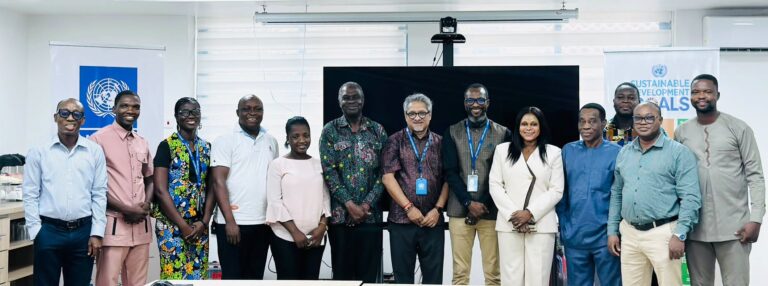
She made these remarks at a high-level roundtable on maternal mortality held at the Alisa Hotel in Accra on Tuesday, 23 December 2025, under the theme “No Woman Should Lose Her Life to Give a Life.” The meeting brought together senior government officials, development partners and civil society organisations to identify pathways for accelerating reductions in maternal deaths nationwide.
Highlighting the urgency of the situation, Oye Bampoe Addo disclosed that nearly 900 women have died from pregnancy- and childbirth-related complications in 2025 alone, a figure she described as evidence that incremental progress is no longer sufficient.

“The data is clear, and the human stories behind the data are even more compelling. Progress has stalled, and small, gradual improvements will not reverse this trend,” she said, characterising maternal mortality as a national emergency that demands coordinated, cross-sectoral action.
She emphasised that responsibility for saving mothers’ lives extends to district assemblies, road contractors, finance officers, traditional authorities and community leaders, noting that delays in transport, weak blood supply systems and poor accountability directly contribute to preventable deaths.
“Saving mothers’ lives is a whole-of-society responsibility,” she said, urging stakeholders to recognise that governance failures and infrastructure gaps can be just as fatal as clinical shortcomings.
The Deputy Chief of Staff also acknowledged ongoing government interventions aimed at improving maternal health outcomes.

These include the uncapping of the National Health Insurance Scheme to ensure predictable and sustainable funding, the ‘Mahama Cares’ programme targeting vulnerable populations, and nationwide free health screenings led by the First Lady, Mrs. Lordina Dramani Mahama, through the Lordina Foundation, which have helped identify high-risk pregnancies early at the community level.
She called on participants to translate dialogue into concrete and measurable action, noting that the success of the roundtable would be judged not by commitments made but by lives saved.
Oye Bampoe Addo commended the support of the United Nations Population Fund (UNFPA), the National Development Planning Commission and the SDGs Advisory Unit, describing their collaboration as critical to sustaining momentum and ensuring accountability.
“Saving women’s lives is not charity; it is justice. When women survive childbirth, families thrive, communities prosper and the nation grows,” she added.
Dr. Hafez Adam Taher, Director of Technical Coordination and Health Planning, who spoke on behalf of the Minister for Health, Kwabena Mintah Akandoh, outlined specific interventions being implemented to strengthen the health system’s response to maternal mortality.
He noted that while challenges remain, targeted measures are underway to address both clinical and systemic gaps. These include strengthening community-level maternal care through expanded primary healthcare services, retooling hospitals and tertiary facilities to improve emergency obstetric care, expanding the availability of skilled personnel in obstetrics, gynaecology and anaesthesia, and improving referral systems to reduce delays through better transport, communication and coordination.
Dr. Taher also highlighted the Ghana Medical Trust Fund under the ‘Mahama Cares’ initiative as a mechanism for securing sustainable financing, alongside efforts to improve blood supply systems and emergency equipment availability to save lives during critical “golden hour” emergencies.
“These interventions are designed to convert political commitment into tangible results by strengthening infrastructure, workforce capacity and functional referral systems,” he said.
He concluded by commending the Office of the President and development partners for their collaboration, describing the roundtable as a key step toward consolidating solutions and accelerating maternal mortality reduction.
The engagement, held as part of a Presidential Initiative on Maternal Emergency Response, signals a shift from a health sector–only response to a whole-of-society approach in tackling one of Ghana’s most pressing development challenges.