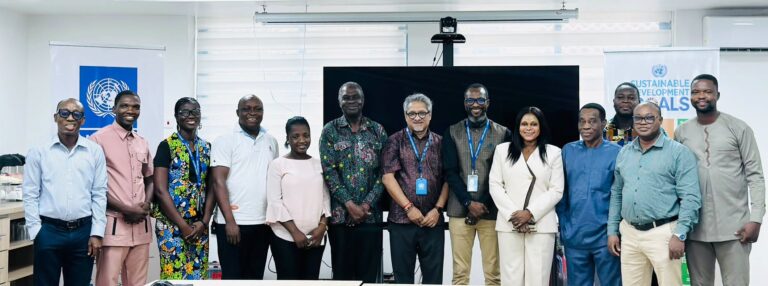
The Ministry of Fisheries and Aquaculture Development (MoFAD) has hosted the United Nations Working Group on the Rights of Peasants and Other People Working in Rural Areas as part of efforts to review Ghana’s progress in protecting the livelihoods of coastal and rural communities.
The meeting formed part of the UN’s official mission to assess Ghana’s implementation of the UN Declaration on the Rights of Peasants and Rural Workers.
Representing the Sector Minister, Emelia Arthur, the Director of Administration at the Ministry, Madam Rosemary Abbey, highlighted the importance of the newly enacted Fisheries and Aquaculture Act, 2025 (Act 1146) in strengthening governance within the sector.

She explained that the law is intended to combat illegal fishing practices, including light fishing, the use of chemicals, and monofilament nets, while promoting the sustainable exploitation of marine resources through ecosystem-based management.
Madam Abbey also noted that the Act seeks to enhance the participation of local fishing communities in decision-making processes affecting the industry.
The UN delegation commended Ghana’s efforts to tackle Illegal, Unreported and Unregulated (IUU) fishing, with discussions focusing on enforcement of the Inshore Exclusion Zone, which is aimed at protecting small-scale fishers from industrial trawlers.
Although acknowledging existing resource constraints, Madam Abbey said the Ministry continues to strengthen enforcement through the Fisheries Enforcement Unit and Landing Beach Enforcement Committees, which support intelligence gathering, surveillance, and community-led monitoring activities.
She added that the Fisheries Commission is currently developing additional regulations on fishing gear mesh sizes, fishing seasons, and landing requirements to support long-term sustainability in the sector.
The UN Working Group praised the collaboration between government institutions and stakeholders, describing the fisheries sector as a key pillar of Ghana’s rural economy.
The Ministry reaffirmed its commitment to ensuring that growth in the aquaculture industry does not undermine the rights and welfare of rural workers and coastal communities who depend on the sector for their livelihoods.