The Executive Director of the ECOWAS Federation of Chambers of Mines (EFEDCOM), Ing. Dr. Kenneth Ashigbey, has called on member Chambers to explore the establishment of a regional cyanide manufacturing plant to reduce West Africa’s dependence on imported mining inputs and promote local manufacturing.
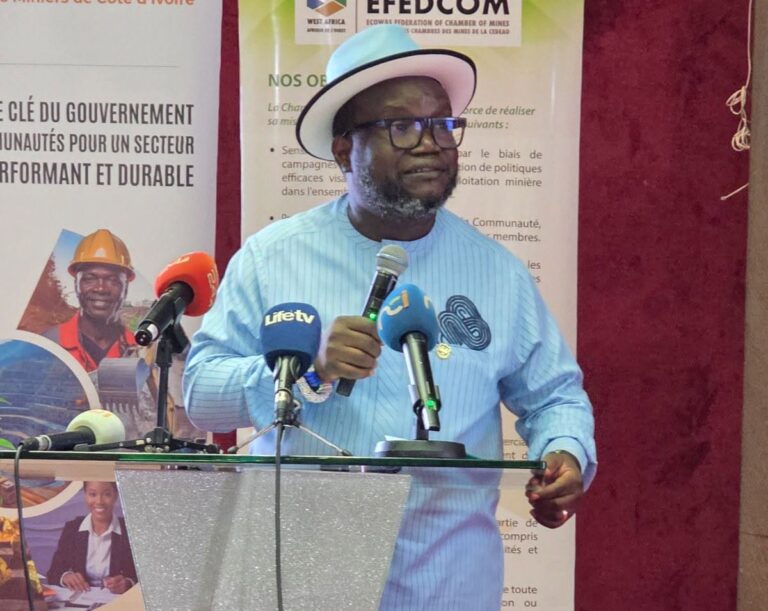
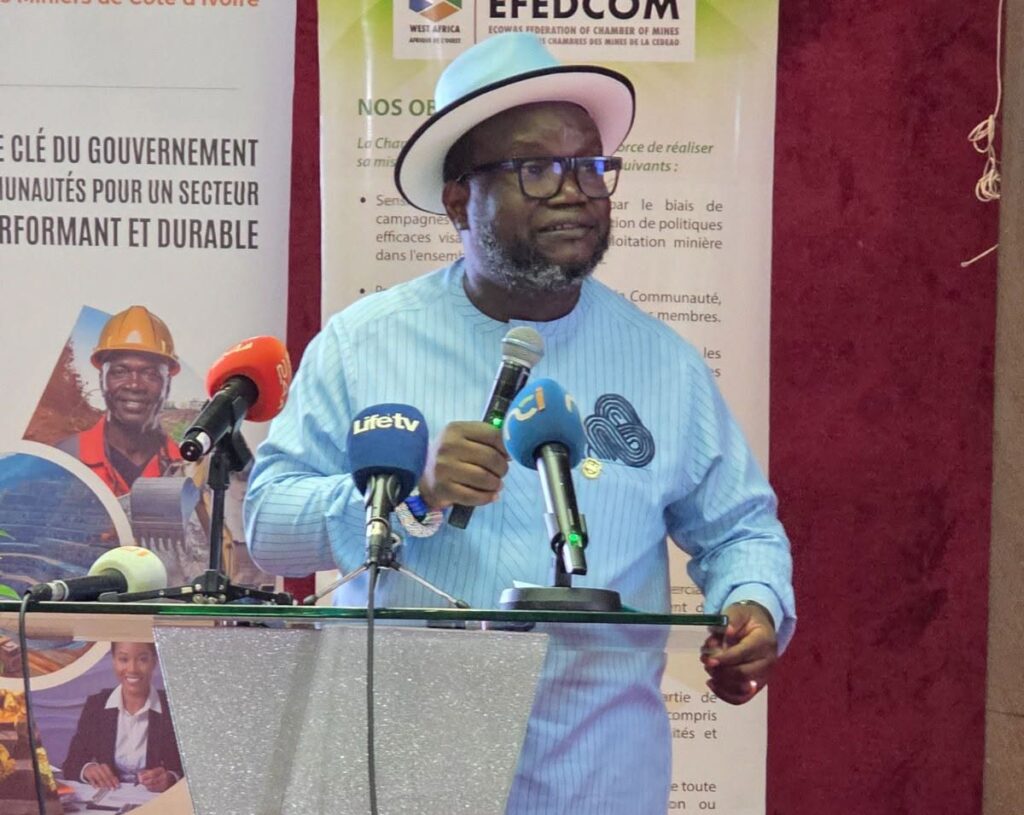
Speaking at EFEDCOM’s 7th Annual General Meeting in Abidjan, Dr. Ashigbey said the proposal emerged from a cyanide management training programme organised by the Federation in partnership with the International Cyanide Management Institute (ICMI).
“During the training, EFEDCOM was challenged to look into setting up a cyanide manufacturing plant in the subregion. I promised them that I would bring it to your attention. We need to look into it and plan to achieve that collectively,” he told delegates.
The AGM was held under the theme, “Transforming West Africa’s Mining Potential into a Driver of National Industrialisation and Shared Prosperity.”
Dr. Ashigbey said West Africa’s deposits of gold, bauxite, manganese and iron ore could support a broader industrial base. However, he noted that the region continued to export much of its mineral output while importing many of the goods and services required by its mining industry.
“For too long, too much of our story has ended at the point of extraction and export. We ship out mineral wealth, and then import many of the goods, inputs and services our mines need to operate. We can, and must, change that story,” he said.
He said EFEDCOM could help member Chambers identify common demand, connect manufacturers with mining companies and develop cross-border markets for mining inputs and services.
He identified opportunities in machinery components, equipment fabrication, engineering, logistics, laboratory services and equipment maintenance.
On gold refining and value addition, Dr. Ashigbey said Ghana’s large-scale mining companies, through the Ghana Chamber of Mines, were working with the Bank of Ghana, the Ghana Gold Board, the Ministry of Lands and Natural Resources and the Ministry of Finance to expand domestic gold refining.
He said the Royal Ghana Gold Refinery had begun processing responsibly sourced gold from large-scale mines, with the long-term goal of meeting the requirements of the London Bullion Market Association (LBMA).
He also called for regional refining capacity to serve producers of responsibly sourced gold across West Africa, alongside investment in downstream industries such as jewellery manufacturing.
Dr. Ashigbey urged member countries to strengthen enforcement against illegal mining, protect water bodies and support responsible artisanal and small-scale mining.
He also asked EFEDCOM to consider a separate proposal raised during the cyanide management training to make certification under the International Cyanide Management Code mandatory in West African countries.
He said industrial investment would depend on reliable energy, competitive infrastructure, skilled workers and predictable regulation. Governments, he added, expected fair returns and meaningful local participation, while investors needed transparent rules to guide long-term investment decisions.
He urged member Chambers to identify viable cross-border supply chains, agree on common investment and regional trade priorities, and deepen partnerships with governments, manufacturers and training institutions.
“The true measure of our mineral wealth will not be only the ounces and tonnes we produce, or the revenues we earn. It will also be the factories we help establish, the skills we develop, the businesses we grow and the communities whose lives we improve,” he said.