Court reverses controversial ruling on excavators seized from illegal miners
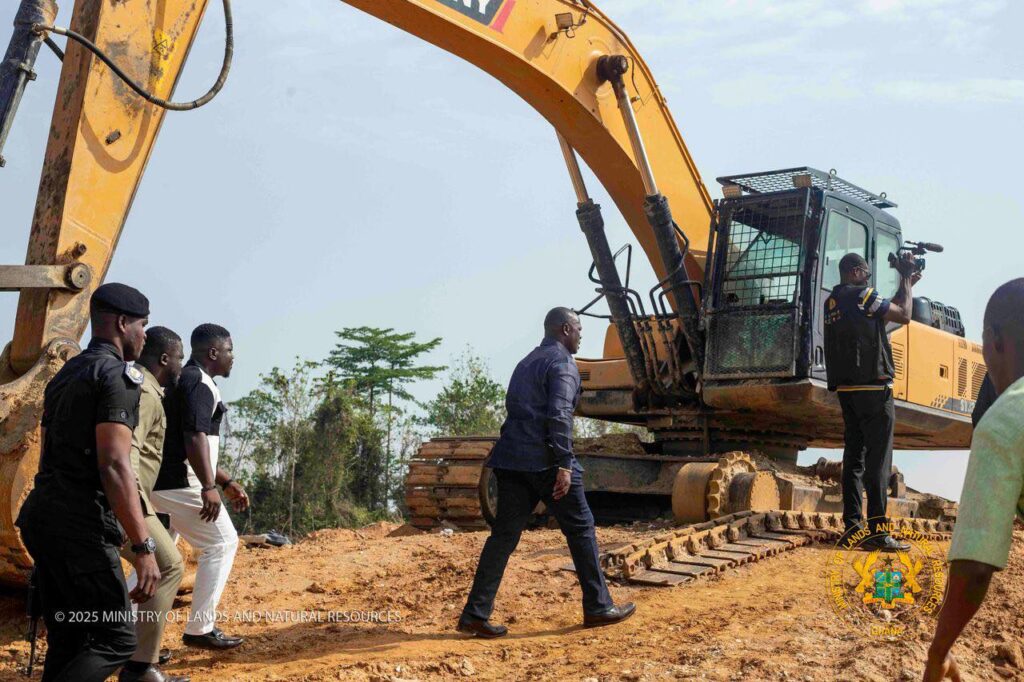
In a significant development in Ghana’s fight against illegal mining, the Minister of Lands and Natural Resources, Emmanuel Armah-Kofi Buah, has announced that the court has rescinded its controversial decision to release two excavators seized from illegal miners operating in the Boin River Forest Reserve.
The initial ruling by the Enchi court on May 28, 2025, which ordered the return of the excavators to the miners, sparked widespread public outcry and concerns over its implications for environmental conservation and law enforcement.
The decision was seen as a major setback in the government’s ongoing efforts to combat illegal mining, commonly known as galamsey.
However, following intense pressure from the public, environmental advocates, and legal interventions by the Forestry Commission, the court has overturned its earlier ruling, effectively nullifying the decision to return the equipment to the miners.
Minister Armah-Kofi Buah hailed this reversal as a victory for collaborative efforts in the fight against illegal mining. “Through the concerted efforts and voices of the citizens and the legal department of the Forestry Commission, I am happy to note that the court has rescinded the earlier ruling and declared it void,” he said.
“This is a testament to the true power of the collaborative approach we are calling for in this fight. It involves multiple agencies and institutions working together to ensure that our laws are upheld and our natural resources are protected,” he added.
Background of the Case
The controversy began on March 23, 2025, when a joint operation by the Forestry Commission and the Enchi Police led to the arrest of four individuals engaged in illegal mining within the Boin River Forest Reserve.
During the operation, two excavators were discovered at the site and impounded as part of enforcement measures to prevent further environmental destruction. The suspects were later arraigned before the Enchi court, where it was expected that their equipment would be confiscated in line with Ghana’s Forest Protection Act of 1974.
To the shock of many, however, the court not only granted bail to the suspects but also ordered the release of the seized excavators, directing the Forestry Commission to allow the miners to move the machines to any location of their choosing.
This ruling raised alarms among environmental activists and legal experts, who questioned its impact on Ghana’s already fragile fight against illegal mining. Many argued that the decision undermined the Forest Protection Act, which strictly prohibits mining in forest reserves and grants authorities the power to seize and forfeit equipment used in such activities.
The backlash led to swift legal action from the Forestry Commission and renewed calls for the judiciary to align its decisions with national conservation goals.
Victory for Environmental Protection
With the latest decision to rescind the ruling, government officials and environmental advocates see this as a turning point in Ghana’s fight against galamsey. Minister Armah-Kofi Buah reiterated the government’s commitment to enforcing environmental laws and holding illegal miners accountable.
He stressed that the fight against illegal mining is not one that can be won by a single institution but requires a united front from all relevant stakeholders, including law enforcement agencies, the judiciary, civil society, and the general public.