
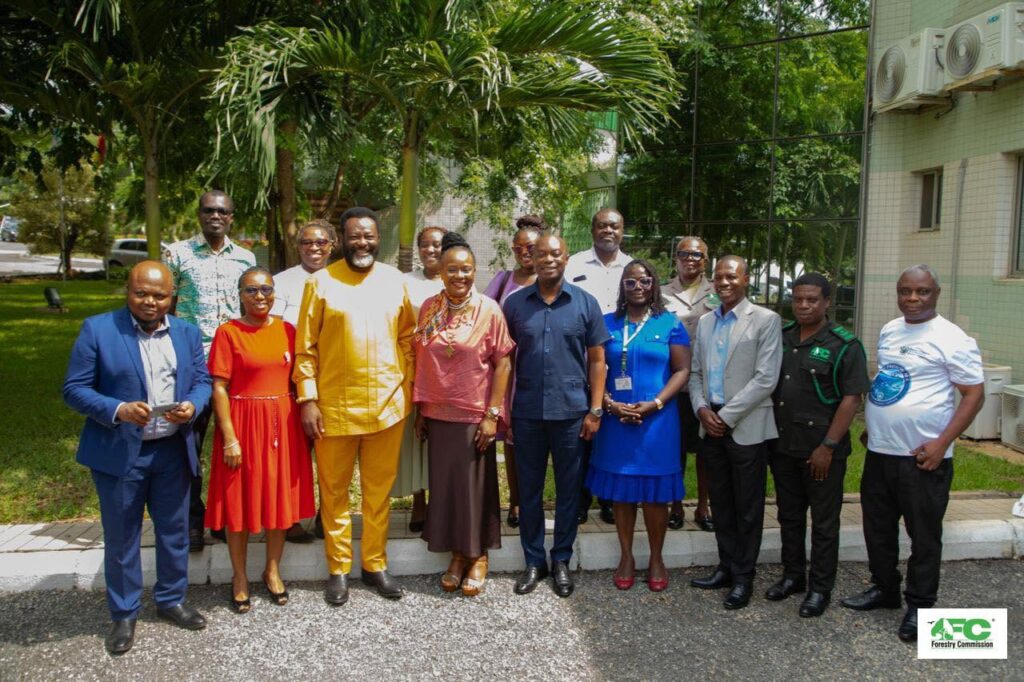
The Forestry Commission (FC) has hosted the Secretary General of the Convention on Wetlands, Dr. Musonda Mumba, as part of efforts to strengthen collaboration on wetland conservation and assess Ghana’s implementation of the Convention.
Dr. Mumba, accompanied by a representative of the Convention Secretariat, Mr. Zebedee Njisuh, and officials of the Environmental Protection Agency (EPA), was in Ghana on a working visit to assess the country’s performance in wetland conservation and management while exploring opportunities to enhance cooperation between the Convention Secretariat and Ghana.
The delegation was received by the Chief Executive of the Forestry Commission, Dr. Hugh C. A. Brown, together with the Acting Deputy Chief Executive, Timothy A. Awontiirim; the Executive Director of the Wildlife Division, Dr. Joseph Boakye; and other senior officials of the Commission.
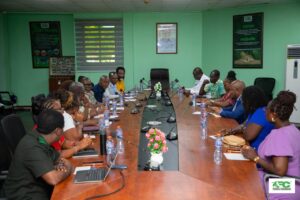
The visit aimed to assess the status of wetland conservation and management in Ghana, review the country’s implementation of the Convention on Wetlands, engage with the Forestry Commission’s management and technical staff on wetland governance, and strengthen collaboration between Ghana and the Convention Secretariat.
Welcoming the delegation, Awontiirim expressed the Commission’s appreciation for the visit and expressed confidence that the discussions would further advance Ghana’s wetland conservation agenda.
As part of the engagement, the Operations Manager for Wetlands, Mr. Eric Atta-Kusi, presented an overview of Ghana’s wetland resources, highlighting the country’s policy framework, management interventions and major conservation achievements. He emphasized the vital role wetlands play in biodiversity conservation, climate change adaptation, fisheries production, flood mitigation and sustaining the livelihoods of many local communities.
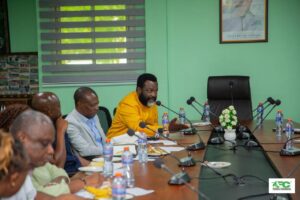
He also noted that Ghana is home to several internationally recognised Ramsar Sites and continues to implement measures to ensure their protection and sustainable use.
Addressing the meeting, Dr. Mumba commended Ghana for its commitment to wetland conservation and praised the Forestry Commission and its partners for safeguarding the country’s wetland ecosystems.
She noted that community participation has significantly contributed to wetland conservation efforts and stressed the need to strengthen data collection and reporting systems to support evidence-based decision-making and improve Ghana’s international reporting obligations.
Dr. Mumba also encouraged the integration of wetlands into national development planning and climate change strategies.
The Secretary General further underscored the importance of documenting indigenous knowledge and traditional conservation practices through active community participation to preserve them for future generations. She also called for increased environmental education, particularly among children and young people, to foster a culture of wetland conservation.
The discussions highlighted several challenges affecting effective wetland management in Ghana, with participants proposing practical recommendations to strengthen conservation and sustainable management efforts.
Bringing the meeting to a close, the Executive Director of the Wildlife Division, Dr. Joseph Boakye, thanked Dr. Mumba and her delegation for the visit and reaffirmed the Forestry Commission’s commitment to working closely with the Convention Secretariat and other stakeholders to promote the conservation and sustainable use of Ghana’s wetlands in line with the objectives of the Convention on Wetlands.
I hope there were frank discussions about how the authorities often stand idly by whilst unscrupulous individuals fill in and build on wetlands, only for those structures to be ‘regularised’ later. Or there’s the occasional on-and-off demolition drives, instead of a consistent, firm approach that sends a clear message: it’s simply not worth building illegally on wetlands.