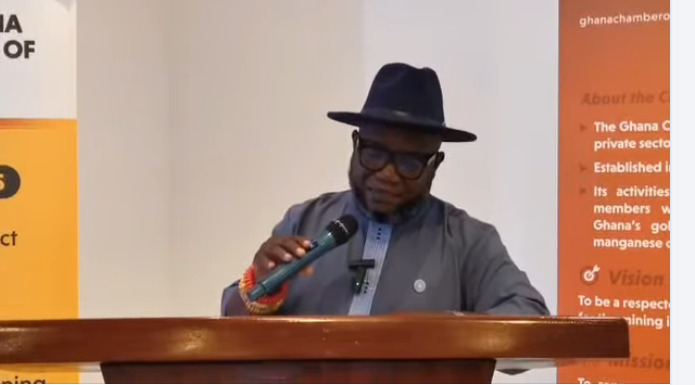
The Chief Executive Officer of the Ghana Chamber of Mines, Ing. Dr. Kenneth Ashigbey, has issued a clarion call to the judiciary to expedite the prosecution of illegal mining cases and fully enforce the provisions of Ghana’s mining and land laws.
He delivered these remarks during a high-level judicial training workshop on the Land Act, 2020 (Act 1036) and the Minerals and Mining Act, 2006 (Act 703), held in Takoradi.
In a stirring speech, Dr. Ashigbey described the scourge of illegal mining—locally known as galamsey—as “ecocide with debilitating consequences,” citing the destruction of water bodies, farmlands, and the health of entire communities. He stressed that the environmental and social costs of illegal mining cannot be ignored and warned that slow judicial processes threaten not only justice but also national development.
“We are at a critical juncture where the urgency of combating illegal mining cannot be overstated,” he said. “Justice delayed in this matter is not merely justice denied—it is national development destroyed and public confidence eroded.”
Dr. Ashigbey called on members of the judiciary to treat mining-related cases, particularly those involving environmental degradation and regulatory violations, with the seriousness and urgency they deserve. He emphasized the need for swift adjudication and the establishment of deterrent precedents to reinforce lawful conduct in the mining sector.
Acknowledging the challenges in prosecuting illegal mining offenses—including evidentiary hurdles and coordination gaps among state agencies—he highlighted the importance of continuous judicial education. “That is why programs such as this are vital. They lay the foundation for judicial consistency, enhance interpretive clarity, and promote stronger collaboration with regulators and the mining industry,” he noted.
Dr. Ashigbey reiterated the Chamber of Mines’ commitment to supporting the rule of law through information sharing, capacity building, and strategic collaboration. He underscored the Chamber’s vision of a transparent, legal, and sustainable mining industry that delivers long-term value to Ghana and its citizens.
“The passage of Acts 1036 and the amendment of Act 703 signify Ghana’s determination to reform its legal architecture. But laws alone are not enough. Their consistent and effective application is what brings them to life,” he emphasized.
He concluded by expressing gratitude to the Judicial Training Institute and all participants, commending their dedication to strengthening legal and institutional frameworks that protect Ghana’s natural resources and communities.
“Together, let us forge a legal and institutional framework that safeguards our resources, empowers our communities, and ensures prosperity for all our citizens,” Dr. Ashigbey said.
The training session brought together judges, legal practitioners, and mining sector stakeholders, aimed at deepening understanding of Ghana’s legal landscape as it relates to land administration and mining governance.