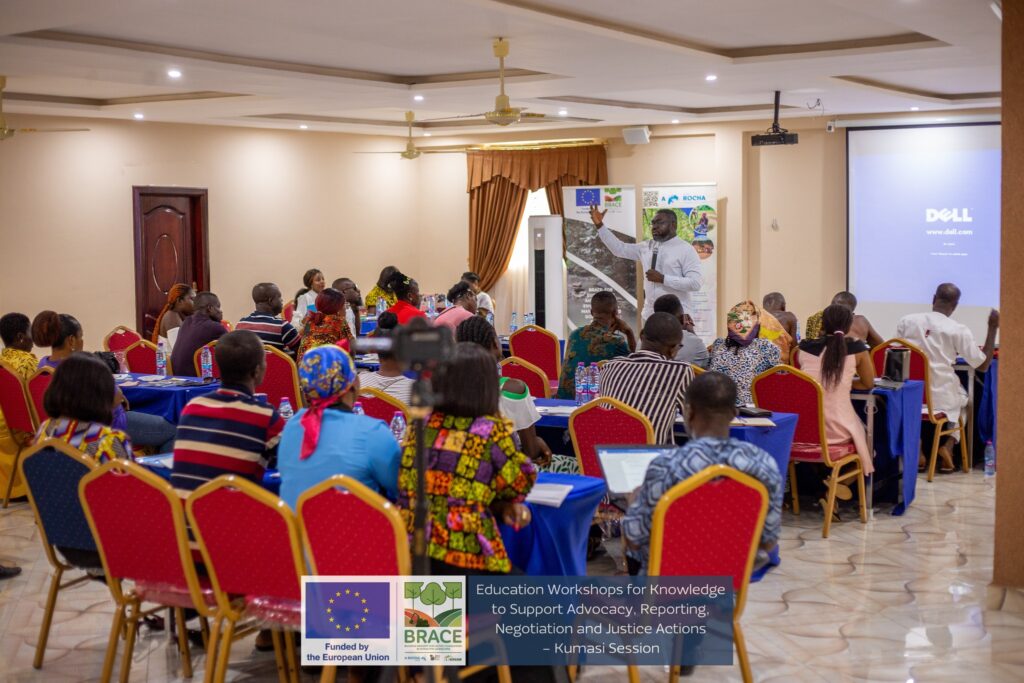
The BRACE Project is deepening its grassroots impact across Ghana with a fresh wave of training workshops aimed at equipping local communities to demand greater transparency and accountability in the country’s extractive sector.
Most recently, the project held a session in Ejisu, in the Ashanti Region, where stakeholders gathered to build legal and civic capacity in the face of rising threats from illegal mining and environmental degradation.
Facilitated by lawyers from Merton & Everett LLP, the training brought together traditional leaders, farmers, youth groups, and other community actors. It provided a platform for participants to better understand the legal tools available to defend their lands, forests, and water bodies from exploitation.
The BRACE initiative is also being rolled out in communities in the Western and Ahafo Regions—areas that continue to bear the brunt of destructive mining practices.
Across these regions, the training is helping residents grasp complex but vital issues such as environmental and human rights law, Ghana’s extractive sector regulations, and how compensation mechanisms work when land or natural resources are damaged.
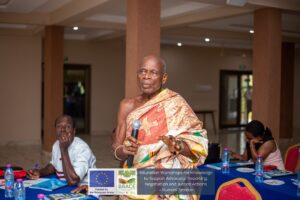
One of the key themes emphasized during the sessions is the right to Free, Prior and Informed Consent (FPIC), a legal principle that allows communities to participate meaningfully in decisions about projects that affect their land and livelihoods. Participants were also briefed on the mandates and responsibilities of Ghana’s regulatory bodies, including the Environmental Protection Agency, the Minerals Commission, and the Lands Commission.
In Ejisu and other areas, the training was welcomed as timely and empowering. Participants expressed renewed confidence in their ability to advocate for themselves and hold both state and corporate actors accountable. A local resident remarked, “Now we know how to ask the right questions, and where to go when our rights are being ignored.”
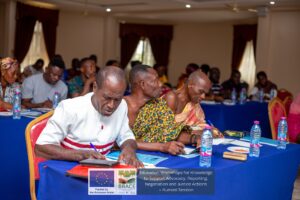
As the BRACE Project continues to expand its reach, its focus remains clear: equipping communities with the knowledge and tools to protect their environment, uphold their rights, and ensure that Ghana’s natural wealth benefits the people on whose land it is found.