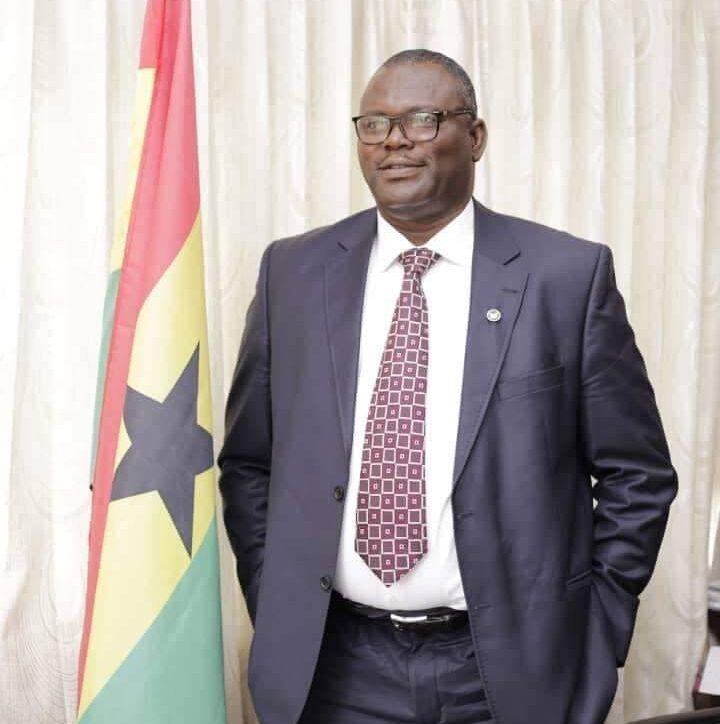
Dr. Johnson Asiama, BoG Governor
Governor of the Bank of Ghana, Dr Johnson P. Asiama, has made a strong appeal to the private sector to play an active role in sustaining the country’s recent foreign exchange (forex) gains. Speaking at the Graphic Business/Stanbic Bank Breakfast Meeting in Accra on Tuesday, July 15, 2025, Dr Asiama emphasized that businesses must embed forex discipline into their strategies, reinvest export proceeds locally, and support efforts to strengthen the dominance of the Cedi in the economy.
The high-level event, held under the theme “Sustaining Forex Gains: Business and Economic Impact,” provided a platform for deep reflection on how the recent stability of the Ghanaian currency can be translated into meaningful outcomes for the broader economy. Dr. Asiama’s address was both a celebration of progress and a caution against complacency.
“Stability in the foreign exchange market is not an end in itself,” Dr. Asiama said. “It is a means—to lower inflation, encourage investment, improve planning, and build an economy that serves its people more predictably and inclusively.”
He noted that while the Cedi had appreciated by over 42% year-to-date, and Ghana’s gross international reserves now stood at $11.1 billion, the true test of macroeconomic recovery lies in whether these gains can be sustained and made to work for businesses and ordinary Ghanaians.
According to the Governor, the central bank has done its part—through tight monetary policy, coordinated fiscal reforms, and robust foreign exchange interventions. However, sustaining these achievements now requires the full cooperation of the private sector.
He urged Ghanaian exporters to retain and reinvest their earnings within the local economy, not merely as a patriotic gesture, but as a strategic choice for long-term profitability. Firms that invoice in Cedis or hedge their foreign exchange positions, he said, help to create a more stable business environment and reduce exposure to external shocks.
“Such firms deserve recognition and support,” he added, pointing to the potential for targeted credit products and procurement incentives as rewards for responsible corporate behaviour.
Dr. Asiama also challenged businesses to deepen their understanding of foreign exchange risk and to develop internal mechanisms to manage it effectively. He stressed that forex exposure should no longer be viewed as a back-office issue, but as a boardroom concern that shapes strategy, pricing, and investment decisions.
In addition to urging better corporate governance on forex matters, the Governor called on the private sector to partner with the central bank in shaping the future of Ghana’s monetary system. He cited initiatives such as the eCedi digital currency, fintech-led payment platforms, and the soon-to-be-finalized regulatory framework for virtual asset service providers as areas where public-private collaboration could yield long-term value.
“Let us move from a reactive posture to a proactive partnership,” Dr. Asiama said. “Let businesses help shape the very environment they operate in.”
He warned that despite the recent gains, challenges such as dollarization, commodity dependence, and weak reinvestment of export proceeds continue to pose a threat to sustained forex stability. He called for deeper investment in value-added exports, digital trade, and service-based sectors that can diversify Ghana’s forex sources and broaden economic resilience.
Dr. Asiama concluded with a firm reminder that macroeconomic stability is a collective responsibility. “The more value we keep within Ghana, the stronger the Cedi becomes—and the more sustainable our macroeconomic trajectory,” he said. “The Cedi is rising. Let us ensure that Ghana rises with it.”