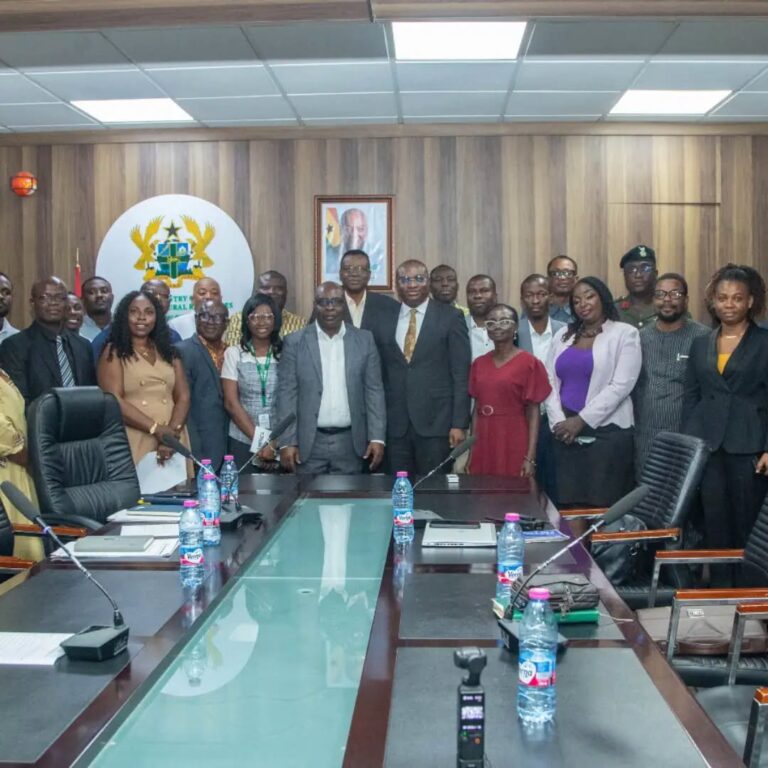
Dr Joyce Aryee
Former Minister and business executive Dr Joyce Aryee has urged people not to allow painful experiences to limit their potential, saying adversity can become a source of personal growth, resilience and renewed purpose.
Drawing on her own experiences, particularly the period following her departure from the Provisional National Defence Council (PNDC), she said difficult moments in life could help people develop a stronger sense of purpose when approached with faith and the right perspective.
“My life has had a number of rough passes, some self-inflicted, others extraneous. But I want to focus on the time after I left the PNDC to talk about a journey of pain,” she said.
Dr Aryee was speaking as the Human Book at the third edition of the Human Library session at Takoradi Technical University (TTU), held under the theme, “From Ashes to Beauty: A Journey Through Pain, Healing, and Hope”.
She said both positive and painful experiences could contribute to personal development, arguing that people should not regard difficult periods as the end of their journey.
“Because I believe that every experience we have is meant to bring us better.
Every experience, whether it’s good in our eyes or bad in our eyes. Because we have a God who has our best interest at heart,” she said.
She likened pain to a pole vault, explaining that it could propel people beyond their immediate difficulties and help them overcome challenges.
“For me, pain is like a pole vault because the pain will catapult you above the problems and bring you home,” she said.
Dr Aryee also challenged participants to recognise their ability to influence change, saying many people feel helpless because they underestimate the impact they can have on their surroundings.
“Until you know that you can influence, you think you are helpless,” she said.
Using the biblical illustration of salt and light, she urged individuals to make meaningful contributions to their communities and society, regardless of how small their efforts might appear.
She further called for a broader understanding of personal development, saying progress should not be measured only by material achievements but should also include physical, emotional and spiritual well-being.
“In God’s economy, there is nothing as falling to the bottom. In God’s economy, you go to the ground and get up because the ground is not where you belong,” she said.
The Vice-Chancellor of TTU, Rev. Prof. John Frank Eshun, said the Human Library provided an opportunity for students to learn from the lived experiences of people whose personal journeys offered lessons beyond formal academic instruction.
He described the platform as one built on the idea that people are books, conversations are the reading process, and personal experiences constitute the knowledge being shared.
He said education should extend beyond academic qualifications to include character formation, resilience, empathy and the ability to confront life’s challenges.
The Human Library brings members of the university community into conversations with individuals whose experiences offer practical lessons and perspectives that complement classroom learning.
Credit: TTU