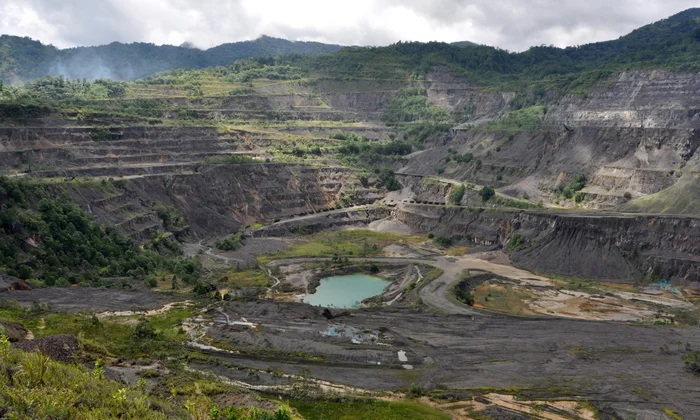
Mining giant Rio Tinto has committed US$250 million towards addressing environmental and human rights impacts associated with the former Panguna mine in Bougainville, Papua New Guinea, following an agreement with the Autonomous Bougainville Government (ABG), Bougainville Copper Limited (BCL) and community leaders.
The voluntary contribution will form part of a fund to support practical responses to impacts identified in the independent Panguna Mine Legacy Impact Assessment (PMLIA), which examined the environmental and associated human rights consequences of the mine’s operations.
The fund is expected to support interventions in affected river and delta areas, as well as social programmes for communities in other areas covered by the assessment, including the mine, port and town areas.
The proposed interventions include improvements to community infrastructure, access to essential services, livelihoods and general wellbeing.
Rio Tinto’s Chief Safety and Technical Officer, Mark Davies, said the contribution was intended to help move the process from identifying the mine’s legacy impacts to implementing practical remedies.
He said engagement with affected communities would be critical in determining the priorities and activities to be supported by the fund.
The President of the Autonomous Bougainville Government, Ishmael Toroama, described the agreement as an important step towards delivering lasting benefits to affected communities.
He said the fund would support improvements to local infrastructure and livelihoods, with benefits expected to extend to future generations.
The fund’s structure, governance and implementation arrangements are yet to be developed. Rio Tinto, BCL and the Autonomous Bougainville Government will work with affected communities and other stakeholders to determine how it will operate.
The contribution builds on priority interventions already underway in Central Bougainville to address immediate risks identified by the assessment. These include repairs to ageing infrastructure, removal of hazardous materials, flood-risk reduction and improvements in access to water and sanitation.
The Panguna Mine Legacy Impact Assessment was published in December 2024 after an independent assessment process overseen by a committee established in 2021. The committee included landowner and community representatives, the Autonomous Bougainville Government, BCL, Rio Tinto and the Human Rights Law Centre.
The mine ceased operations in 1989 after civil war forced its closure.
Rio Tinto was previously the majority shareholder in BCL, which owned and operated the Panguna mine. It divested its 53.8 per cent stake in the company in 2016.
The parties say the fund will be delivered over several years. The process of addressing the mine’s legacy impacts is separate from decisions on any future redevelopment of the mine and port, which remain the responsibility of the Autonomous Bougainville Government and the people of Bougainville.