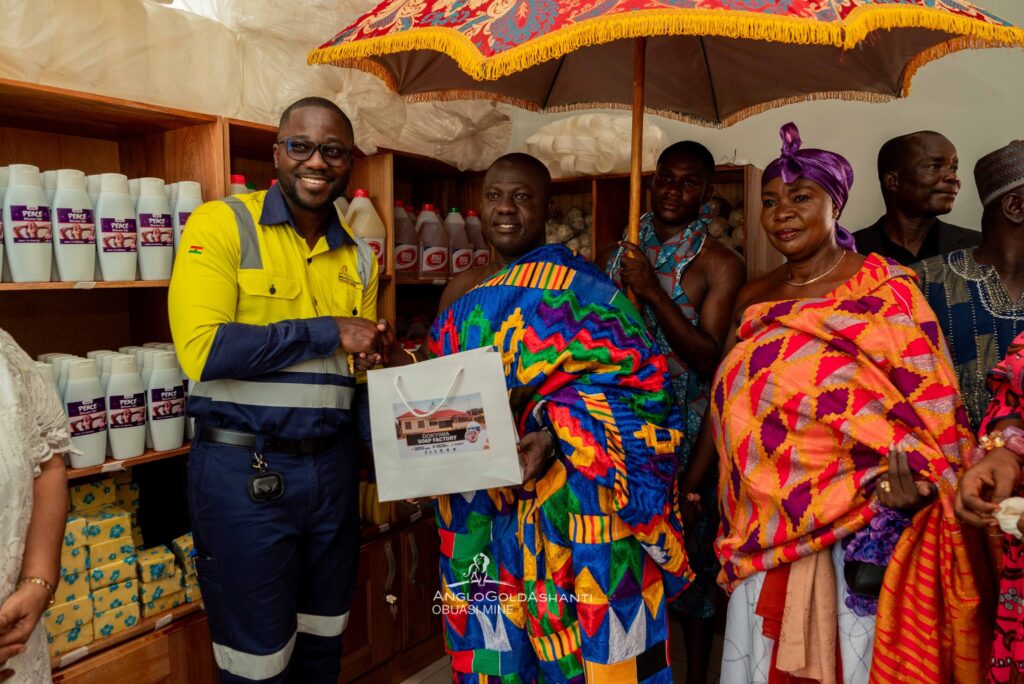
In a landmark event that reflects its ongoing commitment to local development, AngloGold Ashanti Obuasi Mine has commissioned a new, state-of-the-art soap factory in New Dokyiwa, within the Obuasi Municipality.
The colourful ceremony drew community members, traditional leaders, the Municipal Chief Executive Faustilove Appiah Kanin, and several departmental heads who gathered to witness what many called a historic milestone for the area.
With an investment of approximately GHC 1.8 million covering construction and furnishing, the facility is set to produce a variety of high-quality hygiene products including bar soaps, detergents, dishwashing liquids, and shower gels. But beyond its economic potential, the factory represents a deeper vision for community-led development.

The soap factory is wholly owned by the Dokyiwa community and will be managed by the Dokyiwa Peace Women Cooperative Group—local women who have already undergone basic and intermediate practical soap-making training facilitated by AngloGold Ashanti Obuasi Mine. This model of community ownership is designed to ensure sustainability and direct benefit to local residents, especially women.

Speaking at the ceremony, Edmund Oduro Agyei, Community Relations Manager at AngloGold Ashanti Obuasi Mine, highlighted the company’s inclusive approach to development.
“This initiative reflects our strong belief in the influence of women to drive economic change and underscores the transformative power of targeted community programmes that build capacity and nurture entrepreneurial spirit,” he said.

The soap factory forms part of the company’s 10-year Socio-Economic Development Plan, which aims to create sustainable economic opportunities in host communities through strategic investment in skills development, infrastructure, and enterprise support.
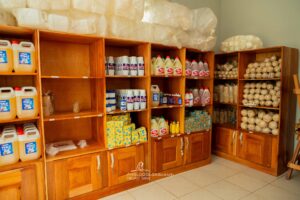
As operations begin, the facility is expected not only to enhance access to hygiene products but also to contribute to job creation, income generation, and broader local economic empowerment. For the people of New Dokyiwa, this factory is more than a building—it is a symbol of self-reliance, dignity, and progress.