Atewa Forest
Community Resource Management Area (CREMA) leaders working around the Atewa landscape have called for greater support for community-led conservation efforts, citing illegal mining, limited logistics and difficulties reaching communities as major challenges.
The CREMA representatives spoke to GHextractives under the Nature’s Heartbeat Project, being spearheaded in Ghana by A Rocha Ghana to support conservation of the Atewa Range Forest Reserve and strengthen community participation in protecting the landscape.
Reginald Osei Akoto, Chairperson of the Atewa West CREMA, said the group had been engaging traditional leaders and community members on the need to protect the forest and support its proposed declaration as a national park.
“We have been to the chiefs with their subjects and sub-chiefs, and we explained what Nature’s Heartbeat is about, with the aim of supporting the declaration of the Atewa Forest as a national park,” he said.
The CREMA has also been raising seedlings at two nursery sites for planting in off-reserve areas, while engaging the Forestry Commission over possible restoration of degraded areas, Mr Akoto said.

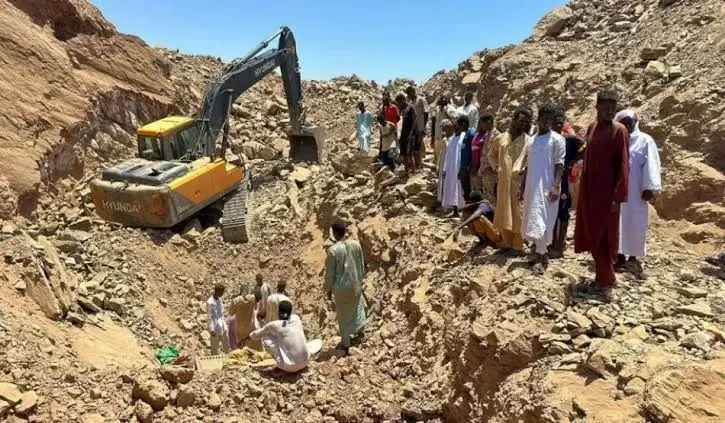
He said illegal activities, particularly mining, remained one of the major challenges confronting the communities.
“The challenges are with the illegal activities that are going on. These people doing mining and other things are well-resourced. When it comes to weapons, they have weapons; they have money. Sometimes, they are ahead of us,” he said.
Mr Akoto said sustaining community participation was also difficult because much of the conservation work was voluntary, while some residents were attracted to mining because of its immediate financial returns.
He said the communities needed greater support to demonstrate the long-term value of protecting their land, forests and water resources.
The Atewa West CREMA covers eight communities surrounding the Atewa Forest Reserve: Bomaa, Awenare, Apampatia, Abisem, Banso, Pameng, Akropong and Larbikrom.
Mr Akoto said some of the communities also had tourism potential, including caves, streams and natural pools, which could provide alternative livelihood opportunities if properly developed.
Samuel Bruce Buertei, Secretary of the Ayensuano CREMA, said reaching communities remained a major challenge because of the distance between them and poor road networks.
The Ayensuano CREMA covers 33 communities divided into 13 clusters, he said.
“If we are to get at least two motorbikes in the district for now, it will solve our problems moving from one community to the other because of the road network,” Mr Buertei said.
He also said the CREMA had been involved in efforts to stop illegal mining in areas around the Atewa Forest.
Mr Buertei told GHextractives that CREMA members recently helped remove 11 alleged illegal mining operators from the Atewa Forest and handed them over to the police. He expressed concern that they were later released, based on information he said he received from a police commander.
He said the group had also confronted people who allegedly brought excavators and other equipment into areas where they were not permitted to operate.
Florence Peprah, Secretary of the Atewa CREMA, said the group was continuing community sensitisation and restoration activities.
She said 200 trees had been planted under the project and that the group was engaging traditional leaders and farmers.
Ms Peprah also identified transportation as a challenge, particularly when CREMA members travel to communities and farming areas along difficult roads.
The CREMA leaders said stronger logistical and institutional support would enable them to expand community engagement and respond more effectively to activities they consider threats to the Atewa landscape.
About CREMA
The Community Resource Management Area (CREMA) approach is a community-based natural resource management system that gives local communities a role in managing and conserving natural resources, particularly outside protected areas.
In the Atewa landscape, the CREMAs bring together communities, traditional authorities and local stakeholders to support forest conservation, restoration, sustainable resource use and protection of natural resources around the Atewa Forest Reserve.
Nature’s Heartbeat Project
The Nature’s Heartbeat Project is a global conservation initiative led by IUCN Netherlands with a backing from the Dutch Postcode Lottery.
Spanning Ghana, Bolivia, Indonesia, Uganda, and the Philippines, the 2025–2029 program supports local grassroots conservation through flexible, trust-based funding and capacity building.
In Ghana, it is spearheaded by A Rocha Ghana focusing on the Atewa Range Forest Reserve and Mole National Park.
# Make a Atewa a National Park
# Make a Atewa a National Park
# Make a Atewa a National Park