Atewa Forest
Sources of water for millions of Ghanaians are increasingly at risk due to escalating illegal mining(galamsey) and logging activities in the Atewa Forest Reserve.
Fresh evidence of destruction inside the forest is raising alarm over what experts describe as a deepening environmental crisis driven by unchecked exploitation.
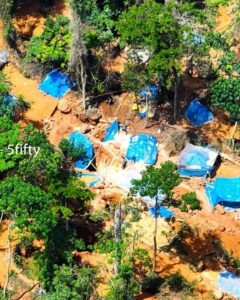
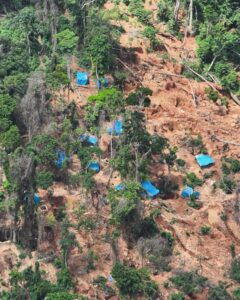
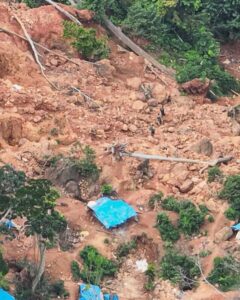
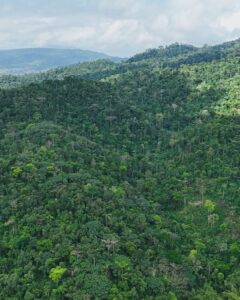
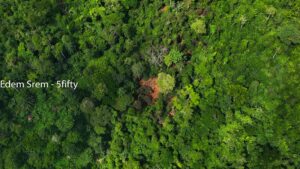
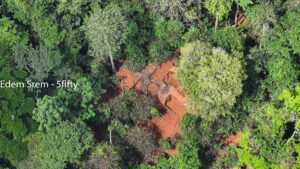
New images captured by journalist Edem Srem have brought renewed attention to the scale of devastation within the forest—once regarded as one of Ghana’s most critical ecological assets. The images reveal visibly degraded landscapes, reinforcing long-standing concerns that the reserve is under sustained assault despite repeated warnings.
The Atewa Forest is a vital ecological zone that serves as the source of three major rivers—the Birem, Ayensu, and Densu. These rivers supply water to millions of people across the country, including a significant portion of residents in Accra. Any damage to the forest therefore poses a direct threat to Ghana’s water security.

Despite repeated caution and sustained advocacy from environmental organisations such as A Rocha Ghana, illegal mining and logging activities continue to persist within the reserve. While some arrests have been made in recent times, stakeholders argue that enforcement efforts remain insufficient to halt the ongoing destruction.
The Concerned Citizens of Atewa Landscape (CCAL) has also raised strong concerns, describing the situation as an escalating environmental crisis. According to the group, the Atewa Forest plays a critical role as a carbon sink, contributing to global climate regulation while supporting biodiversity and livelihoods.
Beyond its environmental significance, the forest functions as a major water tower, supplying clean water to more than five million Ghanaians. However, CCAL warns that increasing illegal mining activities are placing the ecosystem under severe pressure, with potentially long-term consequences.
The group notes that the concerns it raised several years ago have significantly worsened. It recalls a six-day, 95-kilometre protest march undertaken from March 17 to 22, 2018, from Kyebi to the Flagstaff House in Accra.
During the demonstration, participants carried polluted water from the Birem, Ayensu, and Densu rivers to highlight the impact of illegal mining and to call for urgent intervention.
According to CCAL, illegal mining has since intensified and expanded into parts of the Atewa Range Forest Reserve, leading to increased turbidity in major rivers. The deterioration in water quality has had direct consequences for communities that depend on these sources.