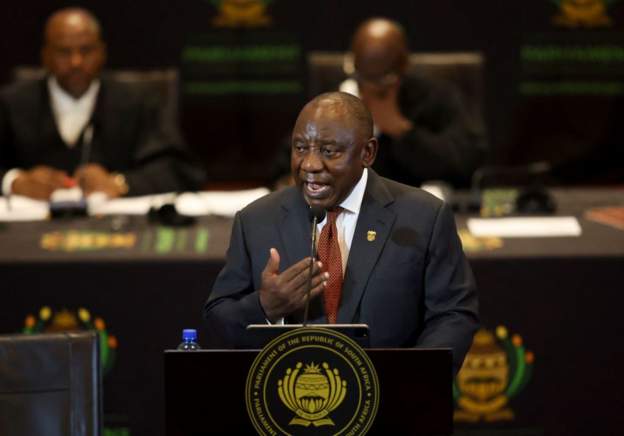
Cyril Ramaphosa
aOil prices firmed on Thursday, edging up from multi-month lows on a possible delay to output increases by OPEC+ producers and a decline in U.S. inventories, though the gains were capped by persisting demand concerns.
Figures from the American Petroleum Institute (API) showed U.S. crude oil inventories fell by 7.431 million barrels last week, far exceeding the 1 million barrel draw expected by analysts in a Reuters poll.
“There is a pause of breath and light reprieve for oil prices this morning,” said PVM analyst John Evans, citing the API report’s findings.
Brent crude for November rose 42 cents, or 0.6%, to $73.12 a barrel by 0810 GMT after touching its lowest since December on Wednesday. U.S. West Texas Intermediate crude for October was up 37 cents, or 0.5%, at $69.57.
Further support came from discussions between the Organization of the Petroleum Exporting Countries (OPEC) and allies led by Russia, known collectively as OPEC+, about delaying output increases due to start in October, sources told Reuters on Wednesday.
OPEC+ had been ready to proceed with an output increase of 180,000 barrels per day (bpd) in October, part of plans for a gradual unwinding of its most recent cuts of 2.2 million bpd.
However, continued soft demand in China and the potential end of a dispute halting Libyan oil exports has pushed the group to reconsider.
Official U.S. oil stocks data from the Energy Information Administration (EIA) is due at 1430 GMT.
Financial markets were also awaiting further U.S. macroeconomic indicators due later on Thursday, including jobs data.
South African President Cyril Ramaphosa said on Thursday that he did not believe Chinese investments in Africa were pushing the continent into a “debt trap” but were instead part of a mutually beneficial relationship.
Ramaphosa made the remarks on the sidelines of a China-Africa summit in Beijing, where delegates from more than 50 African nations gathered this week.
“I don’t necessarily buy the notion that when China (invests), it is with an intention of, in the end, ensuring that those countries end up in a debt trap or in a debt crisis,” Ramaphosa said, when asked by reporters about China’s pledge at the summit of $51 billion in new funding for Africa.
In addition to the financial support over three years, China promised to carry out three times as many infrastructure projects across resource-rich Africa, which in recent years has become the focus of intense geopolitical competition between global powers like China, Europe and the United States.
Without providing details, Ramaphosa also said South Africa had reached agreement with China on aspects of its energy security. He said South Africa could learn from China on reforming its energy sector.
“They already have done exactly what we are seeking to do. So there are lessons for us to learn from China and how to do it,” he said.
South Africa has been plagued for years by rolling power blackouts that have constrained economic growth.
Ramaphosa also said South Africa would look to attract China’s electric vehicle manufacturers including its largest, BYD.
“We had good exchanges with BYD, which has shown a great interest to come and invest in South Africa,” he said.
Reuters