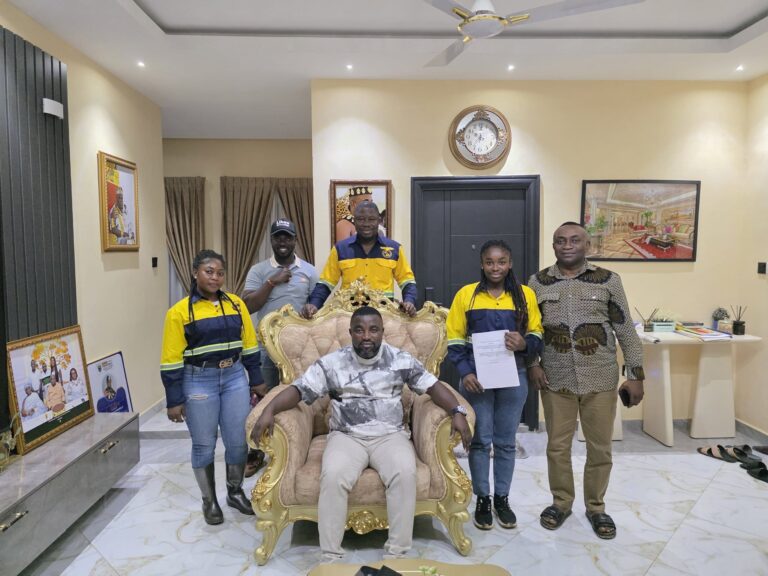
The Forestry Commission (FC), together with a high-level delegation from the World Bank Group led by its Vice President for Planet, Mr. Guangzhe Chen, has undertaken a field visit to the Atewa Hotspot Intervention Area (HIA) in Ghana’s Eastern Region.
This visit, sought to assess the impact of ongoing forest conservation and climate resilience interventions under the Ghana Cocoa Forest REDD+ Programme (GCFRP) and explore opportunities for expanded investment in the landscape.
The visit formed part of efforts to showcase Ghana’s progress in reducing emissions from deforestation and forest degradation while improving livelihoods in forest-dependent communities.

It also provided an opportunity for the World Bank delegation to witness firsthand the outcomes of community-based conservation initiatives and climate-smart agricultural practices being implemented within the Atewa landscape.
The Atewa HIA, one of six intervention landscapes under the GCFRP, covers approximately 216,965 hectares within the Okyeman traditional area and forms part of a 5.9 million-hectare programme supporting more than 140,000 cocoa farmers nationwide.
Since its approval in 2019, the programme has become one of Africa’s pioneering results-based carbon initiatives, enabling Ghana to secure more than US$21 million from the Forest Carbon Partnership Facility (FCPF) Carbon Fund for verified emissions reductions achieved between 2019 and 2021.

Despite ongoing threats from illegal mining, deforestation and forest degradation, the Atewa landscape has received more than US$1 million from the programme’s first and second emissions reduction payments.
These funds have supported community development and agricultural productivity initiatives, including the provision of farming equipment, tree seedlings, spraying machines, school furniture and mechanised boreholes.

The delegation from the FC comprised of the Chairman of the FC Board, Mr. Isaac Essien, Esq.; The Chief Executive of the Commisson, Dr. Hugh Brown; Dr. Josepph Appiah Gyapong, Acting Director, Climate Change Unit; The Eastern Regional Manager of the Forest Services Division (FSD), Mr. Isaac Sintim Yiadom; Kyebi District Manager, FSD, Mr. Owusu Ameyaw; some staff of the Climate Change Unit and the Forestry Commission from both the Corporate Headquarters and FSD, Eastern Region, as well as representatives from the Ministry of Lands and Natural Resources.
Accompanying Mr. Chen from the World Bank Group were Mr. Chakib Jenane, Regional Practice Director for the Planet Team, Western and Central Africa Region; Mr. Robert Taliercio O’Brien, Country Director for Ghana, Liberia and Sierra Leon, among other staff of World Bank West Africa and Ghana.

The delegation commenced the tour by paying a courtesy call on the Okyenhene, Osagyefuo Amoatia Ofori Panin, in recognition of the vital role traditional authorities continue to play in forest governance and conservation efforts across the landscape.
He emphasised the importance of sustainable forest management and stronger community participation in conservation efforts. He also expressed concern over threats such as illegal logging and encroachment, which continue to degrade forest resources and affect livelihoods.

The Okyenhene further called for conservation programmes to be supported by alternative livelihood opportunities and advocated greater community involvement in forest governance. He concluded by urging the visiting delegation to adopt inclusive strategies that balance environmental conservation with socio-economic development.
The delegation later visited Pano Presby Basic School, where school desks supplied through GCFRP benefit-sharing funds have significantly improved learning conditions for pupils.
Assembly Member for the Odumase Electoral Area in the Abuakwah South Municipal Assembly, Collins Akonnor, disclosed that the Municipal Assembly received 180 desks under the programme, which were allocated to various schools within the municipality. Prior to the intervention, many pupils at the school reportedly sat on bare floors during lessons.
The team also engaged members of the Atewa HIA Management Board, Community Resource Management Areas (CREMAs), women’s groups, youth groups and community leaders. Participants expressed appreciation for the programme’s benefits, particularly the support provided to cocoa farmers through farming equipment, training and sustainable land-use initiatives.
Further visits were made to a mechanised borehole at Kwasi Komfo and to enrichment planting as well as climate-smart cocoa demonstration sites at Sagyimase.
The delegation concluded the field tour at the cocoa farm of Mr. Price Owusu at Amanfrom, where shade-tree integration practices have enhanced cocoa production while promoting sustainable land management. Mr. Owusu testified that the planting of shade trees had improved yields by protecting cocoa trees from harsh weather conditions.
During a debriefing session at Amanfrom, Mr. Essien, Esq. praised communities and stakeholders in the Atewa landscape for their commitment to forest conservation and sustainable development.
He highlighted the need for continued collaboration despite challenges such as limited resources and unemployment, and reaffirmed the Forestry Commission’s dedication to protecting forest resources for the long-term benefit of local livelihoods.
The visit underscored Ghana’s leadership in results-based forest conservation and showcased opportunities for increased international investment. It also strengthened efforts to secure a second phase of funding to expand climate-smart agriculture, forest restoration, biodiversity conservation, and community resilience programmes across the Atewa landscape.
Source: Forestry Commission