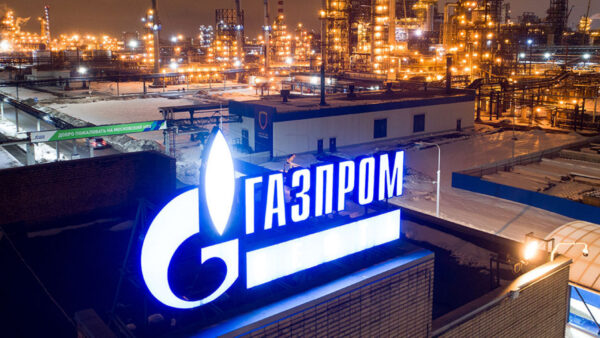
Gazprom Oil and gas field
Kremlin-owned energy kingpin Gazprom once Russia’s most profitable company, could face a long period of poor performance as it struggles to fill the gap of lost European gas sales with its domestic market and Chinese exports.
The company recently announced an annual net loss of $7 billion, its first since 1999, following a steep decline in trade with Europe.
Gazprom’s troubles reflect the deep impact the European sanctions have had on Russia’s gas industry, as well as the limitations of Moscow’s growing partnership with China.
The impact of international sanctions on oil exports has been easier for Moscow to absorb because Russia has been able to redirect sea-borne oil exports to other buyers.
Gazprom relied on Europe as its largest sales market until 2022, when Russia’s conflict with Ukraine prompted the EU to cut Gazprom gas imports.
Russia supplied a total of around 63.8 billion cubic metres (bcm) of gas to Europe by various routes in 2022, according to Gazprom data and Reuters calculations. The volume decreased further, by 55.6%, to 28.3 bcm last year.
That’s compared to a peak of 200.8 bcm Gazprom pumped in 2018 to the EU and other countries, such as Turkey.
Mysterious blasts at Nord Stream undersea gas pipelines from Russia to Germany in September 2022 also significantly undermined Russian gas trade with Europe.
Russia has turned to China, seeking to boost its pipeline gas sales to 100 bcm a year by 2030. Gazprom started pipeline gas supplies to China via the Power of Siberia in the end of 2019.
Reuters