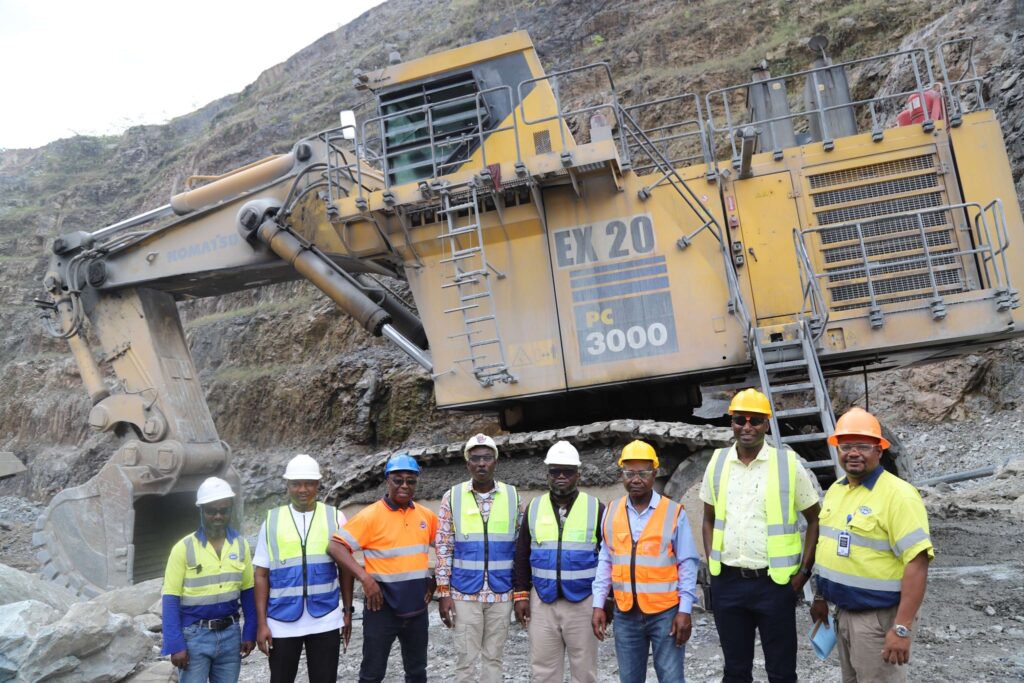
Edem Ashigbi (4th from right)
The Ghana Chamber of Mines has raised concerns over some proposed amendments to the Minerals and Mining Act, 2006 (Act 703), warning that they could undermine the long-term viability and competitiveness of the country’s mining sector.
In a position paper presented by its Chief Executive Officer, Ing. Dr. Kenneth Ashigbey, the Chamber acknowledged the importance of the ongoing review of Act 703 and commended the Minerals Commission for its extensive stakeholder consultations.
However, it cautioned that certain proposals, if passed in their current form, would discourage investment and reduce Ghana’s attractiveness as a mining destination.
Among the Chamber’s key concerns is the proposed reduction of mining lease tenure from 30 years to 15 years with only a one-time renewal of 10 years. Dr. Ashigbey noted that this would severely limit investors’ ability to recoup capital, encourage high-grading of ore, reduce exploration, and compromise the viability of deep-seated or marginal deposits.
“Such a measure would elevate the tax burden and lower the net present value of projects, ultimately driving investors away,” he stressed.
The Chamber also opposed the proposal to introduce a mandatory 1% gross revenue levy for Community Development Agreements (CDAs). While acknowledging the importance of social investments, Dr. Ashigbey explained that mining companies already spend significantly on community projects. A rigid levy, he argued, would reduce flexibility, discourage innovation, and overburden marginal mines.
On fiscal predictability, the Chamber objected to the reduction of stability agreements from 15 years to 5 years, arguing that such a move would heighten investment risks in a sector already characterised by long payback periods and high capital costs. It recommended a minimum tenor of 10 years.
Similarly, the Chamber opposed the abolition of Development Agreements (DAs), describing them as a vital tool for attracting investments above US$500 million. It argued that removing DAs would restrict Ghana to low-value projects and reduce the sector’s global competitiveness.
Regarding exploration, the Chamber rejected the proposal to shorten prospecting licences to nine years, warning that this would erode Ghana’s ability to fully map its mineral potential and derail government’s goal of increasing Ghanaian ownership in mining.
In conclusion, the Chamber urged the Minerals Commission to adopt reforms that balance state revenues with sustainable investment.
“The review must future-proof Ghana’s mining industry, ensuring resilience, sustainability, and competitiveness for generations to come,” Dr. Ashigbey emphasized.