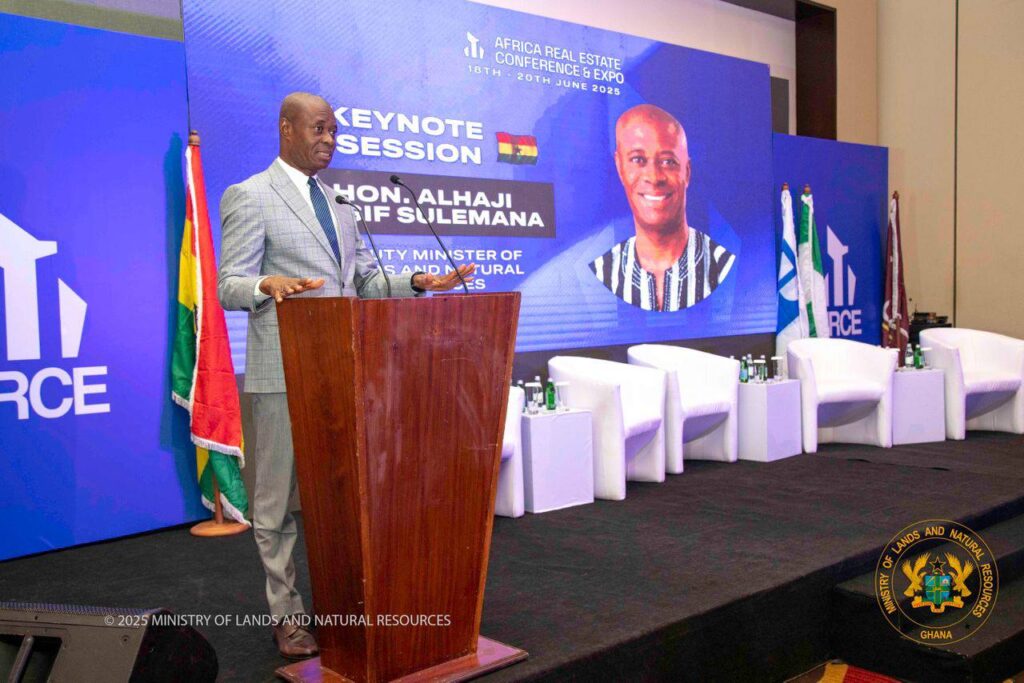
Yusif Sulemana
Ghana is positioning itself at the forefront of Africa’s real estate transformation with the launch of an ambitious land digitization agenda unveiled at the 2025 Africa Real Estate Conference and Expo held on Thursday, June 19.
Delivering the keynote address on behalf of the Ministry of Lands and Natural Resources, Deputy Minister Yusif Sulemana emphasized the urgent need for African countries to embrace technology in resolving long-standing issues in land administration.
Speaking under the theme “Unlocking Opportunities for Sustainable Real Estate in Africa,” he highlighted outdated records, title insecurity, and bureaucratic bottlenecks as major impediments to economic participation and property development.
“These challenges are not just administrative—they limit our citizens’ ability to invest in housing, own land, and grow wealth,” Sulemana stated.
He announced the rollout of Ghana’s National Land Information System (NLIS), a flagship project that aims to digitize and unify land records nationwide. The initiative employs drones and satellite imagery to map and verify historical land data, creating an accurate and transparent database of property ownership for the first time in the country’s history.
“We are building a system that offers a single source of truth on who owns what, and where,” the Deputy Minister said, adding that the system will be accessible, efficient, and secure.
To further enhance land security, Ghana is also piloting blockchain technology to develop tamper-proof land records in areas with high incidences of disputes, making Ghana one of the first African countries to take this bold step toward decentralized land governance.

“Our goal is to create an open and dynamic digital property ecosystem—one that secures land rights, fosters innovation, and drives sustainable development,” Sulemana said.
He called on other African nations to collaborate by harmonizing digital systems, sharing knowledge, and integrating technologies to unlock real estate’s full potential as an engine of inclusive economic growth.
The conference attracted policymakers, investors, and tech leaders from across the continent, signifying a pivotal moment in Africa’s push to modernize land governance through innovation and cooperation.