Martin Ayisi
The Chief Executive Officer of the Minerals Commission, Martin Ayisi, has announced a landmark policy shift in Ghana’s mining regime: prospecting licenses will now be capped at a maximum of seven to nine years, ending the long-standing practice of indefinite renewals.
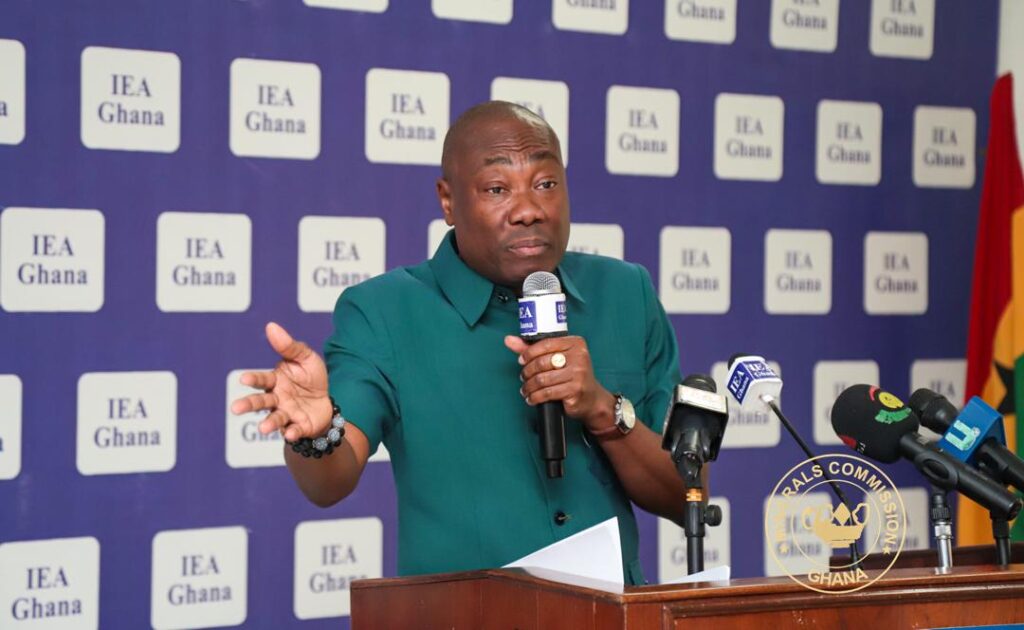
Speaking at an engagement with the Institute of Economic Affairs (IEA) on Wednesday, August 20, 2025, Mr. Ayisi explained that the change is part of a wider package of amendments to the Minerals and Mining Act, 2006 (Act 703) aimed at modernising Ghana’s regulatory framework.
“With the advent of modern exploration technology, there is no justification for licences to drag on indefinitely. Companies must either prove the existence of commercially viable deposits within the set timeframe or relinquish the concessions for others to explore,” Mr. Ayisi stressed.
Ending Licence hoarding
The Minerals Commission boss noted that indefinite renewals had fostered a culture of “land banking” where companies held onto concessions for speculative purposes without meaningful exploration. This practice, he argued, restricted access for serious investors and undermined the sector’s potential.
Under the proposed reforms, prospecting licences will expire after the capped period, with strict compliance measures to ensure that concessions are either developed into mines or returned to the state.
Driving transparency and fairness
Ayisi emphasised that the reform would enhance transparency, efficiency, and competitiveness in Ghana’s mining sector. It also aligns the country with regional best practices, where most jurisdictions impose fixed limits on prospecting activities.
“We want to create a fair system that rewards genuine exploration and ensures the country derives full benefit from its mineral wealth,” he added.
Part of broader legislative overhaul
The move is one of several bold reforms, including abolishing stabilisation clauses, scrapping development agreements, and making community development agreements (CDAs) mandatory.
Collectively, these measures are designed to ensure that Ghana’s mineral resources generate equitable returns for both the state and local communities.