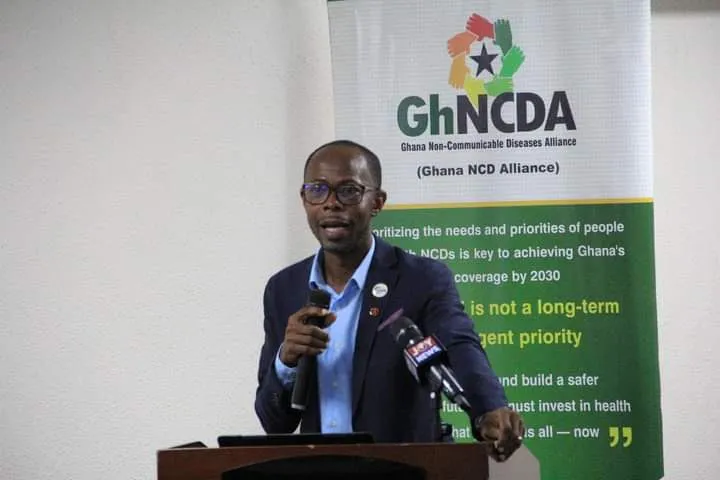
Labram Musah
The Ghana NCD Alliance, in partnership with Vision for Accelerated Sustainable Development and other civil society actors, has commended government for the successful passage of the Ghana Medical Trust Fund Act (Act 1144), describing it as a landmark intervention in the fight against non-communicable diseases (NCDs) in Ghana.
In a statement issued on Monday, the group hailed the transformation of the Trust Fund—popularly known as MahamaCares—from a campaign promise into a fully enacted law as a bold and timely response to the crippling out-of-pocket costs faced by individuals and families living with NCDs.
The Alliance also praised President John Dramani Mahama for his personal commitment to the Fund, particularly his donation of six months’ salary as seed funding, and the appointment of Madam Obuobia Darko-Opoku as the Fund’s first Administrator.
“This act, combined with the establishment of a governing board to oversee implementation, signals serious intent to ensure effective and transparent management,” the statement read.
The Ghana Medical Trust Fund is designed to provide financial protection and access to care for people suffering from chronic conditions such as diabetes, hypertension, cancer, cardiovascular and respiratory diseases, and mental health disorders. It is expected to work in tandem with the government’s proposed Free Primary Healthcare Policy, potentially transforming access to essential services and promoting health equity.
Despite their optimism, the Ghana NCD Alliance raised several concerns. Chief among them was the limited stakeholder engagement in the process leading to the Fund’s passage and the lack of safeguards to prevent unhealthy commodity industries—such as those involved in alcohol, tobacco, and sugary drinks—from influencing the Fund’s operations.
“Clause 3 of the Act leaves the door open to funding from sources that may conflict with public health goals,” the statement warned. “We strongly recommend the development of formal guidelines to restrict involvement from industries that contribute to the NCD burden.”
The group also called for at least 50% of excise tax revenues from these products to be ring-fenced to support the Fund and urged the Ministry of Finance and Ghana Revenue Authority to reject any lobbying for tax reductions.
Among other recommendations, the Alliance urged government to:
-
Decentralize the Fund’s implementation to ensure it reaches underserved populations;
-
Ensure equitable access to NCD services nationwide;
-
Integrate psychosocial and mental health services into the Fund;
-
Align implementation with global best practices from countries like Kenya, Nigeria, Côte d’Ivoire, and Botswana;
-
Ensure inclusive, evidence-based, and transparent operations with strong civil society and stakeholder collaboration.
The group reaffirmed Ghana’s leading role in global NCD advocacy, referencing the country’s leadership in the UN NCD Compact, SDG advocacy, and the introduction of progressive health financing mechanisms.
“The Ghana Medical Trust Fund is more than a national program—it is a statement of Ghana’s unwavering commitment to Universal Health Coverage and the Sustainable Development Goals,” said Labram Musah, National Coordinator of the Ghana NCD Alliance and Executive Director of VAST Ghana.
The Alliance pledged to work collaboratively with government, civil society, and development partners to ensure the Fund becomes a cornerstone of Ghana’s public health future.