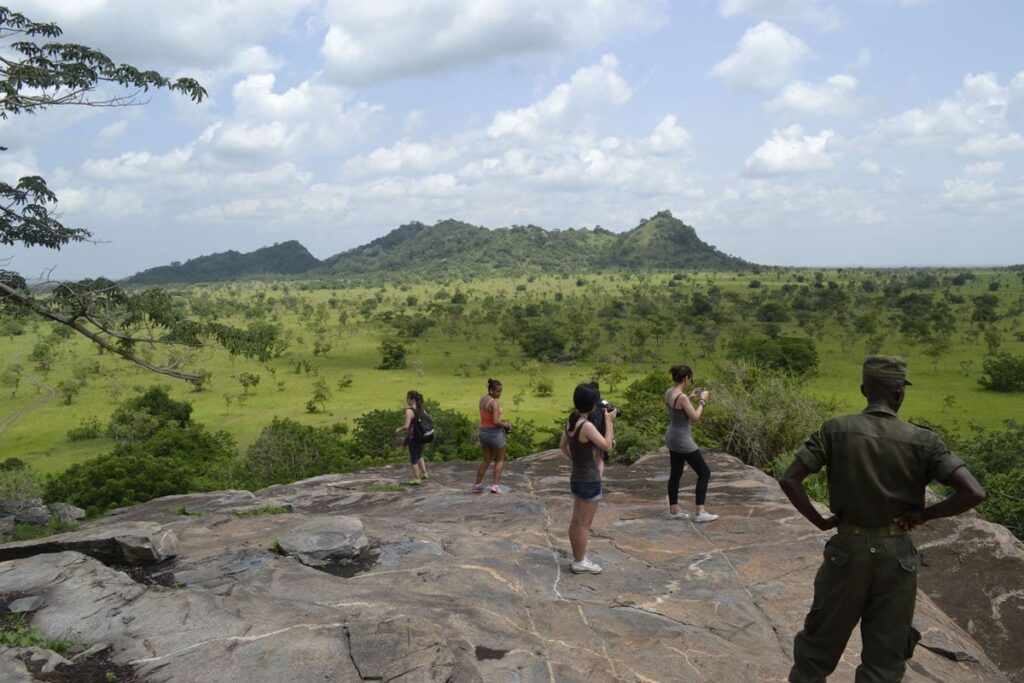
Shai Hills
Ghana is positioning its natural reserves and parks as engines of sustainable tourism and rural development, with five major ecotourism sites set to undergo transformation under proposed public-private partnerships (PPPs).
The announcement was made by the Minister for Lands and Natural Resources, . Emmanuel Armah Kofi Buah, during the Government Accountability Series on Wednesday.
According to the Minister, the Forestry Commission has received proposals from strategic investors seeking to partner with government to develop ecotourism infrastructure and services in Digya National Park, Shai Hills Resource Reserve, Kalakpa Resource Reserve, Sakumono Ramsar Site, and the Muni-Pomadze Ramsar Site. The proposals are currently under review.
“These sites represent some of Ghana’s most unique biodiversity hotspots, and their development through sustainable tourism will help generate jobs, promote conservation, and stimulate local economies,” the Minister stated.
The initiative is part of a broader government strategy to leverage Ghana’s natural heritage for economic diversification while promoting environmental sustainability. The Minister emphasized that any partnerships will adhere to strict environmental and conservation guidelines to protect ecosystems and ensure that local communities benefit meaningfully from tourism revenues.
Located in the Bono East Region, Digya National Park is Ghana’s oldest national park and a rich habitat for elephants and aquatic species along the Volta Lake. Shai Hills, close to Accra, is known for its striking rock formations and baboon colonies, while Kalakpa Resource Reserve in the Volta Region is home to rare antelope species and savannah woodlands. The Sakumono and Muni-Pomadze Ramsar sites are internationally recognized wetlands crucial for migratory birds and coastal biodiversity.
Hon. Buah noted that the proposed ecotourism projects align with Ghana’s climate and biodiversity goals, as well as efforts to promote green jobs through forest-based enterprises. “Our aim is to create models of conservation-based tourism that offer real economic opportunities, especially for communities living around protected areas,” he added.
The announcement comes amid the rollout of Ghana’s “Tree for Life” campaign, which has so far seen 7.8 million tree seedlings planted nationwide, including 2.3 million contributed by private entities. Together, the tree planting drive and the ecotourism push reflect a government vision to integrate environmental conservation with economic recovery and inclusive development.
The Minister called on investors, development partners, and local stakeholders to support Ghana’s push to become a regional leader in ecotourism and sustainable natural resource management.