So far, Ghana Gold Board – GoldBod is attracting all the attention, and understandably so.
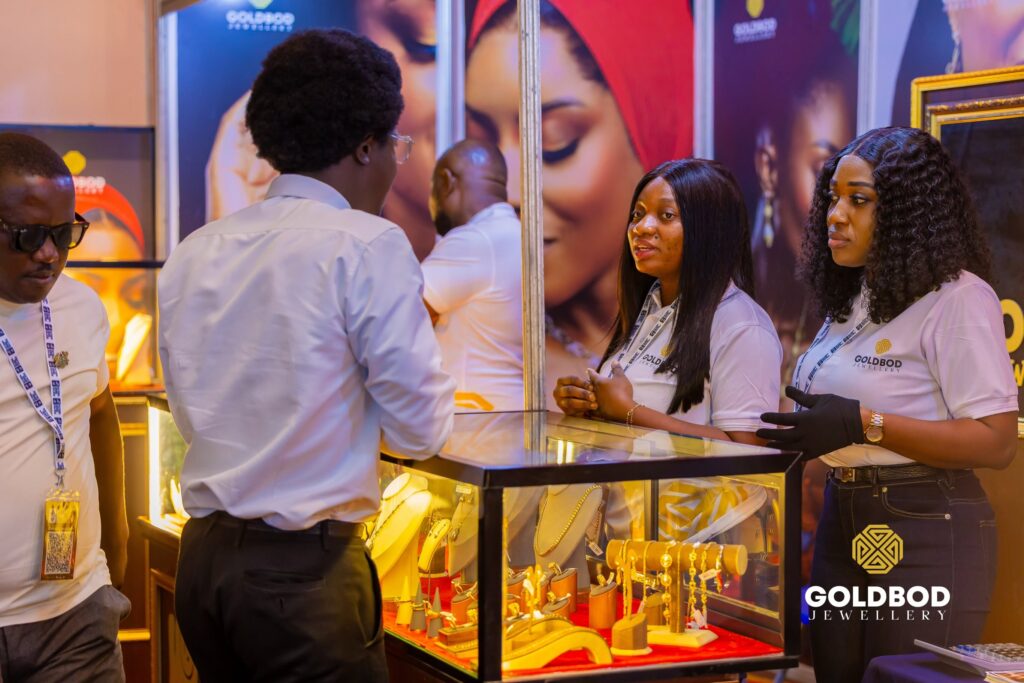
But there is a need to also pay attention to the other businesses sitting under the GoldBod structure, particularly PMMC Jewellery Company Limited, now a wholly owned jewellery company of the Ghana Gold Board(GoldBod Jewllery).
I have been looking at its 2025 audited financial statements, and there are some encouraging signs, but also a few areas that deserve closer attention.
Let me start with the positives.
Revenue increased from GH¢54.1 million in 2024 to GH¢60.6 million in 2025, representing growth of about 12%.
Gross profit also improved from GH¢16.8 million to GH¢20.2 million, with the gross profit margin improving from approximately 31% to 33.4%.
More importantly, the company moved from a loss of GH¢227,730 in 2024 to a profit after tax of GH¢1.87 million in 2025. That is certainly an improvement and should be acknowledged.
The company also received an unmodified audit opinion from the Auditor-General.
So, on the face of it, 2025 was a much better year.
But when analysing financial statements, I always like to look beyond the final profit number.
One interesting point is that while gross profit was GH¢20.22 million, general and administrative expenses were **GH¢20.93 million.
That means the gross profit from the jewellery business by itself was not enough to cover administrative expenses.
The company was helped significantly by GH¢3.2 million in other operating income, largely from polishing, repairs and other activities.
There is absolutely nothing wrong with earning income from repairs and polishing. In fact, these could become important revenue streams.
But it means that if we want to properly assess the performance of the business going forward, it would be useful to separate the performance of:
- jewellery manufacturing and sales,
- repairs and polishing,
- custom-made jewellery,
- sales through agents,
- and any other emerging business lines.
That will allow us to know exactly where the profitability is coming from.
Another issue is operating cost.
Staff cost increased from about GH¢11.2 million to GH¢15.1 million, an increase of roughly 34%, while revenue grew by 12%. Overall administrative expenses also increased from GH¢17.3 million to GH¢20.9 million.
There may be perfectly legitimate reasons for this, especially if the company is expanding and repositioning itself under GoldBod.
But eventually, the additional investment must translate into stronger sales and margins.
The company currently operates seven showrooms, five in Accra and two in Kumasi, in addition to independent sales agents.
Going forward, I would like to see management assess each showroom almost like a business on its own:
How much revenue does it generate?
What is its gross profit?
What does it cost to operate?
How much inventory is sitting there?
How quickly does the inventory move?
That will tell us whether the expansion is actually creating value.
There is also a significant funding issue worth watching.
The amount due to a related party increased from approximately GH¢18.3 million in 2024 to GH¢66.5 million in 2025. At the same time, total assets increased from GH¢42.7 million to GH¢93.8 million.
Again, this is not necessarily a problem.
A parent company funding the expansion of its subsidiary can be perfectly reasonable.
But with the jewellery company now sitting under GoldBod, there should eventually be clarity around what represents permanent capital, what represents working-capital support and what represents amounts that are actually expected to be repaid.
I also noticed a GH¢3.32 million prior-year adjustment charged against opening retained earnings.
The adjustment reduced the opening equity position materially, yet the financial statements provide limited explanation as to exactly what caused it.
For transparency, that is one area where I think future financial statements should provide more detail.
So overall, I would not describe the 2025 performance as poor.
Far from it. Revenue grew. Gross margin improved.
The company returned to profitability.
Cash increased significantly.
And substantial investment was made in infrastructure.
Those are encouraging developments. But there is still plenty of work ahead.
And this is where the bigger GoldBod story becomes interesting.
Ghana has historically exported enormous quantities of gold while capturing relatively little of the downstream value associated with jewellery, fabrication, branding and retail.
If GoldBod Jewellery is positioned properly, it should not simply be another company selling chains, rings and bracelets from a few showrooms.
It should become an important part of Ghana’s gold value-addition strategy.
We should eventually be asking questions such as:
How much Ghanaian gold is being converted locally into jewellery?
How much additional value is created per gram?
How much jewellery are we exporting?
How much foreign exchange is being generated from finished gold products?
How many skilled jobs are being created?
How competitive are Ghanaian jewellery products internationally?
And how much of the value that traditionally leaves Ghana with raw gold can we retain locally?
For 2025, the numbers show progress, but also a business still in transition.
The profit of GH¢1.87 million is encouraging.
But for me, the bigger opportunity is not merely to make a few million cedis in accounting profit.
It is to build a commercially strong jewellery business capable of helping Ghana move gradually from being predominantly an exporter of gold to becoming a serious participant in the higher-value end of the global gold industry.
That is where I think GoldBod Jewellery should ultimately be judged.
Author: Dickson Assan, CA
Chartered Accountant| SME Business Advisor | Career Coach