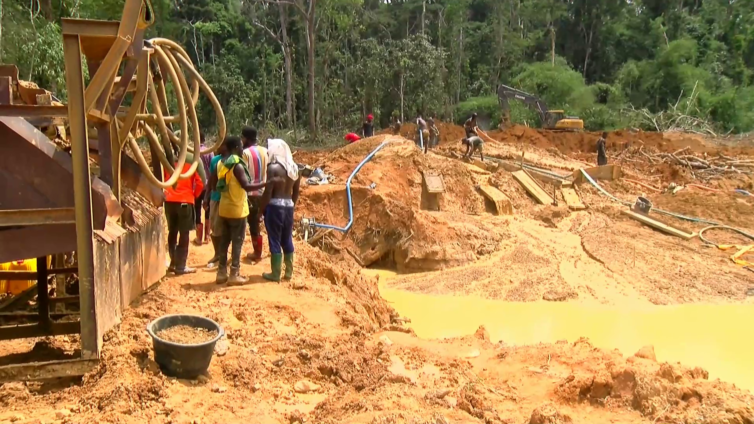
The Government of Ghana has officially taken over the Damang Gold Mine from Gold Fields, effective 18 April 2025 — a historic move that signals a bold shift in the country’s natural resource governance strategy.
While the initial decision to decline the lease extension drew a mixed response, today’s full transition of the asset into Ghanaian hands marks a watershed moment. It is not merely about ownership — it is about agency, ambition, and the long-awaited opportunity to redefine Ghana’s relationship with its mineral wealth.
Now, the spotlight turns to the Minerals Income Investment Fund (MIIF). With a clear mandate and solid financial footing, MIIF is well-positioned to lead the next chapter of Ghanaian-led mining — starting with Damang.
Why Damang Matters
The Damang concession, located in the mineral-rich Western Region, has long been one of Ghana’s top-performing gold assets. With significant remaining reserves, developed infrastructure, and proximity to existing processing facilities, the site is a low-risk, high-reward opportunity.
This takeover offers Ghana the rare chance to operate a world-class gold mine with majority Ghanaian interest — not in theory, but in practice.
A Ghanaian-Led Mining Model
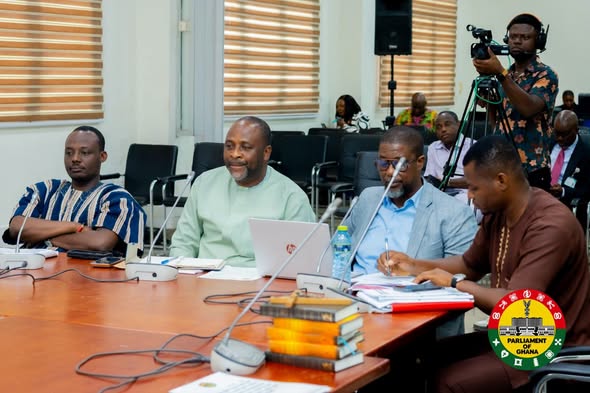
Deputy CEO of the Minerals Commission, Isaac Andrews Tandoh, described the Damang decision as a “clarion call” for Ghana to reset its extractive framework. His three-point proposal included prioritizing Ghanaian consortiums in future mining leases, placing a moratorium on foreign lease renewals, and creating a Ghana Minerals Sovereignty Fund to reinvest profits into mining communities.
MIIF is uniquely positioned to turn this vision into action.
MIIF’s Role and Readiness
Established under the Minerals Income Investment Fund Act, 2018 (Act 978), MIIF is tasked with maximizing Ghana’s income from mineral resources — not only through royalties but also through direct investments in high-value assets.
Now is the moment for MIIF to move beyond passive investing and become an active operator or strategic investor in Damang. With its strong capital base, access to royalties, and growing portfolio of mining investments, MIIF can lead or anchor a Ghanaian consortium to manage the mine.
MIIF has the operational muscle and proven credibility. In 2024, it grew its revenue by 41% year-on-year, reaching GHC1.3 billion, and nearly doubled its profit to GHC 409 million. It expanded its total Assets Under Management to over $1.5 billion. Its strategic investments in gold, lithium, salt, graphite, and industrial minerals are aligned with Ghana’s energy transition and value-addition agenda.
Learning from Akyem: Damang Must Not Be Another Missed Opportunity
Just last year, Ghana passed over a chance to acquire the Akyem Mine, which ended up in the hands of a Chinese consortium. MIIF had backed a Ghanaian-led bid that reportedly valued the mine above market rates, but the opportunity slipped away.
Damang must not follow that script.
This time, Ghana is in control — and the question is not whether local leadership is possible, but whether it will be bold enough to seize the moment.
Building a Sustainable Future
If MIIF anchors Damang’s new operational model, it can ensure long-term reinvestment into local infrastructure, education, and health in the Western Region; the growth of local mining contractors, engineers, and service providers; increased Ghanaian participation across the entire mining value chain; and real dividends for communities and the state, not just multinationals.
The Ghana Minerals Sovereignty Fund, if created and linked to Damang profits, could further institutionalize community development through mineral wealth — fulfilling the promise of inclusive growth.
The Time Is Now
The takeover of Damang is not just a policy outcome — it is a generational opportunity. It affirms Ghana’s determination to reshape its extractive economy and reclaim strategic control of its natural resources.
MIIF must now rise to the challenge — not as a silent partner, but as a national champion that can turn vision into value.
Damang is no longer a hypothetical. It’s real. It’s ours. And the next move will define whether this moment becomes a missed opportunity — or a masterstroke of Ghanaian ambition.