Filing station
Ghana’s fight against illegal mining also known galamsey has long focused on miners in the field, but a critical enabler often escapes scrutiny — the fuel supply chain that keeps illegal operations running.
The piece below written by Daryl Bosu and Ken Ashigbey argues that existing laws, particularly Act 995, provide a powerful yet underused pathway to disrupt that lifeline and tackle the crisis more decisively.
A Crisis at the Crossroads
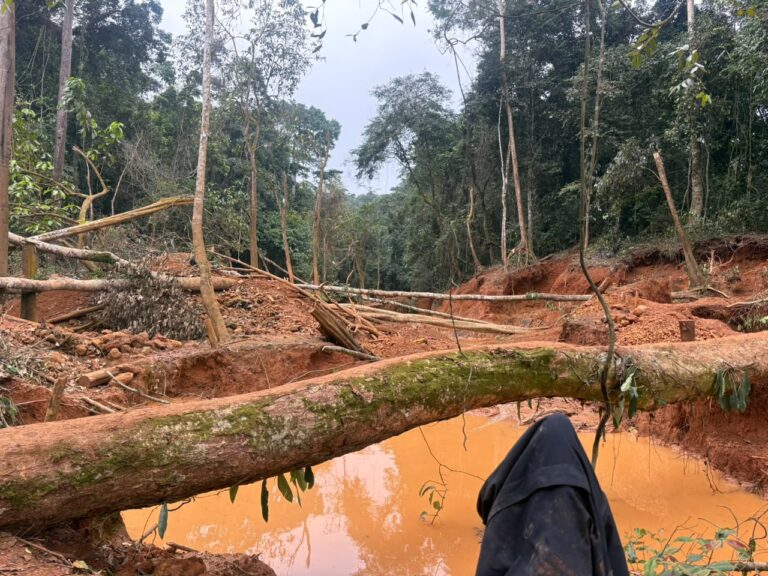
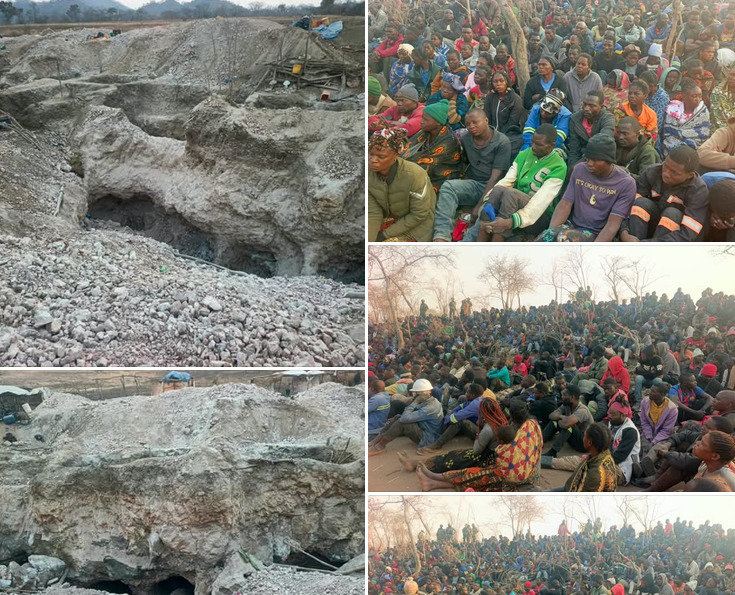
Galamsey, which is the illegal and irresponsible mining that has turned Ghana’s once-pristine rivers brown and scarred its forest landscapes, represents perhaps the most stubborn governance challenge of our time. For years, the narrative has focused on excavators in water bodies, foreign nationals at mining sites, and politicians shielding operators. Yet a critical question remains underexplored: Can Ghana’s laws be used to cut off the fuel supply that powers these illegal operations?
The answer is a qualified yes. Act 995, the Minerals and Mining (Amendment) Act, 2019, provides formidable legal weapons. But as with any tool, its effectiveness depends entirely on the willingness of those who wield it.
What Act 995 Actually Provides
To understand the potential, we must first appreciate what Parliament gave us in 2019. The original Minerals and Mining Act, 2006 (Act 703) prescribed penalties that were, by any measure, inadequate: a minimum fine of 1,000 penalty units (then about GHS 12,000) or imprisonment of not more than three years. Act 995 transformed this landscape dramatically. To understand the potential, we must first appreciate what Parliament gave us in 2019.
The original Minerals and Mining Act, 2006 (Act 703) prescribed penalties that were, by any measure, inadequate: a minimum fine of 1,000 penalty units (then about GHS 12,000) or imprisonment of not more than three years. Act 995 transformed this landscape dramatically. For Ghanaians, the amendment imposed a minimum sentence of 15 years’ imprisonment, extendable up to 25 years, alongside substantial fines. For foreigners, the penalties are even stiffer, reflecting the menace of foreign involvement in a sector constitutionally reserved for citizens.
Fuel as “Equipment” in the Commission of a Crime
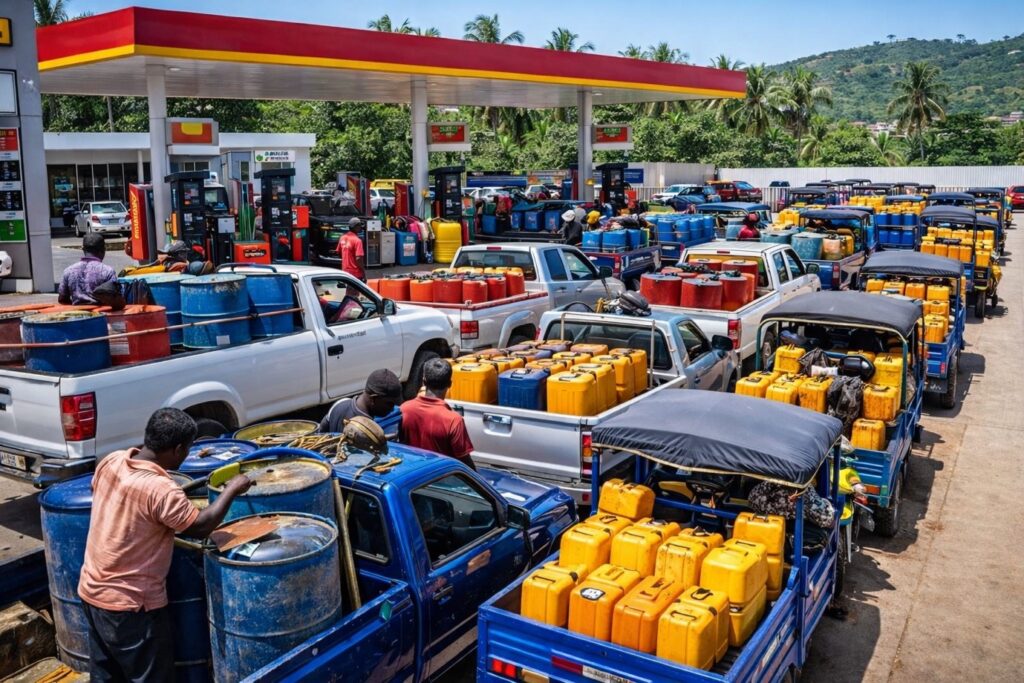
Here is where the argument for targeting fuel stations gains traction. Act 703, as amended by Act 995, provides for the seizure and forfeiture of “any equipment used in or associated with the commission of the offence”. This provision is deliberately broad. Fuel, whether in the tank of an excavator, a generator powering a washing plant, or a yellow 10-liter can being carried into the bush, is quintessentially equipment “associated with” illegal mining. Without it, the excavator is immobile metal; the water pump is scrap; the entire operation grinds to a halt. A fuel station that knowingly supplies galamsey operations is not an innocent bystander, it is an integral component of the criminal enterprise.
This logic is not novel. In drug trafficking prosecutions worldwide, vehicle owners and property landlords are held liable when their assets are used to facilitate illegal activity. In money laundering cases, banks face consequences for turning a blind eye. The same principle applies here: supplying the means to commit a crime is itself criminal complicity.
Fuel Stations as Seizable Assets
There is a powerful precedent already unfolding in Ghana’s courts, though not yet directly applied to galamsey. The ongoing case of The Republic v. Mustapha Abdul-Hamid & Nine Others involves former National Petroleum Authority (NPA) officials accused of extorting over GH¢291 million from bulk oil transporters and oil marketing companies. What makes this case significant for our discussion is the asset seizure that has accompanied it.
The Office of the Special Prosecutor (OSP) has moved decisively, seizing four fuel stations in Accra, located at Opeikuma, Dansoman, Abeka Lapaz, and Millennium City, alongside multiple fuel tanker trucks, high‑end residential properties, and cash totaling nearly GH¢1 million.
The legal principle embedded in this action is clear: fuel‑related infrastructure used in or derived from criminal activity is subject to forfeiture. If fuel stations can be seized in an NPA corruption case, why not in a galamsey case where fuel stations have been documented as “accomplices, financiers, and logistical backbones” of illegal mining?
Our hibernating laws
Yet here we encounter the central tragedy of Ghana’s galamsey fight. The legal tools exist. The question is whether the political will does.
The government’s policy of deporting foreign galamseyers without prosecution is illegal and a violation of Act 995 itself. The law was explicitly crafted to remove judicial discretion and ensure strict enforcement. When the executive branch circumvents that law through administrative deportation, it undermines the entire legal framework. The pattern extends beyond deportation. Even more troubling is that Act 995 appears to have been silently shelved by the Attorney-General’s Department. In recent high-profile galamsey arrests, prosecutors have not invoked Act 995’s enhanced penalties, raising uncomfortable questions about whether the government is truly committed to using the legal weapons at its disposal.
What Others Have Done
Ghana is not alone in confronting the challenge of illegal resource extraction fuelled by legitimate supply chains. Comparative experiences offer both caution and inspiration. Indonesia, grappling with illegal tin mining in Bangka-Belitung province, adopted a similar approach. The government required all fuel stations to implement digital tracking systems for fuel sales to mining operations.
Any station found supplying unlicensed miners faced license revocation and criminal prosecution. In South Africa, confronting the “Zama Zama” illegal mining crisis, they employed a dual strategy: criminal prosecution of mine operators and civil forfeiture of assets used in illegal operations. Fuel suppliers have been prosecuted under the Prevention of Organised Crime Act, which treats fuel as “instrumentalities of crime.” These examples suggest a consistent principle: targeting the fuel supply is not merely permissible but essential to any effective anti-illegal mining strategy.
How are laws can work in practice
First, the Minerals Commission and security agencies must document fuel stations supplying galamsey operations. This requires intelligence gathering, surveillance, and a willingness to act on evidence. Second, prosecutors must charge station owners under Act 995 as accessories or conspirators, or, alternatively, seek forfeiture of the stations as “equipment used in or associated with” illegal mining.
The NPA asset seizure case provides a ready template. Third, the NPA must exercise its regulatory authority. As the statutory body overseeing the petroleum industry, the NPA can revoke licenses, impose fines, and refer cases for prosecution. This regulatory enforcement can move faster than criminal prosecution and serves as an immediate deterrent. Fourth, the judiciary must support these efforts. The courts have shown they are willing, if cases are properly presented, to impose sanctions that reflect the seriousness of illegal mining.
Activating the Political Will
The legal framework is robust. The international precedent is clear. The practical mechanisms exist. What remains is political will.
President John Dramani Mahama has “consistently reiterated his government’s firm commitment to eradicating illegal mining”. The Attorney-General has directed EOCO to investigate high-profile figures, demonstrating that no one is theoretically above the law.
Yet the gap between rhetoric and action persists. Act 995 remains underutilized. Fuel stations continue to supply galamsey operations without consequence. Foreign nationals are deported rather than prosecuted. The message being sent is not that galamsey is a serious crime with serious consequences, but that with the right connections, or the right lack of connection, the law can be safely ignored.
Choosing Between Law and Impunity
Act 995 can be used to stop fuel stations from aiding galamsey. The question is whether we will use it.
Every yellow 10-liter can carried into the bush represents a choice, by the miner, certainly, but also by the fuel station owner who sold it, the regulator who looked away, and the prosecutor who declined to act. We have built a legal architecture that could dismantle the logistical backbone of illegal mining. But architecture, however impressive, cannot enforce itself.
The choice before Ghana is stark. We can continue the current pattern: periodic arrests, symbolic prosecutions, administrative deportations, and a crisis that never ends. Or we can use the laws we have, Act 995, Act 703, the NPA Act, the EOCO Act, as they were intended: as weapons in an uncompromising fight against an existential threat.
The water bodies do not negotiate. The forests do not return on their own. And the fuel stations will not stop supplying galamsey until the law makes it unprofitable and dangerous to do so.
We have the law. The question now is whether we have the will.
Authors: Daryl Bosu and Ken Ashigbey. Email: darylbosu@gmail.com