Isaac Tandoh
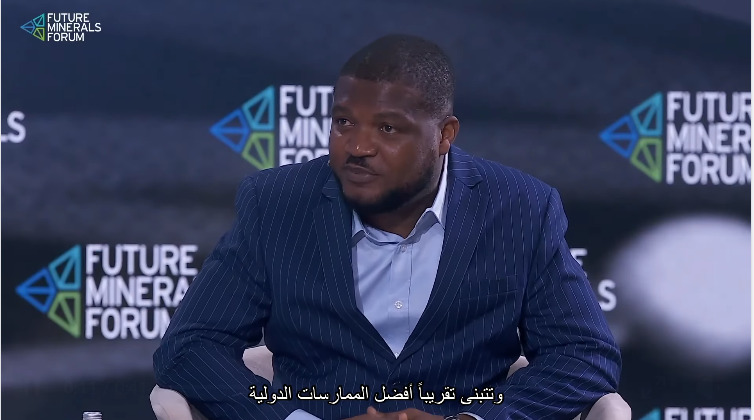
Chief Executive Officer of the Minerals Commission, Isaac Tandoh, says Ghana’s reforms in gold trading, mining formalisation and enforcement are designed to eventually make it difficult for illegal miners to find a market for their gold.
Speaking at the just ended Future Mining Forum in Saudi Arabia, Mr Tandoh said the government is implementing a four-pronged approach to tackling illegal mining, combining regulatory reforms, tracking of earth-moving equipment, formalisation of small-scale mining and enforcement.
He said the strategy is intended not only to prevent illegal mining activities but also to disrupt the channels through which illegally produced gold enters the legitimate market.
“A time will come, if you go and do the wrong thing, you may not be able to sell the gold. We are not there yet, but that is where we are getting to,” Mr Tandoh said.
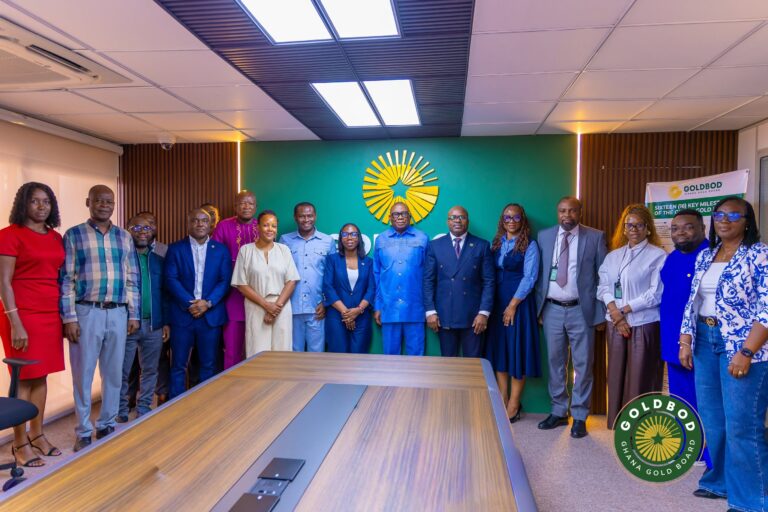
He identified the Ghana Gold Board (GoldBod) as an important component of the strategy. Established by an Act of Parliament, GoldBod regulates the buying and selling of gold from Ghana’s small-scale mining sector.
Mr Tandoh said operators in the small-scale mining sector are required to sell or export their gold through GoldBod, creating a central mechanism for the purchase and export of gold.
He said GoldBod purchased more than 100 tonnes of gold last year, generating about US$13 billion for the Ghanaian economy.
The Minerals Commission CEO said the government is also strengthening gold traceability through the formalisation of small-scale mining operations.
Under the responsible cooperative and skills-development programme, miners operating in areas that can be formalised are being organised into cooperatives, with smaller processing plants being developed in collaboration with the World Gold Council.
Mr Tandoh said the arrangement would make it possible to trace gold to its source and determine where individual consignments originate.
For miners operating in areas that cannot be formalised, he said the government is providing alternative skills training, including agribusiness and small and medium-sized enterprise development.
Enforcement remains the fourth component of the strategy, through the National Anti-Illegal Mining Operations Secretariat (NAIMOS).
Mr Tandoh said NAIMOS is responsible for ensuring that people engaged in illegal mining are arrested, prosecuted and appropriately punished.