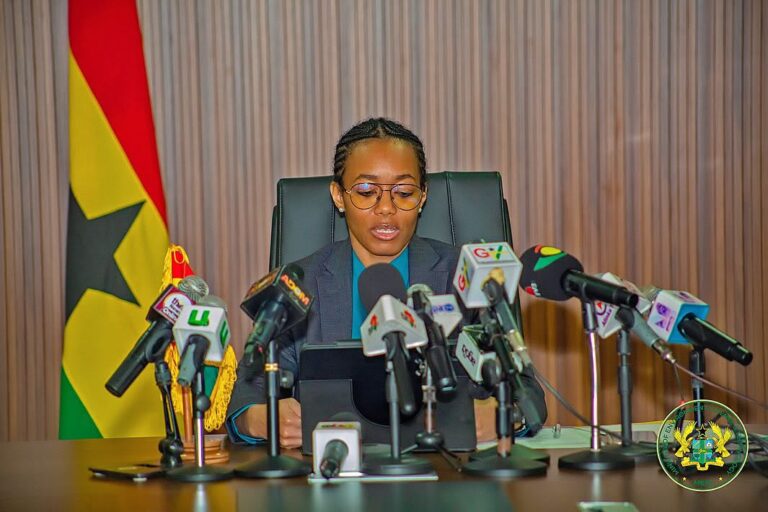
The Administrator of Ghana’s Minerals Development Fund (MDF), Hannah Bissiw, has revealed shocking details of financial mismanagement and attempted bribery during her appearance on “Good Afternoon Ghana” on Metro TV.
According to Bissiw, the MDF authorized an excessive US$1.4 million lease for a cramped office cubicle—payable in U.S. dollars—to a landlord with close government ties, while essential community programs went unfunded.
“I was astonished to discover that the Fund had committed to paying US$10 000 per month in rent, for two years initially, and then extended the same predatory rate for another twelve years,” Bissiw told host Kwasi Afriyie. “It’s a government property—a bungalow—that could have been acquired outright for a fraction of the cost.”
Sources within the MDF had originally negotiated a two-year lease for the office space in 2020 at US$10 000 monthly—double the prevailing market rate of $6 500 for comparable premises in the same district. But without competitive bidding, the contract was renewed unaltered for twelve more years, locking the Fund into nearly US$1.4 million of rent liabilities.
Worse still, the landlord has been identified as a close relative of a prominent government official. “The sub-lease was granted to Kwabena Kufour ’s nephew,” Bissiw said. “When I challenged the arrangement, he came to my office and placed cash on my table—admitting it was ‘commission.’ I immediately reported the attempted bribe, and the money remains secured.”
Bissiw contrasted the MDF’s profligate spending with the Fund’s inability to meet other obligations: insurance premiums, vehicle maintenance fees, and community development grants have all gone unpaid. “We had staff without operational vehicles, and communities waiting on projects that never materialized. Meanwhile, $500 000 each year was funneled into an unfit office space,” she lamented.
The Minerals Development Fund, established to manage royalties and support mining-impacted communities, has an annual budget in the tens of millions of dollars. But Bissiw’s revelations suggest systemic oversight failures and potential conflicts of interest in its contracting processes.
Meanwhile, Bissiw’s public disclosures have reignited demands for greater transparency and accountability in the management of Ghana’s mineral revenues, and for criminal investigations into the apparent bribery attempt and rent-overcharge.