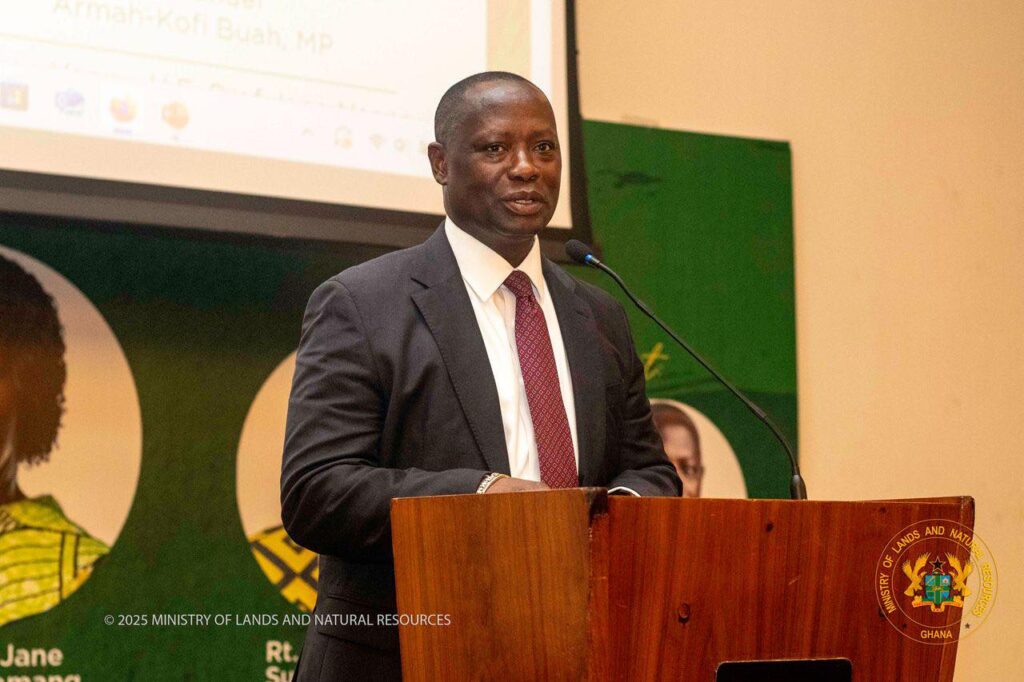
Emmanuel Armah-Kofi Buah
The Minister of Lands and Natural Resources has raised serious concerns about the alarming levels of water pollution caused by illegal small-scale mining, commonly known as galamsey.
Speaking at a High-Level Parliamentary engagement on Wednesday (26 February 0, the Minister of Lands and Natural Resources, Emmanuel Armah-Kofi Buah, revealed that the turbidity levels of major rivers—measured in Nephelometric Turbidity Units (NTU)—have surged to between 5,000 and 12,000 NTU, far exceeding the standard range of 0-500 NTU required for effective treatment.
The minister described the situation as an environmental and socio-economic crisis, warning that the cost of treating water has skyrocketed and that some water sources may soon become unusable if urgent action is not taken.
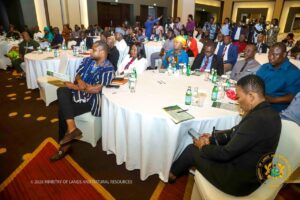
The dialogue, held at the Kempinski Hotel in Accra, brought together Vice President Prof Naana Jane Opoku-Agyemang and Speaker of Parliament Alban Sumana Kingsford Bagbin to engage all parliamentarians in a bid to curb the menace of illegal mining within their constituencies.
Beyond water pollution, the minister disclosed that 44 out of Ghana’s 288 forest reserves have been devastated by illegal mining, with an estimated 30 hectares of forest cover lost. This destruction, he explained, further exacerbates soil erosion and river sedimentation, worsening the water crisis.

“The fight against galamsey must go to the root,” Kofi Buah stated, emphasising the need to track and arrest financiers and influential figures who sponsor illegal mining operations.
In a bid to tackle illegal mining more effectively, the Ministry of Lands and Natural Resources is collaborating with the Ministry of Interior, the Ministry of Defence, and security agencies to enforce stricter regulations.
Additionally, the minister announced plans to review and streamline the mining licensing process to ensure that only qualified individuals and companies are granted permits.
To strengthen local oversight, the ministry, he said, is working on decentralising mining permits, allowing district authorities to issue licenses. This move, the minister stated, will hold local leaders accountable for any illegal mining activities occurring within their jurisdictions.
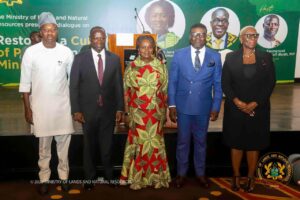
The engagement was primarily aimed at sensitizing MPs and equipping them with the necessary knowledge and tools to combat illegal mining in their respective constituencies.
“Illegal mining thrives because of political interference and inaction at the local level,” the minister pointed out. He urged parliamentarians to work closely with traditional leaders, community stakeholders, and security agencies to enforce responsible mining practices.
With Ghana’s water bodies at risk and entire ecosystems under threat, the minister stressed that the fight against illegal mining requires collective action.
He reiterated the government’s commitment to restoring sanity to the small-scale mining sector but insisted that traditional leaders, civil society, and the general public must also play their part.
Reporting by Abigail Teye in Accra