Dr Omar Farouk (In white)
The General Secretary for Africa Petroleum Producers Organization has said, Africa must leverage on energy and make it accessible to all in order to conquer poverty.
Speaking at 2024 APPO Roundtable Conference on Gas flaring and Fugitive Menthane Emissions in Accra on Tuesday(21 May), Dr Omar Farouk, stated that, Africa must not be flaring gas when nearly a billion of its 1.48 billion population lives without access to modern energy and over 600 million of its people have no access to electricity.
“If we are to continue to benefit from the huge resource endowments that God has given to our countries at a time when those on whom we have been near totally dependent on for the operations of the industry, have resolved to abandon what has become the mainstay of our national economies, then we also need to change the operating model of the industry as we have known it.

“If Africa must get out of poverty, it must find a way to make energy accessible to a vast majority of its population. No country in the contemporary world has been able to conquer poverty and uplifted the living standards of its people without making energy accessible to a vast majority of its population,” he stated.
The 2024 Africa Petroleum Producers Organization (APPO) Roundtable Conference was under the theme; “Towards Zero Routine Gas Flaring and Lower Methane Emissions in APPO Member Countries.”
The two-day APPO Roundtable Conference in partnership with Petroleum Commission, of Ghana aims to unite APPO Member Countries’ oil and gas operators and regulators to share experiences and strategies for addressing gas flaring and fugitive methane emissions.
In His remarks, he added that, Africa heavily rely on foreign technology, financing, and markets for our oil and gas industry, even after decades of oil and gas production in African countries.
” 75% of the oil we produce and 45% of the gas is exported outside our shores, even when as we noted earlier, our continent has the largest proportion of its people living without access to energy.
“All these must change in the light of the global energy shift away from fossil fuels to renewable energies, euphemistically called the energy transition.”
Addressing the issue of phasing out gas flaring and methane emissions, Egbert Fiabille Jnr, Chief Executive Officer, Petroleum Commission Ghana, “Phasing out routine flaring is one of the essential steps toward combining resource efficiency with long-term economic success and a way to strongly our efforts to reduce the carbon footprint of petroleum operations.”
He further stated that, “reducing methane emissions from routine/non-routine venting of gas during oil and gas production and processing as well as from gas leaks also contribute to slowing down climate change and provide valuable mitigation option for climate risk management,” he said.
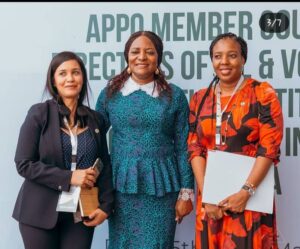
According to Joseph Dadzie, Chief Executive of the Ghana National Petroleum Corporation (GNPC), The government’s main focus has been to capture all produced gas to meet the country’s energy demands and promote industrialization, leading to the zero-gas flaring policy.
“GNPC and its E&P partners have also been intentional about gas flaring in our producing fields and continue to adopt cutting edge strategies to mitigate routine gas flaring.
“Such measures include, closed flaring and hydration blanketing on the Offshore Cape Three Points, Sankofa/Gye-Nyame field as well as other flare recovery technologies on the Jubilee and Tweneboa Enyera Ntomme (TEN) fields.
“GNPC and its venture partners are committed to enhancing all routine flaring on the TEN field by 2025 with the aim of ending the practice of “flaring to produce” on the TEN field,” he noted.