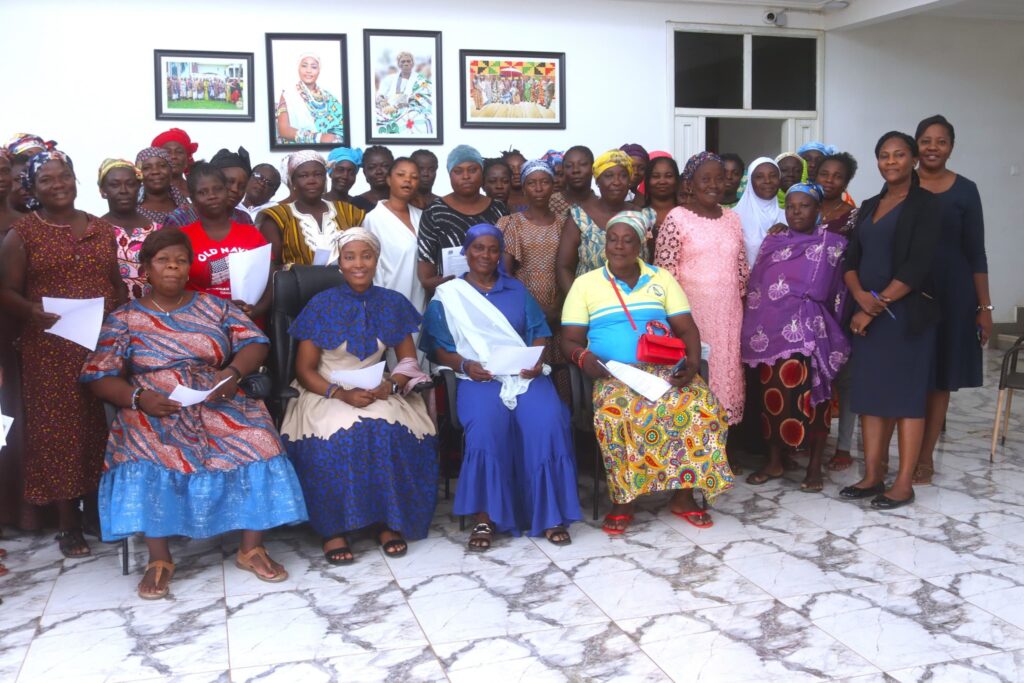
In the heart of Ghana’s Ada Traditional Area, a quiet yet profound transformation is taking place—one that speaks to the power of intentional corporate social investment to change lives and reshape communities.
At the forefront of this change is Electrochem Ghana, whose Women Interest-Free Loan Scheme is providing hundreds of women entrepreneurs with not just capital, but a chance to reclaim their economic agency.
Since the launch of the initiative in 2021, the company has demonstrated that gender equity is not just a development slogan but a tangible goal that can be achieved through smart, targeted support. The scheme was born out of the recognition that many women in Ghana—particularly those in rural and peri-urban communities—remain locked out of mainstream financial systems. For these women, access to credit is often impossible due to stringent collateral requirements and high interest rates that make borrowing both risky and unaffordable.
Electrochem’s intervention has been deliberate and holistic. Women receive interest-free loans of up to GHC 5,000 without the need for collateral—a rare opportunity in a system that has traditionally underserved female entrepreneurs. But money is only one part of the solution. The company also offers training in business management, financial literacy, and digital marketing to help beneficiaries grow and sustain their enterprises. The goal is not merely to lend but to empower—to equip women with the tools and confidence to thrive in competitive markets.

Three years in, the results speak for themselves. Over 300 women have benefitted directly from the scheme, with more than GHC 3 million disbursed in total. The repayment rate has remained impressively above 95 percent, defying the myth that low-income borrowers—especially women—are high-risk. Even more encouraging is the reported increase in average business revenues by up to 40 percent. For many of these women, the loan has allowed them to restock inventory, upgrade equipment, or expand their operations—all of which translate into improved household income and community development.
Beyond the numbers, the initiative has had ripple effects across the Ada region. Women who once operated in isolation now form part of vibrant peer networks and mentorship structures, fostering a sense of solidarity and shared learning. Some have even begun hiring additional help, creating job opportunities for others in their communities. The program’s emphasis on capacity-building has not only improved bookkeeping and budgeting practices but also strengthened local supply chains and increased the circulation of money within the region.
At the policy level, Electrochem’s efforts align squarely with global goals for sustainable development, particularly SDG 5 on gender equality and SDG 8 on decent work and economic growth. But what sets the company apart is its grounded, context-sensitive approach. Rather than applying a generic CSR model, Electrochem has crafted a community-based intervention that responds directly to the needs and aspirations of local women.
The scheme is a key part of the company’s wider sustainability vision, which integrates education, environmental stewardship, and economic empowerment into its operational DNA. In this sense, Electrochem Ghana is redefining what it means to be a socially responsible business in Ghana’s extractives sector—proving that profitability and people-centered development can go hand in hand.
As the Women Interest-Free Loan Scheme continues to evolve, there are growing calls for it to be scaled and replicated in other parts of the country. With every successful repayment, every expanded business, and every new job created, the message becomes clearer: investing in women is not only good ethics—it is good economics.