
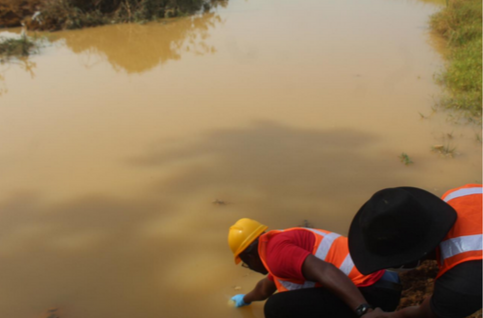
A year-long scientific study has revealed alarming levels of mercury, arsenic, and lead contamination in several Ghanaian communities impacted by small-scale gold mining.
The research, titled Mercury and Other Heavy Metals Impact Assessment, was conducted between August 2024 and September 2025 by Pure Earth in partnership with the Environmental Protection Agency (EPA).
It examined soil, water, air, fish, and food crops across six regions—Ashanti, Eastern, Central, Western, Western North, and Savannah.
The findings show severe mercury pollution in parts of the Ashanti Region, particularly Konongo Zongo and Odumase, with soil concentrations more than 500% above international safety guidelines.
In some samples, mercury levels were as high as 1,342 ppm, far exceeding the recommended 10 ppm limit for residential soil. Water samples from Asiakwa and Nyamebekyere also showed mercury concentrations up to 10 times above Ghana’s drinking water standard, threatening aquatic ecosystems and public health.
Arsenic contamination was found to be widespread across all six regions, with soil samples in Konongo Zongo reaching over 10,000 ppm—more than 4,000% above safety thresholds.
Drinking water sources in mining communities such as Konongo Odumase also tested well above World Health Organization limits.
Lead levels were especially concerning in parts of the Savannah and Western Regions. In Asiakwa, nearly half of the water samples exceeded national safety standards, while food crops such as pumpkin leaves from the Western North Region also showed contamination above FAO/WHO guidelines.
MIA Presentation _18 September 2025-1 by Fred Dzakpata


