In a major boost to sustainable mining and the long-term security of Ghana’s gold sector, the Ministry of Lands and Natural Resources has entered into a transformative partnership with the World Gold Council (WGC) to establish a fully traceable and responsible gold supply chain.
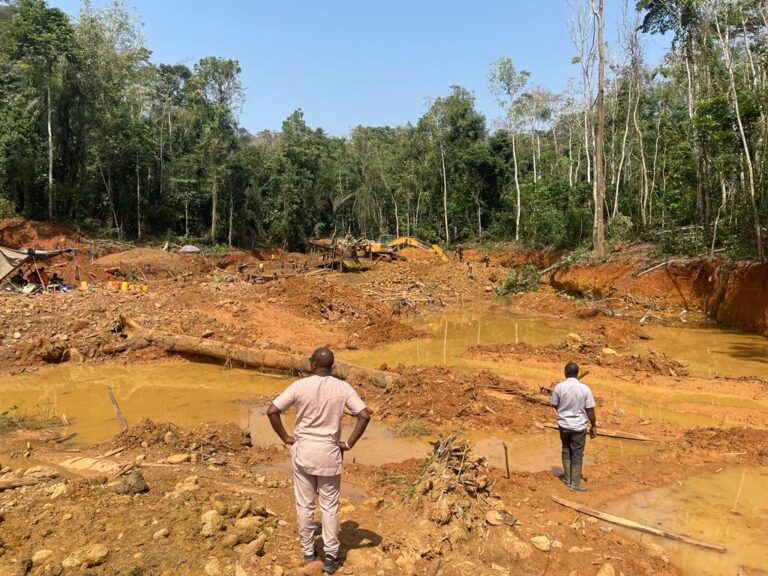
The strategic collaboration brings global expertise and international market access to Ghana’s mining sector and is designed to decisively address illegal mining through the creation of regulated, community-based gold processing plants under the Responsible Cooperative Mining and Skills Development Programme (rCOMSDEP).
Speaking at a high-level engagement with the World Gold Council in Accra on Monday, January 5, 2026, the Minister for Lands and Natural Resources, Emmanuel Armah-Kofi Buah (MP), said the initiative aligns squarely with government’s broader agenda to formalize artisanal and small-scale mining (ASM), promote responsible mining practices, eliminate galamsey, and enhance value addition within the minerals sector.

Welcoming the WGC delegation, the Minister described the discussions as strategic and timely, noting that they build on engagements held during the Mining in Motion Summit in 2025. He emphasized that channeling gold production through transparent, regulated points would help dismantle the informal and illicit trade that has long undermined the sector.
Chief Executive Officer of the World Gold Council, David Tait, praised Ghana’s rCOMSDEP initiative, describing it as a robust and well-structured model capable of serving as a global blueprint for ASM formalization.
He said the WGC’s interest in the programme stems from its ability to answer critical concerns around sourcing gold from traceable, responsible, and sustainable supply chains suitable for international refineries.

Mr. Tait added that the partnership would also improve investor confidence in Ghana’s artisanal and small-scale mining sub-sector by introducing standardized systems that promote transparency and accountability.
At the core of the partnership is the creation of an integrated gold value chain built on three key pillars: end-to-end traceability from mine to market, centralized community processing plants to aggregate and monitor production, and the use of official and regulated gold buying channels.
Both parties agreed on an actionable roadmap, including the establishment of a joint technical working team to oversee implementation and ensure transparency. The target is to have the first community processing plants operational within six months of funding confirmation.
The partnership signals a bold commitment to transforming Ghana’s gold sector—prioritizing sustainability, transparency, and equitable benefits for mining communities—while positioning the ASM sector as a responsible and enduring contributor to national economic development.