A systematic review of 45 studies has found that concentrations of potentially toxic metals in vegetables grown at some mining-affected sites in Ghana exceeded international food safety limits, raising concerns about health risks for regular consumers.
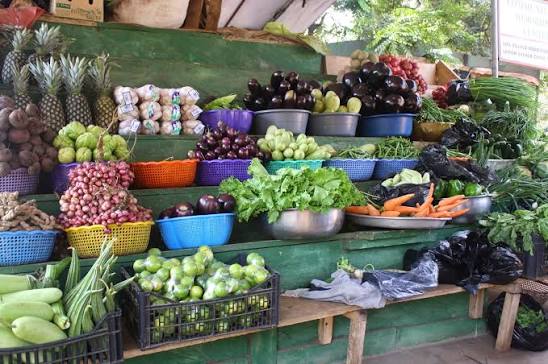
The review, published in Environmental Monitoring and Assessment, examined the movement of lead, cadmium, arsenic, mercury and chromium from mining-affected soil and irrigation water into tomatoes, peppers, garden eggs and onions.
It covered research from 11 mining districts, drawing on peer-reviewed studies published between January 2020 and January 2025, alongside a technical report used for limited site-level information.
The findings showed that arsenic and mercury concentrations in vegetables at the most contaminated sites reported were up to 200 times and 400 times the applicable World Health Organization/Food and Agriculture Organization Codex limits, respectively.
The highest exceedances were reported in samples from the Ashanti and Western regions, while evidence available for the Eastern and Central regions was more limited.
The review also found that the cumulative hazard index exceeded 1.0 in every mining-adjacent community for which the researchers could calculate the measure. A hazard index above 1.0 indicates the potential for non-cancer health effects under the exposure assumptions used in the assessment.
The researchers cautioned, however, that the magnitude of the risk varies according to the metal, vegetable, location and estimated level of exposure.
Cadmium recorded the highest soil-to-plant transfer factors among the five metals in tomatoes and garden eggs, with values above 1.0. This means the measured concentration in the edible plant could equal or exceed the concentration in the corresponding soil, although the ratio alone does not establish the mechanism of uptake.
Chromium transfer factors were comparatively low, remaining below 0.50 even at some sites where soil concentrations exceeded 300 milligrams per kilogram.
The researchers warned that this finding should not be interpreted as evidence of low health risk because almost none of the reviewed studies distinguished between trivalent chromium and hexavalent chromium, which has substantially greater toxicity.
The review highlights the potential for mining-related contamination to enter the food chain in communities where artisanal and small-scale mining, commonly known as galamsey, takes place alongside vegetable farming.
According to the researchers, mine waste, contaminated soil and irrigation water are potential pathways through which toxic metals can reach crops before they are harvested.
They recommended targeted testing of vegetables, soils and irrigation water in mining-affected districts, improved post-harvest handling, and agricultural buffer zones based on site-specific contamination data rather than a uniform distance from mining operations.
The review noted that washing vegetables may reduce contamination on their surfaces but cannot remove metals already absorbed into plant tissue.
The researchers also identified the need for further studies to determine the chemical forms of arsenic and chromium, improve assessments of the combined effects of multiple metals, and conduct long-term human biomonitoring in affected communities.
The study was authored by Eric Osei Bonsu, Michael Kwabena Osei, Harry Okyere and James Korang.
The authors said the findings supported greater attention to food safety in discussions about the environmental and public health consequences of galamsey.
Below is the link to the study: