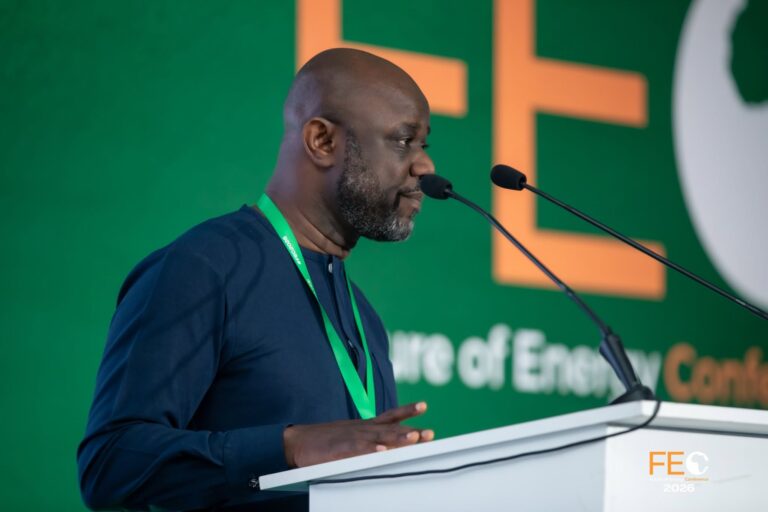
Benjamin Boakye, Executive Director of ACEP
The Africa Centre for Energy Policy (ACEP) has raised concerns over the feasibility of Ghana’s mineral revenue projections and ambitious local processing targets under the 2027 Budget, warning that significant gaps in revenue transparency, infrastructure and enforcement could undermine the country’s mineral value addition agenda.
In its analysis of the 2027 Budget, ACEP said the government’s projections for increased mineral royalties relied heavily on sustained high gold prices and improved revenue collection, although the budget failed to disclose the gold price and effective royalty rate assumptions underpinning the estimates.
Mineral royalties are projected to increase from GH¢13.16 billion in 2027 to GH¢22.52 billion in 2030, representing a 71 per cent rise. The projections would see mineral royalties overtake petroleum receipts in 2028 and reach approximately 1.8 times petroleum receipts by 2030.
However, ACEP said the budget’s own macroeconomic projections suggest that gold output at constant prices would grow by only about eight per cent between 2027 and 2030, raising questions about the extent to which the projected revenue increase depends on higher international gold prices.
The policy think tank warned that this creates a fiscal vulnerability, particularly as gold prices declined from US$4,876 per ounce in the first quarter of 2026 to US$4,268 in the third quarter.
Gold accounts for 69.9 per cent of Ghana’s total export receipts, making the country’s revenue and export outlook particularly exposed to price fluctuations.
ACEP also identified significant gaps in the state’s ability to capture revenue from artisanal and small-scale gold mining, despite the substantial export volumes recorded.
It noted that small-scale gold exports reached 88 tonnes, valued at approximately US$12 billion, yet the 2027 Budget reported no royalty or tax receipts from the gold.
This, ACEP said, raises questions about the actual revenue captured by the state from small-scale gold trading, particularly as government transfers up to GH¢5 billion annually to the Ghana Gold Board (GoldBod).
The report further questioned the transparency surrounding the Growth and Sustainability Levy, noting that although fiscal tables project increasing receipts from the levy through 2030, the budget does not clarify the mining sector’s contribution or explain how the planned phase-out by 2028 will affect revenue.
Local processing targets face feasibility challenges
Beyond revenue projections, ACEP questioned the technical and economic feasibility of the government’s plans to process gold, manganese and bauxite locally before ending their raw exports.
The 2027 Budget commits US$1.5 billion to critical minerals value addition, with targets to refine 70 per cent of small-scale gold locally by December 2027 and 100 per cent by December 2028.
For manganese and bauxite, the government intends to process 50 per cent of production locally by the end of 2028 and 100 per cent by the end of 2030, alongside restrictions on raw mineral exports.
ACEP considers the gold refining target the most achievable of the three, but cautions that electricity costs, international certification requirements and the risk of smuggling could undermine its implementation.
The report said Ghana’s four licensed gold refineries have a combined stated capacity of approximately 290 to 360 tonnes annually, well above the 88 tonnes of small-scale gold exported so far in 2026.
However, only 25 tonnes of the 85.4 tonnes exported between January and October 20, 2026, representing about 30 per cent, were refined locally.
ACEP attributed much of the recent increase in domestic refining to the September 1, 2026 directive barring aggregators from exporting unrefined gold doré.
It said the major constraints were not refining capacity but the high cost of electricity, the ability of local refineries to compete internationally and the absence of London Bullion Market Association (LBMA) accreditation.
The report noted that local refineries were still pursuing LBMA accreditation, a process that could take between three and five years, while 98.8 per cent of Ghana’s small-scale gold exports currently go to Dubai and India.
ACEP also warned that GoldBod’s planned three per cent discount to international gold prices could widen the price difference that encourages smuggling, potentially weakening enforcement of the proposed raw gold export restrictions.
Manganese processing faces power constraints
The think tank described the government’s manganese processing targets as particularly challenging, citing the enormous electricity requirements of local smelting.
Ghana’s manganese output increased from 2.99 million tonnes in 2023 to 5.28 million tonnes in 2025, with the country supplying approximately 5.32 million tonnes to China, representing about 16 per cent of Chinese imports.
However, domestic production depends on a single operator, Ghana Manganese Company, controlled by China’s Tianyuan, with the state holding a 10 per cent free-carried interest.
ACEP said achieving the government’s processing targets would require the existing operator to significantly expand its domestic processing capacity or attract additional investors within a relatively short period.
It identified electricity supply as the decisive constraint, estimating that processing 5.28 million tonnes of manganese ore would require between eight and 11 terawatt-hours of electricity annually.
This would be equivalent to approximately one gigawatt of continuous power supply, representing 30 to 40 per cent of Ghana’s total electricity generation of 27,015 gigawatt-hours in 2025.
The report said this requirement would place considerable pressure on Ghana’s power system, which has an installed capacity of 5,818 megawatts and peak demand of approximately 4,000 megawatts.
ACEP also questioned the ability of the proposed US$450 million manganese refinery at Nsuta to support the government’s targets, noting that its throughput capacity had not been publicly disclosed.
Bauxite target faces bigger hurdles
ACEP identified bauxite processing as the weakest component of the government’s local value addition agenda, noting that Ghana currently has no operating alumina refinery.
It said the target of processing 50 per cent of bauxite locally by 2028 and 100 per cent by 2030 was particularly ambitious given the absence of an operational refinery and the limited progress on proposed investments.
Although Ghana has estimated bauxite resources of about 920 million tonnes, its 2025 exports of approximately 2.07 million tonnes remain relatively small compared with Guinea, which shipped more than 127 million tonnes to China.
The report also highlighted the mismatch between proposed alumina refining capacity and the country’s existing aluminium smelting infrastructure.
It noted that the Volta Aluminium Company (VALCO), which has a capacity of 200,000 tonnes, currently operates at approximately 23 per cent of capacity.
ACEP further pointed to the October 2026 agreement between Rusal and the Ghana Integrated Aluminium Development Corporation (GIADEC), covering up to five million tonnes of bauxite and a proposed 1.2-million-tonne refinery at Nyinahin, with Rusal as the majority shareholder.
However, it described the agreement as preliminary and said the government’s immediate 2027 priorities were limited to lease ratification and environmental permits.
The think tank urged government to undertake a comprehensive assessment of Ghana’s bauxite resources, ore quality, energy and water requirements, logistics and processing costs before committing substantial public resources to refinery-related infrastructure.
GH¢400m reclamation allocation falls short of restoration needs
ACEP also raised concerns over the adequacy of the GH¢400 million allocated in the 2027 Budget for the reclamation of degraded mining lands, arguing that the amount falls significantly short of the estimated cost of restoring affected areas.
The report noted that the government had reported 2,300 acres reclaimed as of September 2026.
It further cited an October 2026 announcement by the President that GH¢200 million of the allocation would be used to reclaim 5,000 acres from 2027, while the remaining GH¢200 million would support the Environmental Protection Agency (EPA) and Blue Water Guards.
However, the budget lists the entire GH¢400 million under land reclamation, creating uncertainty over how the allocation would be distributed.
ACEP estimated that the proposed GH¢200 million expenditure across 5,000 acres would translate into approximately US$2,914 per acre, compared with Lands Ministry estimates of between US$15,378 and US$19,425 per acre.
Based on those estimates, reclaiming the 5,000 acres would cost between GH¢1.1 billion and GH¢1.3 billion, meaning the proposed allocation would cover only about 15 to 38 per cent of the estimated restoration costs.
The report further estimated that clearing the wider backlog of 13,591 acres would require between GH¢2.9 billion and GH¢3.6 billion.
ACEP criticised the absence of clear acreage targets, completion timelines, unit costs and a standard definition of what constitutes reclaimed land in the budget.
It also questioned the government’s failure to outline concrete measures to enforce reclamation bond requirements for small-scale mining companies.
Citing a 2020 Auditor-General’s finding, ACEP said none of the 12 sampled small-scale mining companies had posted approved reclamation bonds, leaving the state exposed to the cost of restoring degraded sites.
The report contrasted this with large-scale mining operations, noting that Gold Fields Ghana reportedly holds approximately US$107 million in reclamation bonds.
ACEP warned that without stronger enforcement of environmental obligations, the financial burden of restoring abandoned and illegally mined sites would continue shifting to taxpayers.
It also highlighted coordination challenges among state institutions, citing the EPA’s October 2026 suspension of reclamation projects undertaken by the Lands Ministry, GoldBod, the Forestry Commission, the Minerals Commission and the Minerals Development Fund over the absence of required permits.
ACEP concluded that Ghana’s ambition to transform its natural resource wealth into sustainable economic development would depend on stronger institutions, transparent revenue management and commercially viable investments.
It urged government to ensure that mineral processing targets and major infrastructure commitments were supported by credible technical and economic assessments rather than ambitious policy deadlines.