mining 2
AngloGold Ashanti Ltd, in conjunction with its joint venture partner IGO Ltd, is pleased to announce that commercial production has been declared at the Boston Shaker underground mine at Tropicana in Western Australia.
Tropicana, located 330 kilometres east-northeast of Kalgoorlie, is managed by AngloGold Ashanti Australia (AGAA) with a 70% interest. IGO holds a 30% interest.
Development of the Boston Shaker mine was approved in March 2019, and the mine transitioned into commercial production this month on schedule, below the A$105.7 million (US$77 million) budget and importantly, with no recordable safety incidents.
Boston Shaker will deliver approximately 1.1 million tonnes of ore per annum at an estimated grade of 3.5 grams/tonne, contributing approximately 100,000 ounces per annum1 to gold production over a seven-year mine life.
“Underground mining at Boston Shaker will leverage further value from this high performing operation, achieving payback in just over three years with upside potential as the deposit remains open at depth,” AngloGold Ashanti SVP Australia Michael Erickson said.
“The underground mine will contribute higher grade mill feed from the current quarter onwards, improving the gold production profile and enhancing cash flow during calendar 2021-2023 when the mine plan includes periods of higher waste stripping in the Havana open pit.”
The first production stope was fired in June 2020 and underground ore production has now reached an annualized production rate of 0.7 Mtpa with the design production rate expected to be achieved in March 2021.
The commercial production milestone at Boston Shaker comes after Tropicana produced its 3 millionth ounce in March this year, just seven years after pouring first gold in September 2013.
Tropicana strategy and production outlook
From commencement of the operation at Tropicana the mining strategy has been designed to optimize cash flow, NPV and the delivery of ore.
The Tropicana, Havana, Havana South and Boston Shaker open pits have been mined as a series of cutbacks, sequenced and scheduled to maximize value at a mining rate that delivers the best mining unit cost for the scale of the operation. Up until June 2020 ore production from the open pits exceeded the plant capacity, allowing higher grade ore to be preferentially treated (grade streaming) while lower grade ore was accumulated on stockpiles.
Over the course of H2 2019 and H1 2020 the Tropicana pit and Havana pit were completed, in line with the mine plan. As a result, grade streaming came to an end and stockpiled ore is currently being used to supplement the mill feed from the Havana South and Boston Shaker pits.
A decision was made in the June 2020 quarter to invest in the next cutback of the Havana pit (Stage 2) which will allow access to the deeper Havana open pit ore from 2022 onwards. While this cutback is being completed, mill feed will be sourced from the Boston Shaker open pit, supplemented by approximately 4 Mtpa of low grade (0.85 – 1.05 g/t) stockpiled ore, resulting in a lower milled grade over the period.
The lower grade will be partially offset by the Boston Shaker underground mine, which is ramping up and will be contributing at full capacity by the second half of calendar 2021. The plan remains for gold production (at 100%) in 2020 and 2021, to be between 400,000 and 450,000 oz, compared to 513,785 oz last year.
From 2022 onwards, annual gold production will normalize at between 450,000 – 500,000 oz as the low grade stockpile ore in the mill feed is displaced by a larger proportion of Boston Shaker underground ore and an increasing contribution of higher grade ore from the Havana pit, as the cutback progresses.
Cost guidance
Operating costs from 2020 onwards increase with the addition of the Boston Shaker underground mine. All other costs remain stable, with open pit mining volumes being maintained year-on-year. All-in-sustaining costs (AISC) increase due to four factors:
• Lower production – lower year-on-year production spreading fixed costs over a smaller volume of production
• Investment in Havana Stage 2 cut back – Total open pit mining costs are consistent with prior years. The focus shifts to waste movement as the Havana stage 2 cut-back continues through 2021 and into 2022. The benefit of the cut-back can be seen from the second half of calendar 2022 onwards as ore mining and gold production ramps back up.
• Underground mining costs – additional mining costs with the inclusion of underground mining costs from the Boston Shaker underground mine into the operation’s cost structure
• Non-cash cost elements – In prior years where the operation has mined and built stockpiles, costs incurred were accounted for as inventory adjustments and have had the effect of enhancing (decreasing) AISC. In 2020 and 2021, as stockpiles are drawn down, the associated costs are transferred from the balance sheet to the profit and loss statement, which has the effect adding a largely non-cash component to AISC.
Growth Opportunities
Significant potential remains to unlock known extensions of mineralisation beneath the Tropicana and Havana open pits and the extensions at depth of the Boston Shaker Underground.
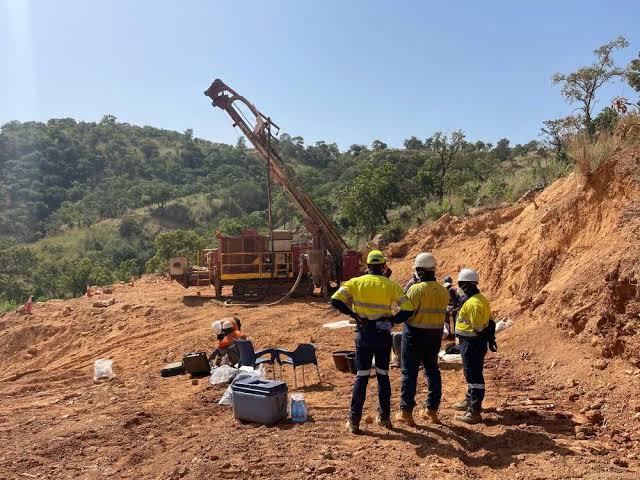
Development of an underground drill drive from the Boston Shaker Decline is well advanced with a total of 240 m completed to date. The drill drive is well positioned to also provide production access to the Tropicana underground reserve should the drilling prove successful. Underground diamond drilling is scheduled for the December 2020 quarter with a decision to mine expected during 2021.
Final trade-off studies are currently being completed on the Havana Stage 3 open pit cut-back and Havana underground to determine the optimal open pit – underground interface. A decision on the way forward for Havana Stage 3 is expected to be made during 2021.