Atewa Forest
Ghanafuor, I have carried one question through years of writing about the Atewa Forest Range, and I would like it answered before the National Anti-Illegal Mining Operations Secretariat (NAIMOS) soldiers leave.
“If the forest is worth more standing than cut down, why is everyone who guards it paid less than everyone who cuts it?”
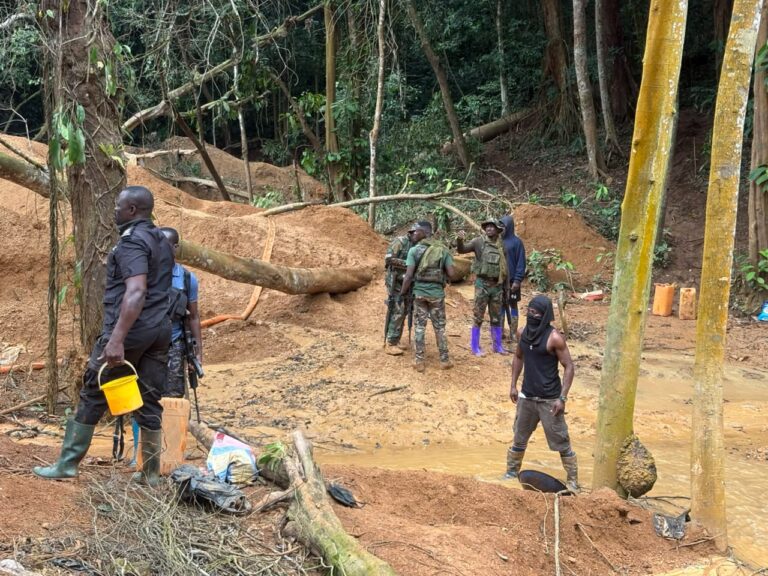
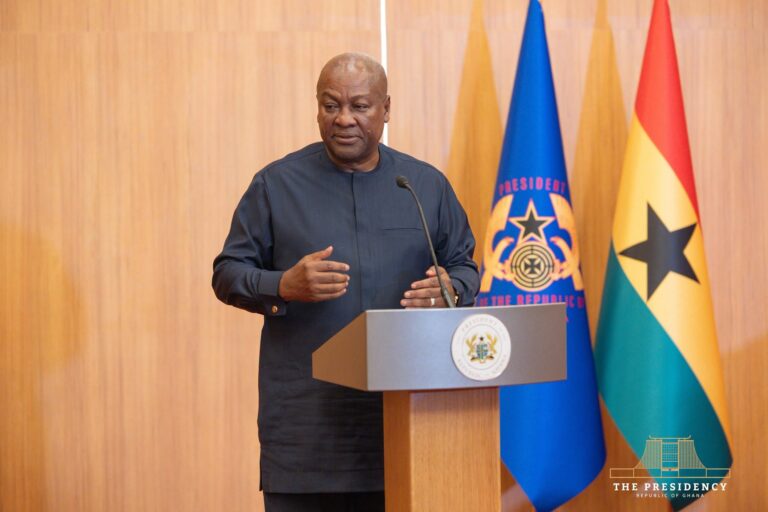
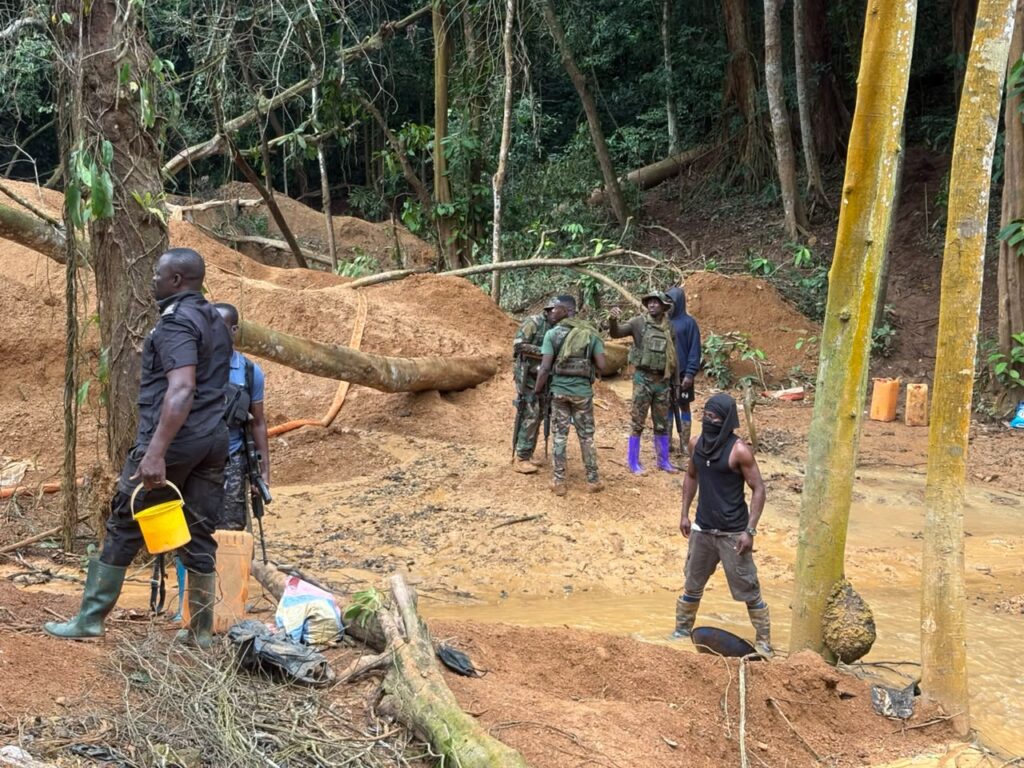
We have just witnessed an intervention that ought to force the country to confront this question. On October 27, Operation Green Shield began at Atewa, launched by the Ministry of Lands and Natural Resources with the Ghana Armed Forces and other agencies.
The Minister, Emmanuel Armah-Kofi Buah, outlined three stages: clear and disrupt, hold and stabilise, then transition and hand over to the Forestry Commission.
The first two stages involve soldiers. The third, however, remains largely a plan on paper.
A week later, the Minister told a conference in Kumasi that “the bleeding has stopped” and that the state now controls all its forest reserves. At the same meeting, the President of the National House of Chiefs, Ogyeahoho Yaw Gyebi II, said miners had entered reserves that had never previously been touched. Within that same week, anti-galamsey teams made arrests inside two reserves, one of them Atewa .
Both claims can be true at once. That is the problem. Clearing a forest is an event. Holding it is a budget.
So let us talk about the budget, and let us begin by refusing one word. Atewa is not priceless. It is priced, and we know the price.
The range holds more than 80 threatened and endangered species across approximately 26,300 hectares. Its rivers supply about five million Ghanaians, including more than a million people in Accra.
A Rocha Ghana’s September 2026 statement puts the annual non-timber income of the 40 fringe settlements, home to approximately 75,000 people, at US$12.4 million, with tourism potential exceeding US$5 million.
Its valuation of a protection scenario involving national park status and restoration of the buffer zone puts the benefits at US$1.157 billion over 30 years, compared with scenarios that include mining.
Now consider what is happening to the asset while we debate its future. Ghana lost 93,000 hectares of natural forest in 2025, equivalent to 52 million tonnes of carbon dioxide, according to the figures cited in this discussion.
WaterAid reported in November 2025 that 122 million people across Ghana, Nigeria and Niger live in high-risk water zones. The watershed that supplies water to millions of Ghanaians is under pressure in a country that already has the figures needed to understand what is at stake.
Now to the arithmetic that those responsible for preparing the national budget must confront.
At US$300 a month per household across the eight CREMA communities, paying the people who protect the ridge would cost approximately US$13.5 million a year, or US$67.5 million over five years. The proposal is for those payments eventually to transition into a share of carbon and water revenues rather than remain a permanent public subsidy.
Thirteen and a half million dollars a year. That is the proposed cost of making watershed protection a source of income for households already living around the forest.
Compare that with the cost of deploying security personnel to clear illegal miners from the forest, only to risk losing the same ground again. Compare it with the water treatment infrastructure that may become necessary downstream when the forest can no longer adequately protect the water sources.
The comparison deserves to be put before the public. Yet it is rarely presented in these terms. That, too, is a form of accounting.
The objection is predictable: carbon markets are unreliable, and the world may not pay enough to finance forest protection. That objection is partly right, and the figures cited in the market indicate why.
Senken’s fourth-quarter 2026 benchmark puts avoided deforestation credits at €8 to €30 per tonne, reforestation credits at €18 to €35, and biochar at €130 to €180. A European emissions allowance, by comparison, trades near €88. Sylvera reports that the average price paid per retired carbon credit was US$6.92 in the third quarter of 2026.
No single carbon revenue stream can finance a forest.
That is precisely why the revenue must be diversified: water payments, carbon payments, biodiversity payments, tourism income and sustainable produce. Each may contribute a modest amount, but together they can create a more reliable financing structure.
A forest financed by one market is vulnerable to that market. A forest financed by several sources has a better chance of sustaining its protection.
One of these revenue streams has already demonstrated its potential in Ghana. Kakum National Park attracted 204,000 visitors in 2024 and 601,167 between January and October 2025. Its canopy walkway, rope course and other visitor facilities have helped turn forest conservation into an economic activity.
Atewa also has tourism attractions, including source of water for three major rivers namely Birim Ayensu and Densu rivers. It has a globally significant biodiversity designation and a highway running past its foot.
But the sceptic is right to point out that declaring a national park does not automatically put money into people’s pockets. That is where many conservation arguments lose their force.
A declaration must be accompanied by a financing and management arrangement that recognises the role of local communities. It must create opportunities for communities to participate in conservation, receive payments and benefit from sustainable economic activities.
Nor should Ghana wait for international financing to solve the problem.
The OECD puts global biodiversity finance at US$75 billion to US$92 billion annually across 2023 to 2025, against estimated needs of about US$200 billion. At COP17 in Yerevan last month, approximately US$1.8 billion in announcements were made, while 22 of the 23 global biodiversity targets remained behind schedule.
Ghana cannot build its forest protection plans around the assumption that international funding will arrive in sufficient quantities. A country that waits for that money may be left with a bare hill.
We can, however, begin to mobilise our own resources.
On October 27, the Green Climate Fund’s board accredited the Ghana Infrastructure Investment Fund as a national direct access entity, with a pipeline target of nearly US$300 million and a first portfolio expected to go before the board in the third quarter of 2027.
That is an opportunity to develop projects locally rather than depend entirely on external institutions to structure and finance them. But the opportunity will mean little without credible, measurable projects that can attract funding.
So here is what I would put before the Minister ahead of the next budget.
First, declare Atewa a national park, as promised in the 2016 manifesto, and stop treating a watershed that supplies millions of people as merely a security matter.
Second, finance the third stage of Operation Green Shield in cedis, with payments tied to independently verified monthly results and channelled through the CREMAs. Publish who receives the payments and how much.
Third, direct the Ghana Infrastructure Investment Fund to explore a cedi-denominated financing facility for nature-based enterprises in the Atewa landscape. Such a facility could include grants to support activities during the years before they generate revenue, while recognising measurable environmental outcomes as an asset.
And finally, charge for the water.
A watershed service levy on water utilities, even at a few pesewas per cubic metre, could create a revenue stream for the communities that protect the watershed. It would do something international donors cannot guarantee: make the income of forest guardians part of a Ghanaian financing system, collected in Ghana, paid in cedis and reviewed annually.
I do not claim this closes the entire financing gap. I claim it changes who pays whom.
A word to the wise: Ghanafuor, a nation that will not pay the people who guard what it says it treasures has not decided that the forest is worthless. It has decided that its guardians are.
And the guardians are beginning to agree with it.
Hmmm, 3y3nsem piiii, oooo. Yooooooooooo…
By Kofi ThompsonWriter & activist for environmental justice & human rights