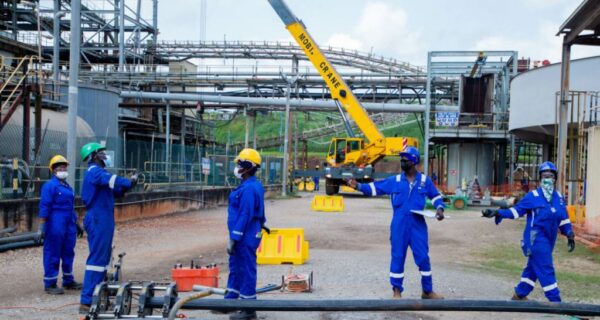
Asante Gold Corporation has withdrawn its 2026 production and all-in sustaining cost (AISC) guidance due to operational challenges at its Bibiani mine in Ghana.
The company said the mine’s performance had been affected by reduced availability of its main mining contractor, lower plant recovery, power disruptions and delays in resettlement.
In its third-quarter 2026 results, Asante said it had engaged a second contractor to speed up the removal of waste material following a failure of the south-east wall of the Main Pit in January 2026.
The waste clearance is expected to be completed in early December 2026, allowing the company to regain access to ore in the affected area by the first quarter of 2027.
Despite the challenges at Bibiani, Asante recorded consolidated gold equivalent production of 165,594 ounces in the first nine months of 2026, representing a 41 per cent increase from 117,459 ounces during the same period in 2025.
The company’s Chirano mine produced 34,420 gold equivalent ounces in the third quarter, representing a 34.4 per cent increase year-on-year, mainly due to higher-grade ore from Aboduabo.
Asante’s revenue also increased by 103.3 per cent to US$756.7 million for the nine months ended September 30, 2026, compared with US$372.1 million in the corresponding period last year.
The increase was driven by higher gold prices and a 45.1 per cent rise in gold equivalent ounces sold.
Adjusted EBITDA rose to US$194.8 million from US$597,000 in the corresponding period of 2025.
The company also reported encouraging drilling results at the Bibiani Bridge area between the Main Pit and Cut 5, which could support an expansion of open-pit mining.
Asante said it plans to accelerate drilling and mine planning in the area to determine whether additional resources can be incorporated into the Main Pit’s open-pit mining plan.
The company believes this could also allow it to defer significant underground development expenditure planned for 2027 and 2028.