Small scale miners on a river bed on the outskirts of Harare, Wednesday, Sept. 9, 2020. Zimbabwe’s government says it has banned mining in its national parks, but an environmental group that had taken court action to stop the development of a coal mine in an elephant-rich park said on Wednesday that it will insist on “more than just words.” (AP Photo/Tsvangirayi Mukwazhi)
Zambia is attracting billions of dollars in mining investment as it seeks to become a significant supplier of minerals critical to the global energy transition.
But as foreign companies expand operations and new projects come on stream, questions are mounting over whether common Zambians are benefiting from the country’s growing mineral wealth.
President Hakainde Hichilema said more than $12bn had been invested in Zambia’s mining sector since 2022, as the government pushes to increase copper production and attract new investors.
Leading investors include Canadian companies First Quantum Minerals and Barrick Mining Corporation, India’s Vedanta Resources and China Nonferrous Metal Mining Group (CNMC).
Abu Dhabi-based International Resources Holding (IRH) has also emerged as a leading investor after committing $1.1bn to recapitalise Mopani Copper Mines, previously owned by Glencore. The investment gave IRH a 51 percent stake in the mine, with state-owned ZCCM Investments Holdings retaining 49 percent.
Alongside large-scale mining projects, the Copperbelt province has also seen the expansion of smaller Chinese-owned mineral-processing plants, some sourcing ore from artisanal and small-scale miners. Their growth has raised concerns about safety standards, regulatory oversight and environmental protection.
The government has sought to restore investor confidence through tax incentives and a more predictable fiscal framework, following years of frequent changes to mining tax policies under the former Patriotic Front government, which ruled Zambia between 2011 and 2021.
Unlocking mineral wealth and adding value
To accelerate mineral exploration, Zambia is undertaking a nationwide high-resolution aerial geophysical survey aimed at improving geological information and identifying previously unexplored mineral deposits. The survey is now about 98 percent complete, according to the Ministry of Mines and Minerals Development.
The government has set an ambitious target of increasing annual copper production to 3 million tonnes by 2031, from less than 1 million tonnes in recent years.
“We can do with our copper, cobalt, nickel, lithium, manganese and rare earth metals, which we now know we have in this country for our people, what the UAE has done with oil and gas for its people and their economy,” Hichilema told delegates at the Zambia Mining and Investment Forum in Lusaka on October 19.
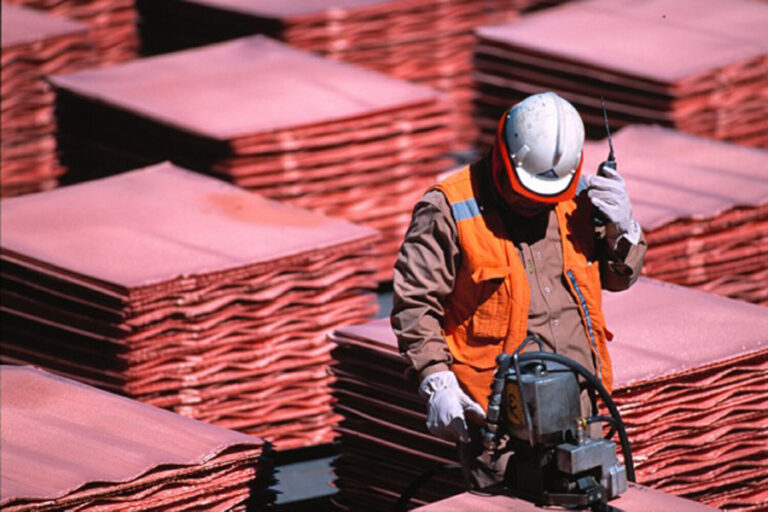
Beyond increasing production, Zambia is also seeking to expand value addition to copper, a key material in electric vehicles and renewable energy infrastructure.
Credit: Aljazeera