Bright Simons
Policy analyst and social innovator Bright Simons has raised serious concerns about the Government of Ghana’s takeover of the Gold Fields Damang mine, pointing to the possible influence of political interests over sound commercial judgment.
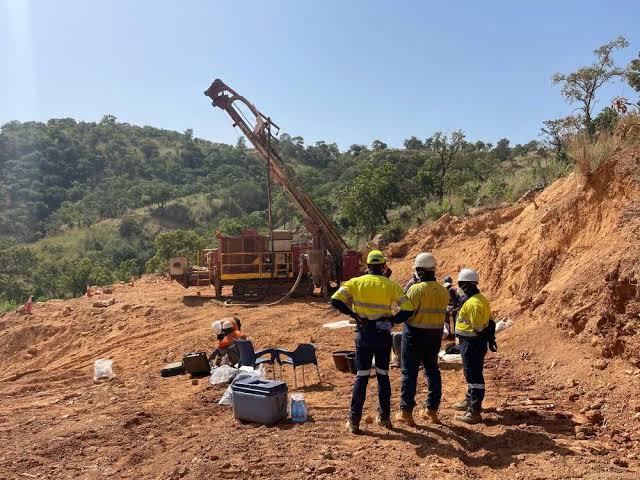
In a detailed analysis, Simons highlights the role of Engineers & Planners (E&P), the mine’s main contractor, which is owned by Ibrahim Mahama, brother of Ghana’s President. E&P has reportedly been hit hard by Gold Fields’ decision to temporarily halt active mining at Damang. The mine’s production costs—now exceeding $2,300 per ounce—have made it economically unviable in the short term, leading Gold Fields to focus on processing stockpiles while conducting further studies.
E&P, which only gets paid when it delivers fresh ore, has seen its cash flow dry up since the suspension. According to Simons, the company is now attempting to raise billions of dollars to acquire “marginal” mines like Damang—mines that require major capital investment and carry high financial risk.
Simons warns that if the interests of the President’s brother are influencing the government’s decision to nationalise the mine, rather than sound economic planning, Ghana could face heavy commercial losses. “Everybody in the industry is fully aware that E&P has been hit very hard by Gold Fields’ decision,” Simons notes. “Should the President’s brother’s interests start to drive decision-making, the country would need to brace for serious consequences.”
Adding to the complexity are reported conflicts of interest within the Ministry of Lands and Natural Resources (MinComm). One deputy minister is a former employee of E&P, and another senior MinComm official is said to be a former Gold Fields executive with unresolved tensions with the company. Simons questions whether strategic decisions can be trusted under such conditions without thorough public scrutiny.
He also criticizes a recent policy push by MinComm to require all large mines to use contractors for core mining operations, a move that conveniently aligns with E&P’s business model. “It is not clear that national interest would always coincide cleanly with the wishes of powerful local business bosses,” Simons cautions, “especially those who have influence across the political spectrum.”
Simons notes that the takeover of Damang follows other state-led moves in the gold sector during a time of high gold prices, such as the centralization of value chain initiatives under GoldBod. But he warns against basing long-term national mining strategy on temporary market highs. “Within just three years, from 2012 to 2015, gold prices plunged by 30%, sparking off a crisis in the industry and contributing to a national economic crisis,” he recalls.
He also points out that Gold Fields had already been preparing for Damang’s eventual transition, given its limited remaining mine life. The company had been working on various social and operational scenarios, and Simons believes a more productive path would have been to engage in dialogue with the mining giant.
“It always helps to take a strategic view of the industry and be guided by sober analysis,” Simons writes. “Would it really hurt to talk to Gold Fields and come to an accommodation?”
With Damang now under government control and lingering questions about motives and oversight, Simons’ warning is clear: Ghana must ensure that its mineral resource decisions are based on national interest and economic realism—not on the financial needs of the politically powerful.