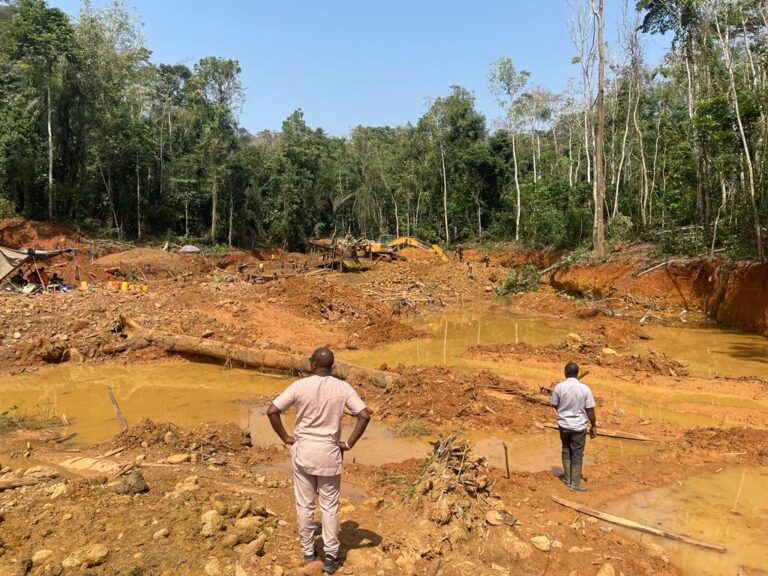
The Concerned Citizens of the Atewa Landscape (CCAL) have issued a national appeal for the government and citizens to take decisive action against illegal mining, warning that Ghana’s growing gold export success risks becoming an “environmental grave” if unchecked.
In a statement released on October 20, 2025, the group expressed alarm over figures from the Ghana Gold Board (GoldBod) indicating that small-scale gold exports have reached 81,719 kilograms, earning the country over US$8 billion in foreign exchange as of mid-October.
While acknowledging the economic benefits, CCAL cautioned that the figures conceal devastating environmental costs — polluted rivers, destroyed forests, and poisoned communities.
“Behind this glittering figure lies a trail of destruction. Shall we truly exchange the very pillars of our existence — our water, soil, forests, and health — just for gold?” the group questioned.
The statement commended the work of enforcement bodies such as NAIMOS and the Blue River Guards, but said Ghana’s environmental crisis persists because interventions often lack consistency and transparency.
“Are these genuine defenders of nature or just another display of political shenanigans while our environment bleeds for profit?” CCAL asked, urging the government to declare all mining security zones public and launch a nationwide crackdown on illegal mining before the situation worsens.
Community-led restoration
As part of its own interventions, CCAL announced the commencement of a tree-planting project at Potroase, aimed at restoring reclaimed lands devastated by illegal mining. The group also plans to plant 20 million trees across 52 communities surrounding the Atewa Landscape as part of a long-term reforestation effort.
In collaboration with FLOWER Ghana, CCAL is also undertaking scientific research into phytoremediation, which uses natural plants to remove toxic chemicals such as mercury and cyanide from polluted rivers and soils.
“Nature can heal itself if the destruction stops,” the group said, calling on all Ghanaians — from traditional authorities to private sector players — to unite in what it described as a “national crusade to reclaim our environment.”
CCAL emphasized that protecting Ghana’s natural heritage is not only an environmental necessity but a moral obligation to future generations.
“The trees we plant today are the air our children will breathe tomorrow. When the last river dries and the last tree falls, we will finally realize that we cannot eat gold.”