The Centre for Policy Scrutiny (CPS) has urged the government to ensure clarity, consistency, and fiscal discipline in the design and implementation of the 24-Hour Economy and Accelerated Export Development Programme (24H+), cautioning that its shift from the initial “1-3-3” concept to a broader national transformation agenda must be backed by strong coordination and credible financing.
In its latest policy review titled “The 24-Hour Economy and Accelerated Export Development Programme: A Critical Review,” CPS noted that while the 24H+ represents a more comprehensive approach to economic transformation than the earlier notion of extended work shifts, its success will depend on how well it is aligned with Ghana’s medium-term development and fiscal frameworks.
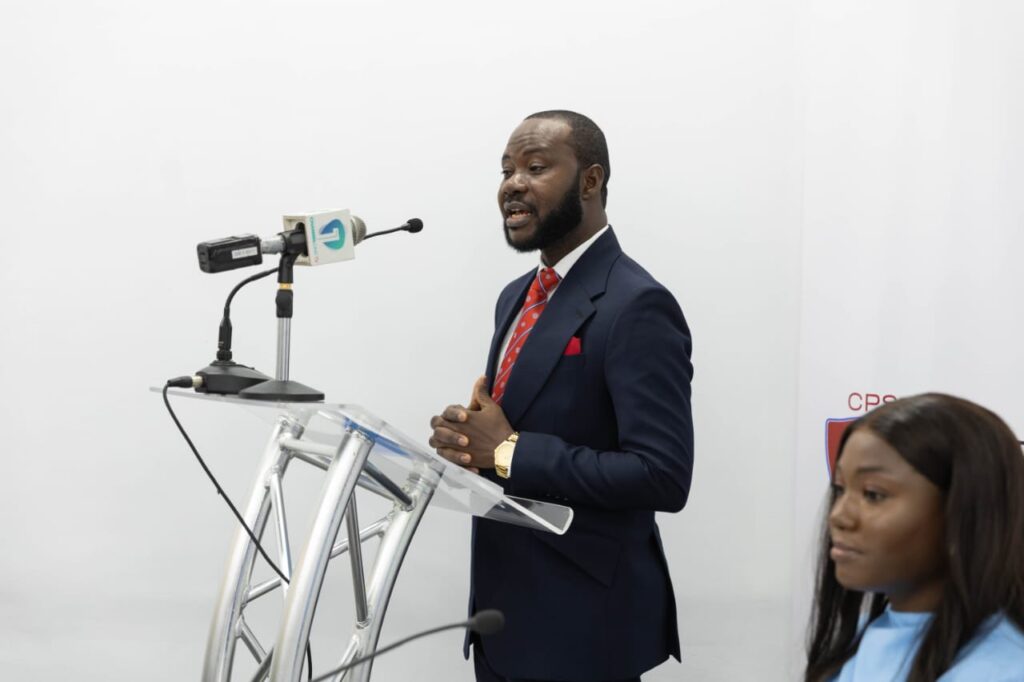
Presenting the document, Dr. Adu Owusu Sarkodie, Executive Director of CPS, explained that early interpretations of the 24-hour economy — popularly described as the “1-3-3 model,” which proposed running three work shifts to multiply job opportunities — have evolved into a national transformation agenda focused on value addition, industrialisation, and export competitiveness.
CPS described this transition as a positive correction, but warned that government must maintain policy discipline and avoid “conceptual drift.”
“The move from the 1-3-3 idea to a broader production and export-led strategy is sound, but it must not lose coherence in execution,” Dr. Sarkodie said. “Government must align this programme with the national planning framework and ensure that its financing plans are realistic and transparent.”
According to the review, the 24H+ seeks to diversify Ghana’s economy through eight integrated sub-programmes covering agriculture, manufacturing, logistics, tourism, housing, finance, and skills development. CPS acknowledged the ambition behind the framework but cautioned that it overlaps with existing initiatives such as the Feed Ghana Programme and the Agriculture for Economic Transformation Agenda.
The think tank also raised concerns about the programme’s financing structure, describing the government’s estimated cost of US$4 billion as understated. It warned that Ghana’s low capital investment levels—averaging less than three percent of GDP— could constrain implementation.
“The programme’s infrastructure ambitions are commendable, but they must be grounded in fiscal reality. Transparent costing and sequencing are essential to sustain credibility and attract investors,” the report said.
CPS further urged government to establish measurable performance indicators and timelines to track progress. It warned that without concrete implementation metrics and accountability structures, the 24-hour economy could risk becoming “another ambitious vision without delivery.”
Despite its concerns, CPS commended the programme’s emphasis on agro-industrialisation and regional development, particularly plans to transform the Volta Basin into an agro-industrial and logistics corridor. It said these interventions, if well executed, could boost productivity, create jobs, and promote balanced growth across regions.
“The 24-hour economy still offers Ghana a credible pathway to transformation,” Dr. Sarkodie added. “But the government must ensure that the policy’s evolution from the 1-3-3 model to a national programme is backed by sound financing, clear targets, and disciplined implementation.”
CPS concluded that the 24H+ has the potential to reset Ghana’s growth model, but urged government to learn from past experiences by prioritising coordination, cost efficiency, and results-oriented delivery.