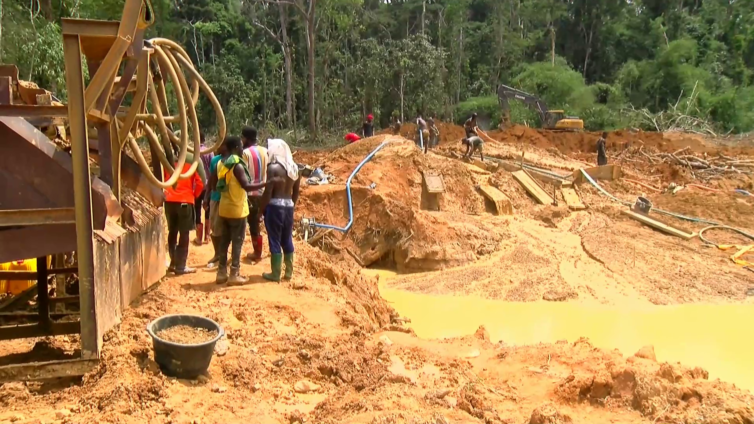
A new report by the Global Initiative Against Transnational Organized Crime has revealed the growing infiltration of criminal networks in Ghana’s artisanal and small-scale gold mining (ASGM) sector.
Based on three years of in-depth fieldwork, satellite analysis, and interviews, the report paints a concerning picture of how informal mining operations are increasingly shaped by illicit activities, foreign involvement, and environmental degradation.
According to the report, Ghana’s gold sector is undergoing rapid transformation, with new mining hotspots emerging alongside long-established regions such as Ashanti and Western. The Savannah Region, in particular, has witnessed a surge in mining activity, with over 80 percent of sites surveyed being less than a decade old. This shift is contributing to a sharp increase in gold smuggling, with the illicit gold trade estimated to be worth more than USD 1 billion annually.
Marcena Hunter, Director of Extractives at the Global Initiative, noted that the expansion of illegal mining, processing, and trade is closely tied to weak regulatory oversight and governance challenges. She explained that the injection of foreign capital and technology—primarily from Chinese and Burkinabé nationals—has fueled the growth of unlicensed mining operations and is significantly altering local supply chains and financial flows.
The report also highlights the increasing use of cyanide in gold processing, a practice reportedly introduced by foreign nationals from neighboring West African countries. This trend is not only reshaping mining methods but also posing heightened environmental and health risks in affected communities.
Beyond environmental concerns, the report identifies serious socio-economic implications. It raises alarm over money laundering activities facilitated through casinos located in mining areas and documents a troubling rise in the sexual exploitation and trafficking of women within mining communities. These developments underscore the need for urgent, coordinated responses to the evolving threats in Ghana’s gold mining landscape.
At the heart of the findings is a warning about changing power dynamics and the competition for control and profits from gold production. The report reveals how secretive, fast-moving criminal networks are exploiting loopholes in the system and adapting quickly to both regulatory efforts and market conditions.
The Global Initiative emphasizes that addressing these challenges requires comprehensive and adaptive strategies that build on existing reforms while introducing innovative approaches to governance, law enforcement, and community protection. This latest report is the first in a two-part series. The second installment, expected soon, will explore how illicitly mined gold is laundered and traded globally, shedding light on the broader international dimensions of the problem.
The Global Initiative is a Geneva-based independent civil society organization working globally to confront organized crime through innovative research, policy engagement, and partnerships.