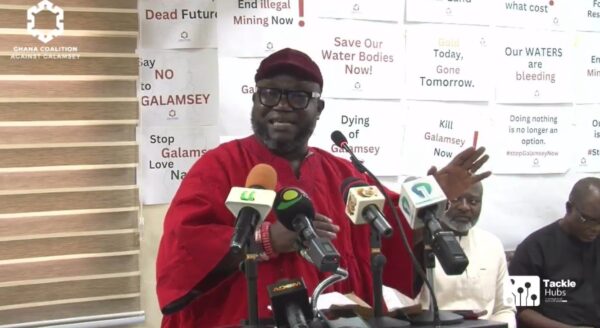
Ken Ashigbey, Convener of the Ghana Coalition Against Galamsey (GCAG)
The Ghana Coalition Against Galamsey (GCAG) has raised alarm over what it describes as the deteriorating fight against illegal mining, calling on President John Dramani Mahama to take immediate and decisive action to address the growing crisis.
In a statement issued on March 28, 2026, the Coalition said its assessment of developments on the ground and government pronouncements indicates that, despite a promising start, the anti-galamsey campaign has failed to achieve meaningful impact.
The group expressed concern that illegal mining activities continue to escalate, posing serious threats to water bodies, forest reserves, and public health. It attributed the situation to weak enforcement, poor compliance, and what it described as impunity among some state officials and enforcement agencies.
According to the Coalition, the number of forest reserves affected by illegal mining has increased from about 45 to at least 50 within a year, with over 9,000 hectares impacted. It highlighted the Atewa Forest as particularly vulnerable, warning of intensified encroachment despite its ecological importance.
The GCAG is urging the government to strengthen protection for forest reserves by adequately resourcing the Forestry Commission and undertaking immediate enforcement operations in high-risk areas such as Atewa. It also renewed its call for the revocation of Executive Instrument 144 to ensure long-term protection of the Achimota Forest.
On water pollution, the Coalition noted that illegal mining continues unabated in major rivers, including the Ankobra, Birim, Pra and Ofin. It called for the immediate removal of mining equipment such as chanfans from water bodies and demanded the publication of weekly water quality data to improve transparency.
The statement further raised human rights concerns, urging the government to protect environmental activists and drop charges against the “Atronsu 5.” It also called for a thorough investigation into the killing of 13-year-old Pious Nketia Nkansah, allegedly linked to illegal mining activities, and demanded accountability for all perpetrators.
The Coalition stressed the need for stricter enforcement of existing laws, particularly provisions under the Minerals and Mining Act, and called for an end to political interference in the fight against galamsey.
It also demanded a pause in the issuance of small-scale mining licences until effective monitoring systems are in place, and called for sanctions against Metropolitan, Municipal and District Chief Executives (MMDCEs) who fail to curb illegal mining in their jurisdictions.
Additionally, the GCAG urged the government to release findings from ongoing investigations into alleged political involvement in galamsey, including reports by the Economic and Organised Crime Office (EOCO) and the Prof. Frimpong-Boateng committee.
The Coalition criticised the deportation of foreign nationals involved in illegal mining without prosecution, describing it as a loophole that allows offenders to evade justice. It also raised concerns over the reported use of hazardous chemicals such as cyanide by illegal miners, calling for an immediate crackdown.
While acknowledging the role of the National Anti-Illegal Mining Operations Secretariat (NAIMOS), the group said the agency requires more resources and operational independence to be effective.
The GCAG further identified several hotspots, including Dunkwa-Offin, Mankranso, Kunso, Kyebi, and Konongo-Odumase, where illegal mining activities continue unabated.
The Coalition has urged President Mahama to take personal charge of the anti-galamsey campaign and commit to clear, time-bound actions to restore accountability and demonstrate political will in addressing the crisis.
The statement was jointly signed by GCAG Convenor Kenneth Ashigbey and members including Awula Serwah, Senyo Hosi, and Daryl Bosu, on behalf of a broad coalition of civil society organisations, professional bodies, and advocacy groups.