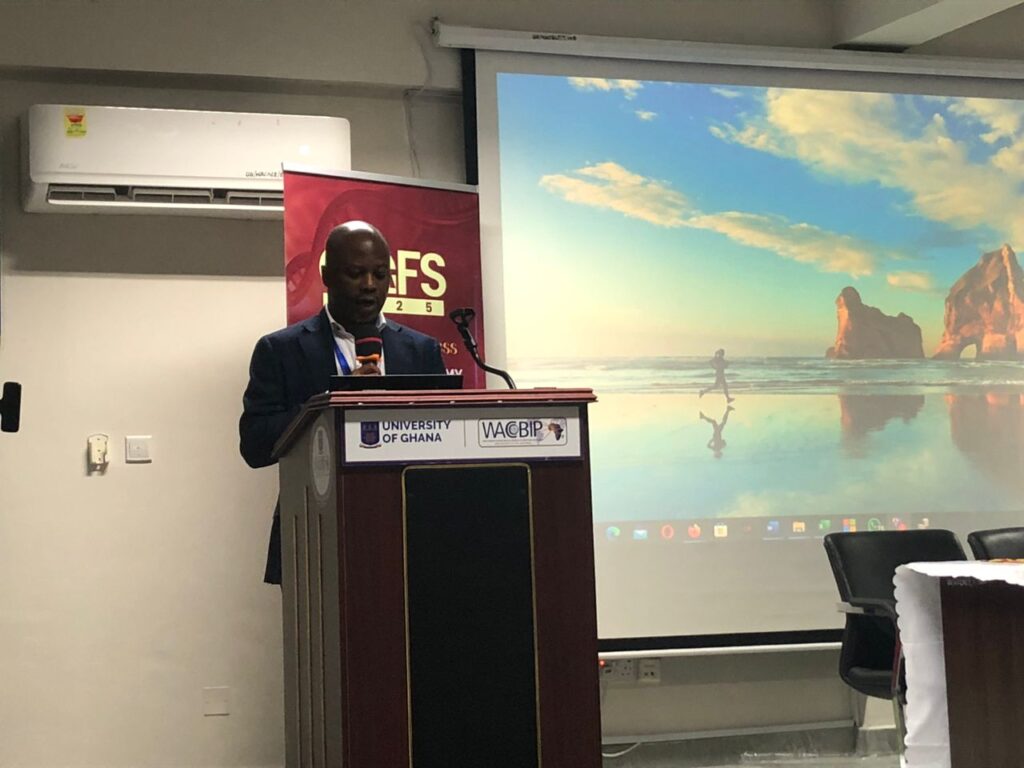
The President of the Ghana Academy of Forensic Sciences (GAFS), Dr. Pet-Paul Wepeba, has called for urgent reforms to strengthen forensic science practice in Ghana and the wider subregion.
He made the call at the inaugural congress of the Academy, held in Accra on Saturday 6 September under the theme: “Modernizing Crime Investigation in Ghana: Bridging Traditional Methods with Forensic Investigations through Capacity Building.” which attracted experts, policymakers, and law enforcement officials gathered to chart a new course for forensic science.
In a keynote address, Dr. Wepeba highlighted the burden of justice and the limits of traditional investigative methods in tackling modern threats, particularly transnational crime.
He argued that while Ghana has made notable strides in forensic development — including the refurbishment of the Police Forensic Laboratory in 2011 with EU support and the introduction of training programs — critical gaps remain.
“Logistics, legislation, and quality assurance deficits continue to weaken our forensic ecosystem,” Dr. Wepeba said. “We lack a national DNA database, comprehensive fingerprint systems, and accreditation mechanisms that ensure consistency across laboratories.”
He warned that without modernization, Ghana’s justice system risks falling behind criminals who are increasingly using sophisticated methods.
Call for a National Forensic Science Agency
Central to Dr. Wepeba’s proposals was the establishment of a National Forensic Science Agency — an autonomous body to regulate and coordinate forensic services across the country. Currently, forensic work is fragmented across institutions such as the Ghana Police Service, Ghana Standards Authority, and Ghana National Fire Service, leading to inefficiencies and inconsistencies.
The proposed agency would oversee all forensic laboratories, enforce standardized protocols, manage national forensic intelligence databases, and accredit labs and training programs. It would also promote research into cost-effective forensic technologies tailored to Ghana’s context.
Dr. Wepeba emphasized the importance of integrating forensic innovations into traditional investigative methods such as community policing and witness testimony, rather than replacing them outright.
He also urged universities to expand academic programs in forensic science to train the next generation of experts.
He further stressed the need for regional collaboration, noting that Ghana and its West African neighbors face growing threats from transnational crime. “Forensic science must be part of our collective security response if we are to safeguard justice and strengthen public trust,” he said.
According to Dr. Wepeba, investment in forensic science will reduce wrongful convictions, strengthen disaster response, and improve overall trust in the justice system. “This is about enhancing justice, protecting communities, and ensuring social stability,” he concluded.