Gold
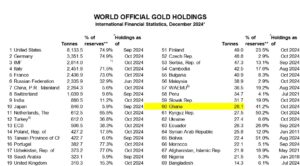
Ghana has been ranked as the 5th country in Africa with the highest Central Bank gold reserves, according to the latest data released by the World Gold Council in December 2024.
The Bank of Ghana’s gold reserve as at October 2024 was 28 tonnes. The figure was boosted significantly by the banks recently introduced Domestic Gold Purchase Programme.
This means the country’s gold reserves have increased steadily since May 2023, when they stood at just under 9 tonnes.
Ghana added a further 1 tonnes during the month.
Algeria currently occupies the first position in Africa with 173.6t followed by Libya 146.7, Egypt 126.8, South Africa 125.4 Ghana 28.1 , Morocco, 22.1, Nigeria 21.5t, Mauritius 12.4t Tunisia 6.8 Mozambique 3.9t.
It is currently ranked as 60th globally.
About BoG’s Domestic Gold Purchase Programme
In June 2021, the Bank of Ghana launched the Domestic Gold Purchase Programme to augment the country’s foreign reserves.
The programme was aimed at boosting the Central Banks’ ability to buy domestically produced gold from selected gold aggregators and mining firms, and pay them in local currency at the prevailing market price.
The programme has since paved the way for BoG to grow its foreign exchange reserves to foster confidence, enhance currency stability, and create a more attractive environment for foreign direct investment and economic growth.
About gold reserves
Gold reserves refer to the quantity of gold held by a central bank or government as a financial asset.
These reserves can serve as a form of currency stabilisation and can provide security during times of economic uncertainty.
This system tied the value of a country’s currency to a fixed amount of gold, requiring nations to keep large gold reserves to support their money supply.
Gold reserves play a crucial role in a nation’s economic stability, serving as a safeguard against currency fluctuations and financial crises.
They are maintained by central banks and act as a store of value, reflecting a country’s commitment to sound monetary policies.
Reporting by Fred Dzakpata in Accra